Vinyl Floor Scratch or Tile Chip: Use the Right Fix
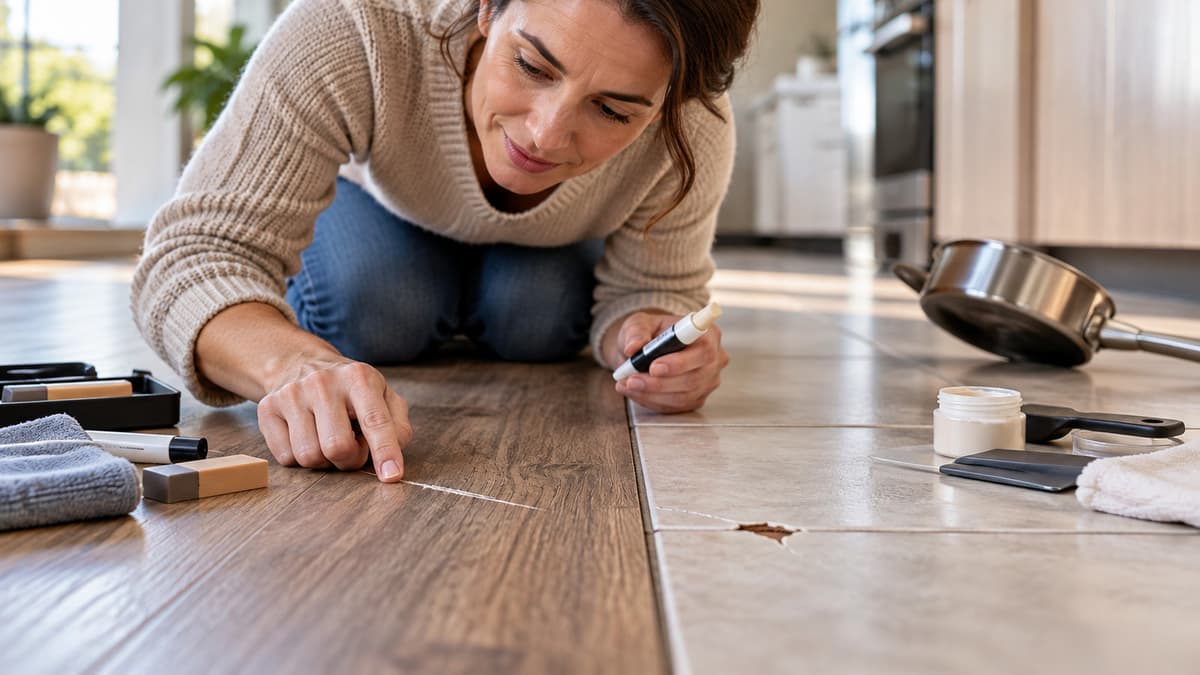
Learn why vinyl scratches need wax or a new plank while ceramic chips need hard filler, with a simple damage check before you choose a repair kit today.
On this page
A dropped pan can leave a vinyl floor scratch or tile chip that looks like the same small problem: a pale line, a dark nick or a missing fleck. The repair is not the same. Vinyl needs a method compatible with its flexible wear layer, while glazed ceramic needs a hard filler on a rigid surface. Choosing by colour alone can turn a modest mark into a patch that is hard to remove.
In short
Use the floor material, not the shape of the damage, to choose the repair. Light LVT scratches may suit the maker's retouching or repair-wax system, while deep damage can make plank replacement more sensible. A stable chip in glazed ceramic can suit a tile paste or epoxy filler. That hard-setting material is not a general vinyl repair.
Two floors, two surfaces
Vinyl flooring is a layered, resilient product. Its visible pattern sits beneath a transparent wear layer, so a scratch may stay in the protective top surface or cut far enough to damage the printed design. The plank moves slightly under load, so any repair has to cope with that movement and stay compatible with the manufacturer's finish.
A glazed ceramic tile behaves differently. Its hard glaze covers a rigid body. When an impact knocks away a small piece, a ceramic tile epoxy filler or repair paste can fill the space and cure hard. It still needs careful preparation and a close colour match, but it is filling a rigid chip rather than treating a flexible coating.
A product labelled for floors is not suitable for every floor. Read the named materials and your flooring instructions. Hard surfaces, wood effect or a photograph of a floor is weaker evidence than a statement that the product suits your vinyl or ceramic surface.
Identify the damage before buying
Start by confirming the material. Ceramic feels hard and cool, has grout lines and usually shows a clay-coloured, grey or pale body where the glaze has chipped. LVT and vinyl planks feel more resilient. A deep cut may reveal a different-coloured backing or disrupt a printed wood or stone pattern. Vinyl tiles are still vinyl even when they imitate ceramic.
Clean the area with the floor maker's usual method and let it dry. Dirt can make a scuff look like a scratch, and residue can hide the edge of a chip. Look across the surface in side light rather than scraping it. If the mark disappears once loose dirt is gone, it may not need filling.
Check depth and location. A faint line in vinyl's clear surface is different from a gouge through the print, and a damaged click joint matters more than a mark in the centre. On tile, stop if it is cracked through, loose, hollow-sounding, moving or letting moisture behind it. Paste can hide a small stable chip, but it cannot stabilise the substrate or repair a failed installation.
Repairing a light scratch in vinyl
For a light LVT scratch, begin with the flooring manufacturer's care page. Some makers distinguish a retouching product for slight marks from a repair-wax method for deeper scratches. The wear-layer finish, sheen and compatible treatment can vary. A generic wax stick sold for furniture, laminate or timber is not automatically safe for vinyl.
Remove grit with a soft vacuum attachment, then clean only as directed and let the area dry. Do not start with an abrasive pad, solvent, steam cleaner or improvised polish, because they can change the sheen well beyond the line. If the maker supplies a repair pen or wax, follow its limits and colour-mixing guidance exactly.
Wax can make a narrow scratch less noticeable, but it does not rebuild the factory wear layer. Check the result in daylight and artificial light before adding more. Repeated applications can leave a glossy mound or a dull halo. A living-room repair is not automatically suitable for a bathroom. If you cannot identify the floor brand, ask the retailer or installer before using a permanent product.
When a vinyl plank needs replacing
Replacement becomes the stronger option when the cut reaches the printed pattern, a piece is missing, an edge has broken or the locking joint no longer holds. A dark or pale scar through a wood-effect print cannot be recreated reliably with hard tile paste. Filler may occupy the hollow, but it does not reproduce the design or restore the original protective surface.
Click vinyl can sometimes be dismantled from the nearest wall to the damaged plank. Kitchens, door frames, skirting and the locking direction can make that slow. Follow the manufacturer's sequence so you do not break sound joints. Keep a spare from the original batch where possible, because later production can differ slightly in tone.
Glue-down LVT is different. Lifting one piece may need heat, adhesive removal and subfloor preparation. Too much force can damage neighbouring pieces, and an unsuitable adhesive can leave movement or visible edges. If the area is large, close to a wet-room detail or part of a recurring movement problem, a flooring professional can assess the cause before you conceal it. Modular vinyl squares are still vinyl.
Filling a chip in glazed tile
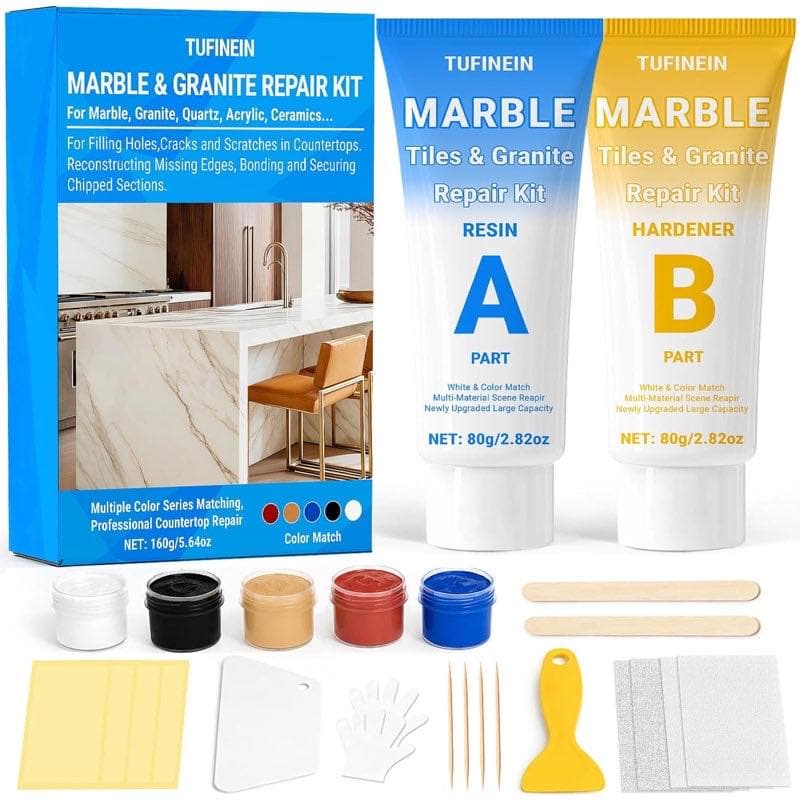
A small, stable chip in glazed ceramic is where a stone and tile paste kit can make sense. The Tufinein 160 g stone and tile repair kit is listed at £16.99, with a 4.4 rating from 185 amazon.co.uk reviews. Those figures can change and do not prove a match on every tile. It is a tile option, not evidence that the paste belongs on LVT.
Remove loose fragments without widening the chip, clean away dust and grease, and let the recess dry. Protect the surrounding glaze and mix only as the kit directs. Changing the ratio to gain working time can prevent a proper cure. Stay within the stated depth and working time. Slight overfilling may be needed if the instructions call for shaping after cure, but paste smeared over intact glaze creates more finishing work.
Match the base colour before trying to imitate veins or speckles. A neat, close-toned repair is usually less conspicuous than a pattern painted across the tile. Allow the full cure before washing or walking on the area. If the chip crosses an edge, exposes movement, sits in a shower or accompanies a crack, filler may be only cosmetic. Consider professional replacement where water ingress or sharp edges remain.
Why one repair kit is a poor bet
The tempting approach is to keep one colour-matched kit in the cupboard and use it wherever a floor loses material. A hard tile filler cures against a rigid ceramic body. A vinyl repair method has to accommodate a resilient layer and preserve its finish. Similar shades do not make those systems interchangeable.
Tile paste on vinyl can leave residue, a hard spot and a patch that shows as the plank flexes. Later manufacturer-approved work is harder if that material must first be removed. A soft wax for a minor LVT scratch may lack the hardness, adhesion or water resistance a ceramic chip needs.
Before you buy, check the exact substrate, excluded surfaces, cure and wet-area limits. If the label names tile, ceramic and stone but not vinyl or LVT, treat that omission as meaningful. A wax described for laminate or wood is not vinyl-compatible unless its maker says so. Keep leftover vinyl pieces and spare ceramic tiles. A matching original piece is often more useful than a universal-looking filler when the damage is too deep.
Which comparison should you open?
Open the vinyl flooring comparison if you are deciding whether to repair or replace a damaged plank, or if you want to compare vinyl formats more broadly. It is the relevant route when the wear layer, printed design or click joint is involved.
Choose the vinyl tiles comparison when your resilient floor is made from separate squares or tile-shaped pieces. This helps you consider a like-for-like replacement without confusing vinyl tiles with glazed ceramic.
Use the tile repair kit comparison for a small, stable chip in ceramic, porcelain or stone, subject to each kit's stated materials. Do not treat it as an LVT product: those kits are not evidence of vinyl compatibility. Identify the substrate and depth first. We reviewed manufacturer guidance and UK flooring advice; we did not laboratory-test the featured kit.
Common questions
Can I use a tile repair kit on vinyl flooring?
What is the wear layer on vinyl flooring?
When should I replace a damaged vinyl plank?
Are wood wax sticks suitable for LVT?
Will tile epoxy stain vinyl flooring?
What if the floor is made from vinyl tiles?
Is a deep gouge in vinyl a tile-chip repair job?

Products Compared publishes British-English buying guides based on amazon.co.uk listings and public UK sources. We do not run a lab and we do not invent test scores.
Related articles

Epoxy or wax tile repair: which filler fits the chip
Hard wax melts into a dry scratch. Two-part epoxy cures hard for a floor chip. Match the filler to the damage.

Chipped tile repair cost UK: kit price or the visit
A chipped tile repair kit was £7.47–£23.99 on amazon.co.uk in October 2026. Published tiler ranges sit far higher.

Glossy tile repair on matt tile: why the patch shines
A glossy patch on a matt tile is often the cured paste's own sheen. Sanding the glaze can leave a dull ring.