Glossy tile repair on matt tile: why the patch shines

A glossy tile repair on a matt tile is the cured paste’s own sheen. See when varnish, sanding or a matt stick helps, and when to leave the glaze alone.
On this page
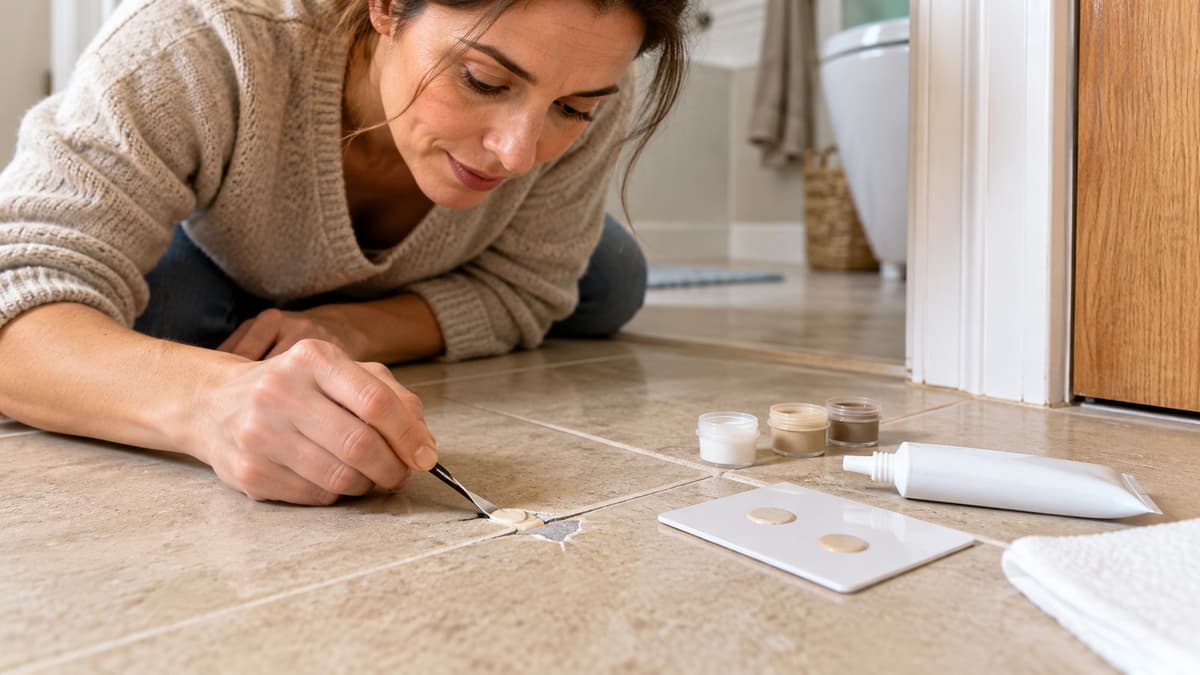
You filled a fingernail-sized chip on a matt floor tile, and the bathroom downlight now catches a bright disc about the width of a 5p. The colour is close enough that you look twice. A glossy tile repair on a matt tile is that disc: the paste has cured with a surface of its own, and the glaze around it has not changed.
Sheen and colour are two jobs. Another speck of grey moves the shade and leaves the film shiny. Sanding past the edge of the fill changes the tile, a worse mark than the highlight.
This page is from the Products Compared editorial team. The sources are the ED Supplies ceramic putty method, Konig's ceramic filler sheet, the Health and Safety Executive page on silica dust from grinding stone, and amazon.co.uk review notes for the kits in our tile repair kit comparison. We have not run a laboratory gloss meter on your tile.
In short
The shine is the cured fill, and buyers on several pastes in this set say it looks glossier than a matt tile. Keep varnish on the patch, sand only a proud ridge after the printed wait, and leave the glaze around it. A matt stick with a matt pen is a chosen sheen. A crack through the tile is a different job from a shiny spot on a sound chip.
The cure has its own sheen
Factory glaze is fired onto the tile. A two-part paste is a film you mix, often at 1:1, press into the chip, and leave until it hardens. Matt glaze scatters a bathroom downlight. A smooth cured epoxy throws a small highlight back, even when the grey is right.
PIBEIBUK PI-RE01 is £18.99 for 50 g of part A and 50 g of part B, with black, grey, cream and white pastes, rated 4.1 from 175 amazon.co.uk reviews. The first 50 praise small chips and repeat a fiddly colour match and a cure that looks shiny on a matt tile. The page prints no cure time. MendMight, the best-value kit, is 160 g at £13.59, six tints, a 1:1 mix, 24 hours to cure, then 24 hours or more before water, rated 4.1 from 171 reviews. In the first 50, beige and off-white are hard to hit, and the cured putty is often shinier than the tile. Its bullets refuse a structural crack, an unsupported deep hole and a large broken section.
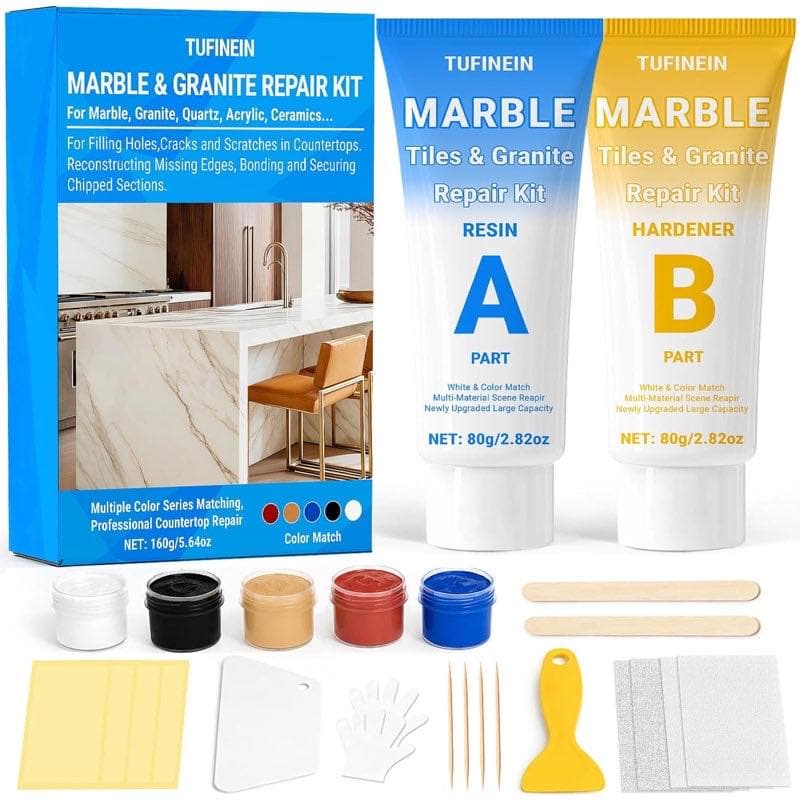
Hupeyna's bullet claims a glossy finish on purpose. The paste is £23.99, mixed 1:1, rated 4.7 from 49 reviews, with no hour count and a unit-count field of 1.0 gram against a 220 g item weight. Tufinein, our top pick, is 160 g at £16.99, five tints, a printed full cure at 24 hours, and 4.4 from 185 reviews. Those notes mention a first layer that sank. Cure a test dot first: two rice-grain lines, tint in specks, on card or an offcut, for the hours the box prints, or a full day if it prints none. If the dot flashes under the downlight and the tile stays dull, the repair will flash too. More pigment moves the colour. A second layer copies the same film. Mix and wait sit on the how to use a tile repair kit page.
Varnish stays on the filler
ED Supplies' ceramic putty method tells you to varnish the putty only, for a high-gloss finish, and to keep that varnish off the surrounding tile. On a matt floor, a brush that wanders builds a wider shiny island than the chip. Wipe a stray lick off while it is wet. Once it has dried on the glaze, sanding it dulls a ring around the repair.
Konig's ceramic filler is matt in the stick, with a separate gloss pen and a separate matt pen. The pen belongs on the fill. One thin pass of a matt pen can take a glossy highlight back a step. A second heavy pass creeps onto the glaze and still leaves the factory texture untouched. High-gloss varnish suits a gloss tile whose chip has gone dull. Wait for the paste's own clock before you coat it, because a skin over soft filler can crack or cloud. MendMight's line is 24 hours, then 24 hours or more before water. Hupeyna says fully cured and prints no hours, so a same-night coat is a guess. The buying guide shows which kits print a number.
Sanding the ring around the chip
A cured fill often sits a fraction proud. A toenail and a mop both catch the lip. After the wait on the box, sand that ridge light and flat so you take the high spot down without dishing a crater. Bondtech's white paste, at £9.99, says mix 1:1, then allow 24 hours or more before sanding. The paste is still smoother than the glaze.
Cross the edge and you cut the fired skin. Abrading matt glaze leaves a halo that scatters light differently from the patch and from the tile around it. Stop when the ridge is flush. The Health and Safety Executive's stonemasonry guidance is about crystalline silica from grinding stone. Leave the surround. If the highlight disappears only once the tile itself is cut, leave the highlight or take the tile out. Water on a short cure softens the fill. MendMight's second 24 hours is about water, so a wet cloth used as sandpaper smears paste into the grout. Wait, sand dry, and wipe the dust up. Once the lip is gone and the disc remains, the repair or replace page is the next decision.
Wax pens and a matt stick
A matt stick splits the jobs that epoxy rolls into one cure. Konig's sheet says the stick is matt, with a gloss pen and a matt pen sold apart. On a small chip in a matt wall tile, a matt pen on that stick is the closest these kits come to a dull surface you asked for. The stick suits a shallow chip or a scratch you can warm and press. A hole that hides a match head, or a crack from grout to grout, is past a wax plug, because extra wax in a deep void cools and shrinks. A packable hole puts you back with epoxy and with the film that paste cures to.
BOFRHME, the wax set in this comparison, is eleven bars at £22.99 in a 404 g pack, rated 2.5 from two ratings with no review text. The bullets describe light scratches on tile walls, tile floors and washing tables. Waterproof is unstated, and there is no harden time beyond the wax cooling. Melted bars can shift a shade and leave a 10 mm chip without a printed vein. Cool a sample beside the paste test dot. The best tile repair kits page sets the large paste samples next to this thin wax record. A dry wall chip is a fair trial. A wet floor, a crack through the tile, and any damage MendMight's bullets already refuse are weak ones.
When the sheen matters more than the chip
A floor tile in line with the window takes raking morning light, and a 5p-sized patch can flash on every trip to the basin. The same patch on a wall tile above eye height can sink into the pattern. Satin sits between a dead matt and a full gloss, and a matt pen or a gloss pen still leaves a small gap. Cure a dot in that light before you fill the chip. Sanding the glaze swaps a shiny disc for a dull ring that can read as a water stain. Once the lip is flush and shine is the only complaint, stop.
The repair has failed if the paste is still soft after the printed cure, the lip catches a sock, the colour is wrong in daylight, or an edge lifts in steam. A hard, flush, stuck patch that shines is a finish limit you can leave. Replace the tile when a hairline runs from grout to grout, a wide area sounds hollow, or a large piece is missing. A spare from the original box returns the glaze you own. If on day seven you still stop in the doorway, the matching finish is the original tile.
Common questions
Why is the patch shiny?
Can I sand the shine off?
Will sanding dull the tile around it?
Does a varnish make matt tiles worse?
Are wax fills less shiny?
Can I match a satin tile?
Is a shiny patch a failed repair?
Should I replace the tile instead?

Products Compared publishes British-English buying guides based on amazon.co.uk listings and public UK sources. We do not run a lab and we do not invent test scores.
Related articles
How to colour-match a porcelain chip
Add pigment in specks, cure a test dot, and judge the colour in daylight before you fill the chip.

Epoxy paste or hard wax for a tile chip
A two-part paste and a wax bar are both sold as tile repair. They fill different kinds of damage.

Chipped tile repair cost UK: kit price or the visit
A chipped tile repair kit was £7.47–£23.99 on amazon.co.uk in October 2026. Published UK tiler ranges sit far higher.