Independent comparisons. We may earn from shop links. More info

How to use a tile repair kit on a sound tile

Updated: 16.10.2026

A chip the size of a fingernail in a kitchen floor tile is where most people start, kit still in the amazon.co.uk box. How to use a tile repair kit is a short sequence on a tile that is still stuck: clean and dry the chip, test the colour off the tile, mix a little, fill, then wait the time printed on that kit before you level only the patch. The twelve listings are on our [tile repair kits](/hub/flooring/tiles-repair-kit) comparison. The Products Compared editorial team read those pages and the UK sources below on 15 October 2026. We did not run a lab test.

A chip the size of a fingernail in a kitchen floor tile is where most people start, kit still in the amazon.co.uk box.

Our top picks

On this page

Prepare the chip, not the whole tile

The paste sticks to clean, dry glaze and lifts off soap film or a damp hole. Wipe the chip, pick out loose crumbs, and mask a tight border so the mix stays off the glaze. Walls and Floors starts the same way: clean, then fill without a mound you will grind away. A 3 mm chip in a porcelain floor tile is a fair test if the tile sounds solid and the mark stops short of the grout. Dry a wet chip until the glaze is no longer cool. Which box to buy is on our tile repair kit buying guide.

Mix a test dot, then a small batch

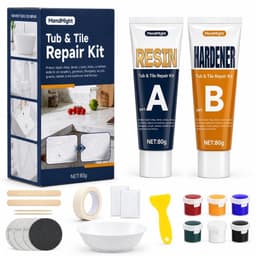
Where the listing says 1:1, mix equal parts. Bondtech, MendMight and Tufinein all print that ratio. Squeeze two rice-grain lines onto a card, fold until the streak disappears, then add tint in specks. A white base will not copy a printed pattern, and beige is a common miss in MendMight’s early reviews. Cure the dot in daylight before any paste touches the floor, then mix a smaller batch for the chip. These twelve listings do not print a working-time window. BOFRHME, at about £22.99, is melted wax for a light scratch, with no waterproof line, so the rest of this page stays with paste.

Wait the time on your kit

The cure clock is the number on your box. Bondtech says 24 hours or more before sanding. MendMight says 24 hours to cure and a further 24 hours or more before water. Tufinein says a full cure after 24 hours. Using one of those lines on a kit that prints nothing is a guess. Hupeyna says keep water off until fully cured and prints no hours. Walls and Floors tells you to keep feet off a floor fill until it has cured. Wet trays and enamel are on our shower tray repair kit page.

Level the patch and stop at the glaze

After the printed cure, level only the paste that stands proud of the chip. Inpumo’s reviews note that sandpaper dulls the shine around the repair. HSE guidance says grinding tile releases respirable crystalline silica, so keep the abrasive on the patch. If the first layer sinks, add a second after it has cured, as Tufinein’s reviewers did.

When the steps no longer apply

These steps assume one chip in a tile that is stuck. A crack across the tile, a hollow sound under several tiles, or water coming through into another room is a different job. MendMight’s bullet already refuses a structural crack. Topps Tiles tells you to replace a cracked floor tile. Stop before you mix if the tile rocks or the damage is a split shower tray. HSE advice treats epoxy skin contact as a route to dermatitis, so wear gloves even when a bullet says non-toxic. None of these listings cites a food-contact test.

One chip, one clock, then stop

If the tile is firm and the mark is a chip, clean it, cure a test dot, and mix only what that chip needs. If your box prints 24 hours, do not borrow a shorter time from another product. If the tile rocks, these steps are finished.

Common questions

Do I mix the whole tub?
Mix a test dot, let it cure, then mix only what the chip needs. A 1:1 paste such as Bondtech, MendMight or Tufinein stiffens once the two parts meet, and a full tub is wasted if the tint is wrong. A deep hole may still need a second small batch after the first layer has cured.
How long before the bath can be used?
Use the water line on your kit. MendMight prints 24 hours to cure and then 24 hours or more before water. Tufinein prints a full cure at 24 hours. Bondtech prints 24 hours or more before sanding. Hupeyna gives no hour count, so a bath the same evening is a poor match.
Can I sand the glaze to blend the edge?
Sand only the paste standing above the chip. Sanding the glaze dulls a ring around the repair, which Inpumo’s reviews already note, and dry-grinding the tile releases silica dust that HSE warns about. If the fill sits low, add a second layer after the first has cured. Grinding the surround down to the fill takes off glaze you cannot put back.
What if the first fill sinks?
A deep chip can pull the first layer down as it cures. Tufinein’s reviews describe a second layer for that sink. Wait out the cure time on that kit, then mix a fresh small batch and fill just above the surface. A thick mound on the first visit, sanded while soft, smears paste onto the glaze.
Do I need gloves if the bullet says non-toxic?
Wear gloves. HSE guidance on epoxy resins treats skin contact as a cause of allergic dermatitis, whatever a seller bullet claims. Non-toxic on these listings is not backed by a cited test. Keep the mix off your hands and off anything you eat from. A floor or wall chip is the use these pastes describe.

Related pages

Sources

Public UK sources from the research digest. amazon.co.uk prices and stars were captured on 15 October 2026.

  1. HSE: epoxy resins and hazardous substances in woodworking (retrieved 15.10.2026)
  2. HSE INDG233: epoxy resins and allergic contact dermatitis (retrieved 15.10.2026)
  3. HSE: silica dust when cutting or grinding tile and stone (retrieved 15.10.2026)
  4. Consumer Rights Act 2015, section 22 (retrieved 15.10.2026)
  5. GOV.UK: private renting repairs in England (retrieved 15.10.2026)
  6. Topps Tiles: replacing a damaged tile (retrieved 15.10.2026)
  7. Walls and Floors: chips, scratches and cracks in floor tiles (retrieved 15.10.2026)
  8. Cramer UK repair kit: not for hairline or movement cracks (retrieved 15.10.2026)