Colour match porcelain chip: start lighter than the tile
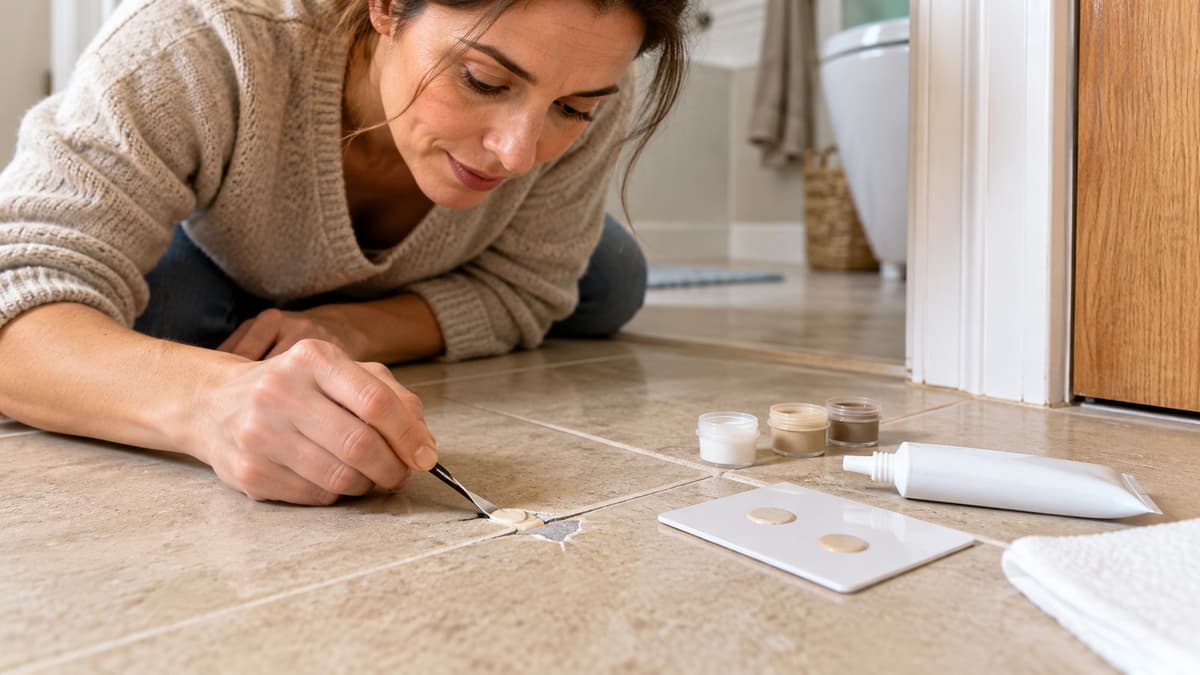
Too much pigment turns a porcelain chip cream or grey. Start lighter, cure a test dot off the tile, and stop if the glaze is veined or the patch will shine.
On this page
The chip is the size of a fingernail, in a beige porcelain floor tile by the bathroom door, and the kit has a white paste plus a few tiny pots. Colour match porcelain chip repairs fail in the same place on the amazon.co.uk reviews in this set: too much pigment, then a gloss patch on a matt tile. By the next day the smear has gone cream, or a flat grey, and it shines under the downlight while the glaze stays dull.
Start lighter than the glaze, cure a test dot on card, and stop if the tile is veined.
Products Compared read those amazon.co.uk listings on 15 October 2026. Prices and stars are that day's listing figures, not a laboratory colour test. A purchase through a comparison link can earn us a commission at no extra cost to you.
In short
Start paler than the dry tile, because a speck of yellow is enough to push ivory filler towards cream, the overshoot Hupeyna reviewers describe. Cure a test dot for the time printed on your kit, and fill the chip only when you can live with that dot in daylight.
Start lighter than the tile
The white paste is already a colour. On the Hupeyna listing, one review describes the untinted mix as off-white or grey, and white repairs are called close. Almond and ivory were the shades people missed. The named pigments are white, beige, grey and black.
Hupeyna reviewers describe a speck of yellow taking ivory too far, and the same pattern shows on almond. Stir that speck, on a cocktail stick, into a pea of paste, and stop while the smear is lighter than the dry tile. A squeeze from the nozzle is how a beige floor becomes a cream patch.
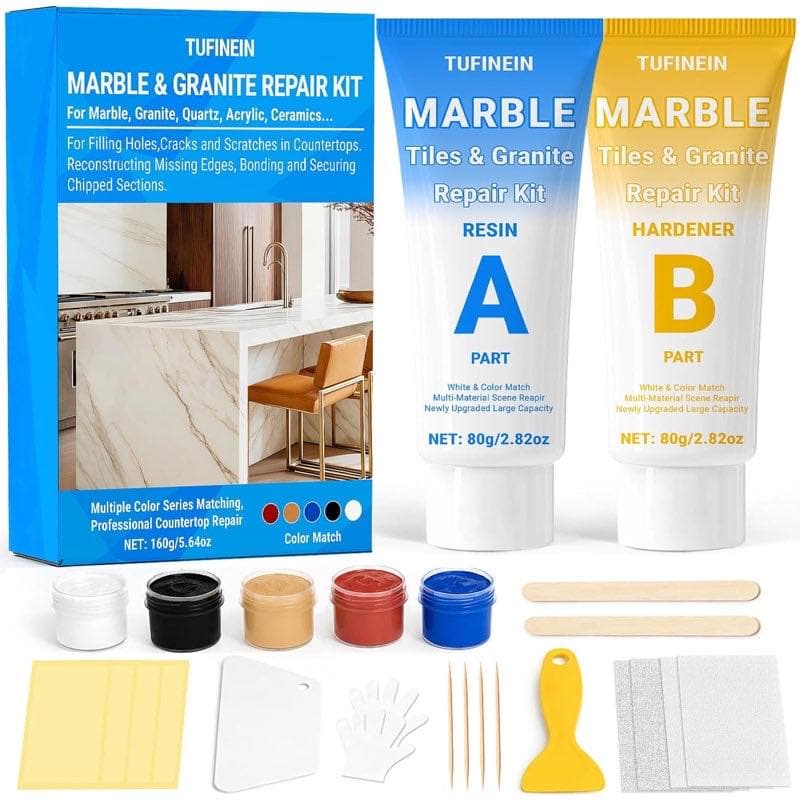
Add black only to a fresh pea, and only if that cured dot is still too pale. MendMight's tints are white, red, black, blue, yellow and green, with no brown, and the first 50 reviews find beige hard to hit.
Tilemaster's polyester bundle, outside this set, notes that a little brown turns white filler cream, using about 3 per cent hardener. Bondtech, MendMight, Tufinein and Hupeyna print 1:1.
Cure a test dot, not the chip
Mask the chip so a trial smear cannot land in it. Compare a cured dot with the dry tile, in daylight, from the doorway. A downlight flatters a wet smear, and damp porcelain looks darker than the same tile once it has dried. Filling and levelling sit on the how to use a tile repair kit page.
- Put gloves on first. The Health and Safety Executive treats epoxy resins as skin sensitisers, and a harmless line on a listing is a seller claim.
- Mix a pea in the ratio on your kit. Bondtech, MendMight, Tufinein and Hupeyna print 1:1.
- Add the lightest useful tint as a speck, and keep the paste paler than the tile.
- Press a dot onto an offcut or white card, note the time, and leave it for the cure that kit prints.
- Fill the chip with a fresh batch only when you can live with the cured dot from the doorway.
An offcut from the same box beats white card, because paper makes a warm mix look darker than it will on beige porcelain. Tufinein and MendMight each state 160 g, which is a poor reason to mix the whole tub while you are still guessing.
Clocks stay with the brand that printed them. Bondtech says 24 hours or more before sanding, MendMight adds a further wait before water, and Tufinein says fully cured after 24 hours. Hupeyna prints no number. RE03 has a minutes line with no hour count, and ED Supplies' 15-minute working time belongs to a different putty.
The card here is the Tufinein 160 g kit, about £16.99 on 15 October 2026, with 4.4 from 185 reviews. It leads because it prints a 24 hour cure and has the largest review file in the set. Its five pastes are not named as beige or brown.
Beige, grey and almond are the hard colours
White enamel is where these kits are praised, because the base is already close. Beige, warm grey and almond are where complaints gather, on Inpumo, PI-RE01, MendMight, Hupeyna, Rivvra and YiJiAre.
MendMight, about £13.59 and 4.1 from 171 reviews, lists white, red, black, blue, yellow and green. The first 50 reviews call beige hard, and the cured putty often shinier than the tile. The listing allows a small chip and refuses a structural crack or a large break. Hupeyna, about £23.99 and 4.7 from 49, names beige, yet almond was still hard, and it prints no cure hours.
PI-RE01, about £18.99 and 4.1 from 175, is white plus black, grey and cream, and buyers mention a fiddly, shiny cure. One speck of black in the cream moves a warm grey a long way. RE03, about £18.99 and 4.5 from 51, names beige, cream, almond, grey and black. It prints no ratio and no hour count, the colour field says Orange, and one review found untinted white yellower than the basin. YiJiAre, 4.3 from 113, uses the same six colours as MendMight, and some reviews say the paste went grey when sanded.
For a grey tile, cure one dot with black only and one with a smaller warm speck, then judge both on the dry tile in daylight. The buying guide lines those pigment lists up, and the tile repair kit comparison holds all twelve. If two dots bracket the tile, use the paler one.
Sheen is a separate problem from hue
A close beige can still show under the bathroom light. MendMight reviews describe cured putty shinier than the tile, and PI-RE01 reviews describe a shiny cure. Matt porcelain reflects less than a gloss epoxy skin, so the patch reads as a wet spot after the hue is accepted.
Sandpaper will not turn the epoxy skin into the glaze you chipped. Inpumo reviewers, rated 4.5 from 43, describe the abrasive dulling the surround. YiJiAre reviewers describe paste going grey as it is sanded. The Health and Safety Executive warns that grinding tile releases respirable crystalline silica, so keep the paper on the filler.
Walls and Floors wants a floor repair sanded flush, because you feel a proud patch underfoot. A few strokes after your kit's own cure, then stop. Bondtech puts sanding at 24 hours or more, and a kit with no sanding time borrows nothing from that bullet. If the first fill sinks, as Tufinein reviewers found, tint the second layer from the same dot. A paler cap on a darker base looks like a blister.
When the tile pattern will not be matched
A plain tile can take a flat tint. A vein, a speckle or a printed grain cannot. Walls and Floors says a standard filler does not reproduce stone grain, and the kits here that name marble still give you one flat colour. The vein stops at the edge of the fill, so a spare from the same batch is the match if you kept one.
Topps Tiles says to replace a floor tile cracked through the body, because filler in that crack opens again. A hollow tap is a separate stop: paste on the face leaves the void in the bed, which is the choice on the repair or replace page. BOFRHME, about £22.99, is eleven wax bars for a scratch, rated 2.5 from two reviews. Wax can suit a hairline, and it is the wrong body for a chip under a shoe. The best tile repair kit page ties each type to a surface.
Leave a small chip when the hue is close, the extra shine is slight, and the tile is out of the main view. Replace it when a spare would disappear and the patch is what you see first. A disliked beige, once the pots behaved as pigment, sits outside the 30-day right to reject a kit that is not as described, under section 22 of the Consumer Rights Act 2015.
Common questions
Do I add the dark tint first?
Why did the patch go too yellow?
Can I match a veined porcelain tile?
Should I tint before or after the hardener?
What if the cured colour is darker than the wet mix?
Can I paint the patch afterwards?
Will sanding fix a bad colour?
When is a bad match better replaced?

Products Compared publishes British-English buying guides based on amazon.co.uk listings and public UK sources. We do not run a lab and we do not invent test scores.
Related articles

Chipped tile repair cost UK: kit price or the visit
A chipped tile repair kit was £7.47–£23.99 on amazon.co.uk in October 2026. Published tiler ranges sit far higher.

Glossy tile repair on matt tile: why the patch shines
A cured epoxy patch can shine on a matt tile. Sanding the glaze to blend it dulls the surround.

Epoxy or wax tile repair: which filler fits the chip
Paste and wax bars are both sold as tile repair kits. Melted wax fills a scratch. Porcelain wants a hard paste.