Cracked grout or cracked tile: which line failed
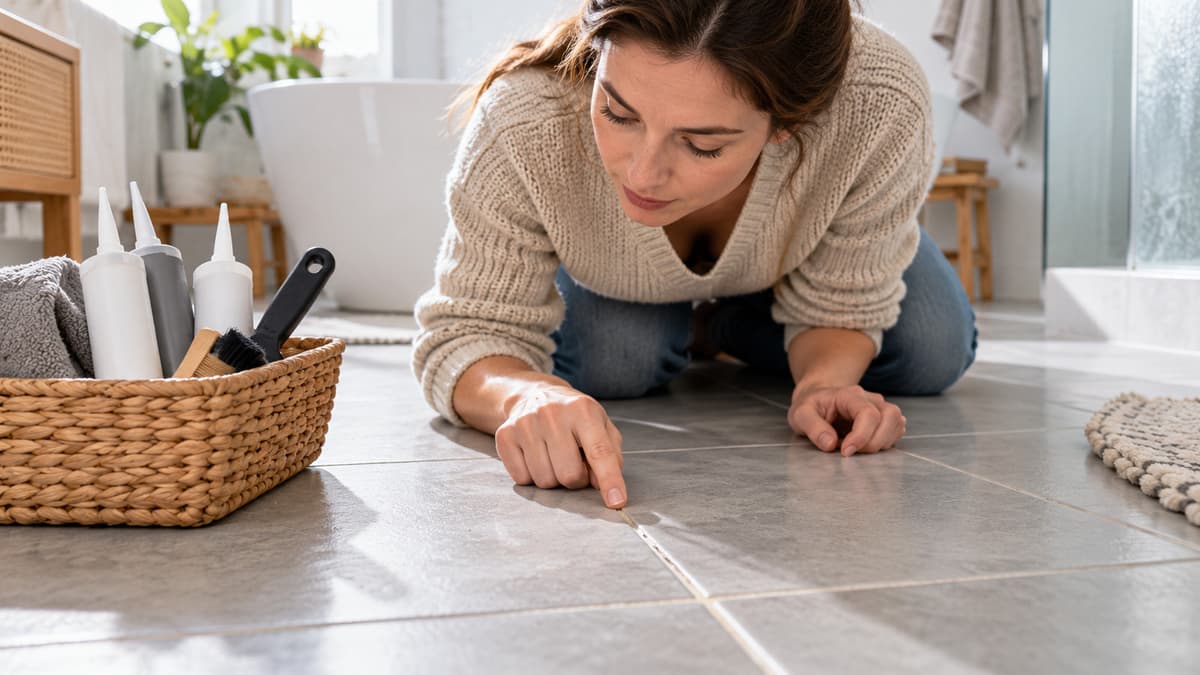
Cracked grout and a cracked tile need different materials. Grout fills a sound joint, silicone takes a change of plane, and paste only fills a glaze chip.
On this page
You notice a pale line on the bathroom floor, and the kit in the basket says it fills cracks. The question cracked grout or cracked tile decides which tube belongs there. If the line follows the grid and stops at the corners, you are looking at the joint. If it crosses the glaze and ignores the grid, the tile itself has split.
Grout, silicone and a tile-paste kit are three materials with three jobs. This page uses public notes from BAL, Bromley Tilers and The Tile Association, plus the amazon.co.uk tile-repair listings we compared on 15 October 2026. We did not test those pastes in a lab.
In short
A cracked grout joint sits in the gap between tiles on the same plane. A cracked tile runs through the glaze or the body. Use grout in a sound joint, silicone where two planes meet, and tile paste only for a chip in a tile that still rings solid. If the same joint opens again, or the tile sounds hollow, another tube of filler spends the money twice.
Look at where the line runs
Stand over the mark with the light from the side, so the edge throws a shadow. A grout line is the gap the tiler left, and it turns the corner with the grid. A crack in the tile starts in the glaze and keeps going after the joint has ended. A chip at the edge can sit beside the joint and still be tile damage, because the glaze is gone and the body shows.
Run a fingernail across it. Crumbled grout leaves a ditch between two intact edges of glaze. A crack in the tile is a split in one of those edges, sometimes so fine that the nail catches on one side only.
Count how many tiles the mark crosses. One gap, with both tiles still whole, is the joint. A line that enters a tile and leaves by the far side is the tile. Several joints opening in a straight run point at movement in the floor or the wall, which is why one tube rarely finishes that pattern.
Wipe a short length with a dry cloth if sealant, dirt or a busy glaze hides the edge. If you still cannot tell the joint from the tile, stop. Guessing with paste fills the wrong gap and leaves the real one open.
Grout, silicone and tile paste
Grout is the fill between tiles on the same plane. Cementitious grouts carry a CG class under BS EN 13888, and reaction-resin grouts carry RG. CG2 is the improved cementitious class, and the bag should name it. Bromley Tilers put the rule plainly: grout belongs between tiles on one plane.
Silicone, or a formed movement joint, belongs where the plane changes: wall to floor, bath rim to wall, tray to tiles. Those junctions move as the fitting and the building move, and grout there sets hard and then splits. Grout or silicone at the bath edge comes down to silicone at the edge and grout on the flat field.
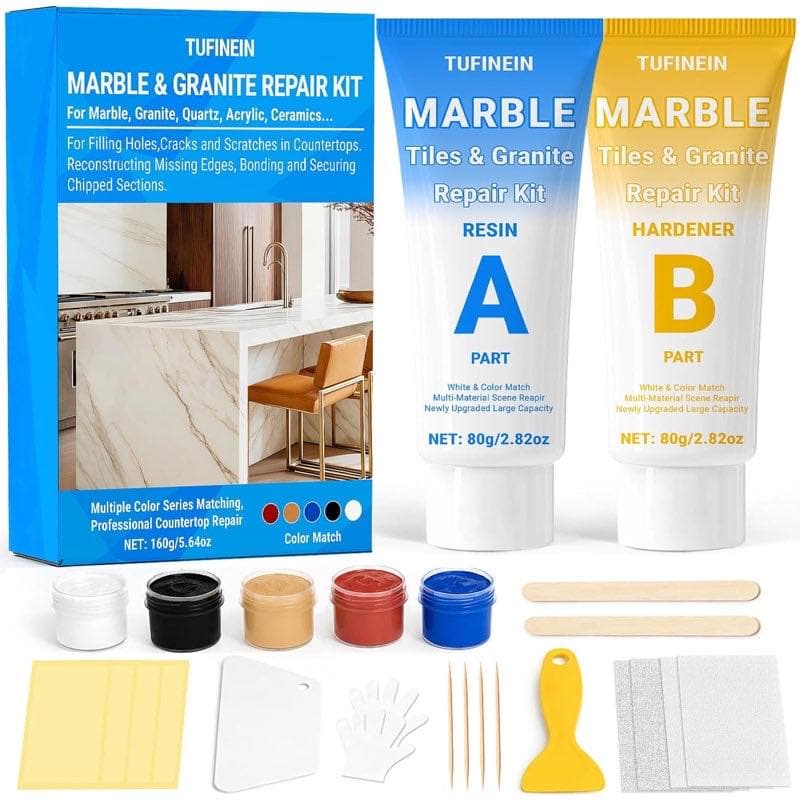
Tile paste is the third material. The kits we compared are mostly two-part epoxy pastes for a chip, scratch or short crack in a hard surface. They are fillers. They are not a CG2 grout, and they are not a movement joint.
Should you fill a cracked grout line with tile paste? Use grout in the joint. Use the paste on a chip in the glaze beside it, once you know the tile is still sound.
One basket for all three is the usual mistake. A tube that says "cracks" on the front is usually a chip filler, which is what the tile repair kits in our set are for. A waterproof claim on a paste listing does not make that paste the seal at the bath, and it does not make it grout for a joint that opens and closes through the year.
Why the joint cracks again
BAL's note on grouting problems points at movement, a mix that was too wet, and joints that should have been movement joints. It points on to BS 5385, the British Standard for tiling. A neat new line on top of the same movement opens in the same place.
Follow the water stated on the next bag, and keep that stiffness. Slackening the mix so it pushes in faster adds water and weakens the set, so a fresh joint fails on a floor that has not moved at all. If you are deciding whether to regrout or replace the tile, the cause comes before the bag.
Flexible grout is often sold as the cure for that movement. Bromley Tilers are clear that it does not stand in for a movement joint, and it does not stand in for silicone where two planes meet. The perimeter, and any change of direction, stay their own details. One joint, opened once beside a knock you remember, on tiles that ring solid, can be regrouted. The same joint opening after you have filled it means the floor or the wall is moving, and a tiler should see the bed before you buy another bag.
The tap test beside the joint
Tap the tile on each side of the mark with a knuckle or a coin, then tap a tile further away that you trust. A solid tile gives a short, hard note. A hollow tile gives a duller, drum-like note. Do that before you decide the crack is only cosmetic. A hollow tile beside a cracked grout joint can mean a void in the adhesive, so the tile is bridging and the joint takes the strain.
Filler on the face, and new grout in the line, stay on the surface. Neither fills a void under the tile. If the note changes only on the tile next to the crack, read the choice between a surface fill and a tile that has to come out in the repair or replace guide. A hollow tile with a crack through the body is a replacement.
A hollow note is a warning, and it is not proof the tile is loose enough to lift with a knife. Coverage varies, so one dull tile in a solid floor deserves a second tap and a look at whether the crack grows over a fortnight. Several hollow tiles, with open joints above them, are a tiler's visit. A paste kit will not re-bed that run, however waterproof the listing sounds.
What you buy for each job
Buy grout when the gap between sound tiles on one plane has failed and the tap is solid on both sides. A wet floor wants a grout sold for that exposure, with the BS EN 13888 class on the bag. Match the colour to a dry piece of the old joint, because a wet smear looks darker than the line once it has cured.
Buy a sanitary silicone for the bath edge, the tray and the wall-to-floor corner. If that seal has split, replace it once the gap is clean and dry. Bridging it with grout puts a hard fill where the detail was meant to move, and a fat bead smeared onto the tiles peels after a short run of showers.
Buy tile paste when one tile is chipped, the crack stays in the glaze, and the tile rings solid. In our set the largest review file with a printed cure is [Tufinein](https://www.amazon.co.uk/dp/B0GVHDY6D5?tag=pcuk26-21%29%3A&creatorsDisableRedirect=true 160 g of white paste, five tints, a 1:1 mix and a 24-hour cure, at £16.99 with 4.4 from 185 amazon.co.uk reviews on 15 October 2026. Reviews describe a second layer when the first fill sank. The listing names marble, granite, quartz, acrylic, porcelain and ceramic, and it names no grout class.
That kit is the wrong buy for a grout line, a bath edge or a hollow tile. Sort the boxes in the buying guide, and a chip beside failed silicone on the shower and bath page. Call a tiler when the crack crosses the tile, a run of joints has opened, several tiles sound hollow, or a filled joint has opened again. A qualifying amazon.co.uk link may earn us a commission at no extra cost to you.
Common questions
Is the crack in the line or in the tile?
Can I push tile paste into the grout?
Why does the same joint crack again?
Where does silicone go instead of grout?
What is a CG2 grout?
Does a hollow sound change the answer?
Can flexible grout replace a movement joint?
When do I call a tiler?

Products Compared publishes British-English buying guides based on amazon.co.uk listings and public UK sources. We do not run a lab and we do not invent test scores.
Related articles
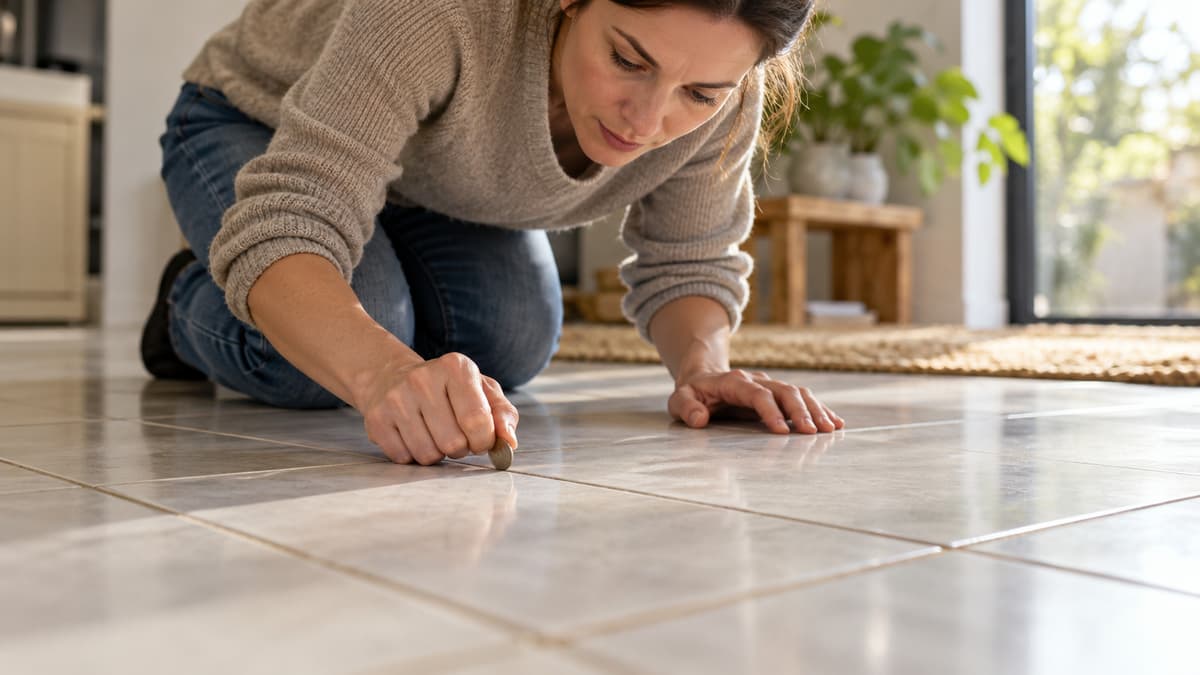
What a hollow-sounding floor tile means
A dull note beside an open joint can mean a void under the tile. Filler on the face leaves that void.
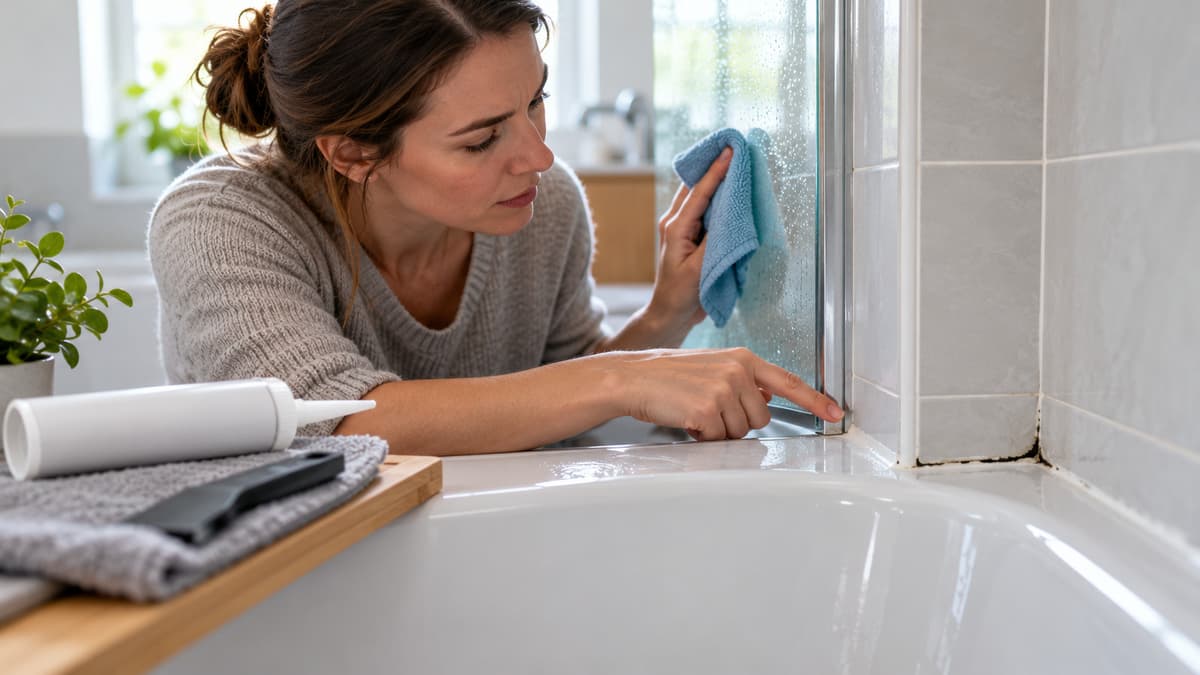
How often to reseal a bath: yearly look, then the signs
Check bath and shower joints once a year. Replace silicone when it cracks, lifts or leaks.

Cracked tiles over underfloor heating
A new crack over a heated floor is a movement-joint question. Another tube of paste leaves the cause.