Hollow sounding floor tile: a void, not a loose tile
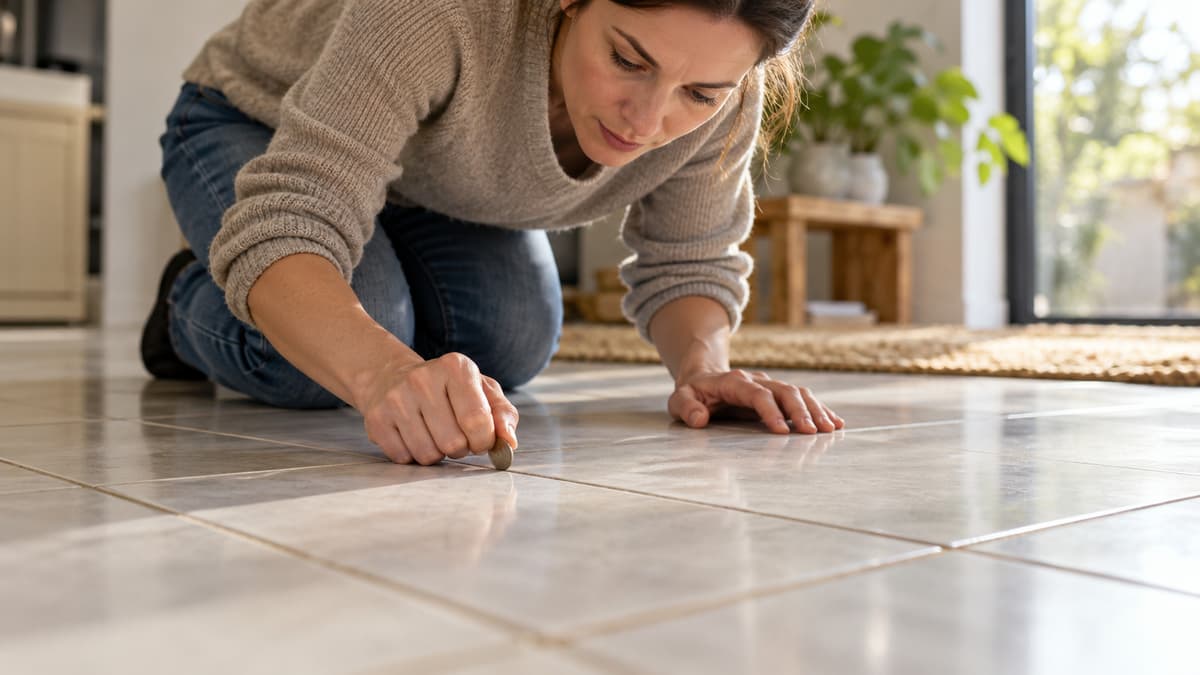
A hollow sounding floor tile is a void under the tile, not proof it is loose. Paste on the face does not fill that void. A moving tile needs a tiler.
On this page
You tapped a floor tile with a knuckle and it answered like a drum. A hollow sounding floor tile means there is a void under that tile. It does not, on its own, mean the tile is loose, and it does not mean a repair kit squeezed onto the glaze will fill the gap you cannot see.
This page is from the Products Compared editorial team. We used public notes from Cotswold Maintenance Group, Bromley Tilers, Fix-A-Floor and Topps Tiles, plus the amazon.co.uk tile-repair listings we compared in October 2026. We did not lift your floor. Amazon links are affiliate links.
In short
A hollow note is a void. If the tile is firm, the grout is intact and the area is dry, Cotswold's guide says it can be left. If the tile moves, or the grout has failed, the bond is going, and new grout will not stick it down. Paste from a chip kit stays on the face. It does not re-bond the bed. A spreading patch is a tiler's job, not another tube.
The sound is a void
A solid tile, stuck across its back, answers with a short hard tick. A tile with air under part of the bed answers with a lower, longer note. Cotswold Maintenance Group's account of hollow-sounding tiles calls that note a void, and it refuses the leap from "I heard a drum" to "the floor has failed". The failure, in their framing, arrives when the tile moves or the grout has gone.
That distinction matters because plenty of floors were laid with a comb that left ribs of adhesive and channels of air. A large tile can bridge those channels for years. The sound was there from the day the grout set. You noticed it when you dropped a spoon. Age of the sound is useful. A note that has always been there, under a firm tile, is a different story from a note that appeared after a crack.
Tap a neighbour you trust, then the suspect, then the neighbour again. The comparison is the test. A whole room laid on a timber floor can sound duller than a tile you remember from a concrete hall. You are listening for the odd one out, not for a studio "solid". Mark the dull tiles with tape. One isolated square in a dry corner is the leave-it case Cotswold describes. A cluster is a map of the bed.
Press the tile before you buy a filler
The tap is incomplete without your weight. Press the centre, then each edge, and watch the joints. A firm tile does not pump the grout. A debonded tile clicks, rocks, or opens a hairline at one side as the other side rises. That movement is the point Bromley Tilers tie to a failed bond. Cracked grout plus a hollow tap is their combination for "this is no longer stuck", and they are plain that regrouting does not glue it back.
Do the press test in the shoes you actually walk in, not only with a fingertip. A rocking tile can feel solid under a finger and move under a heel. If you are unsure, lay a straight edge across the joints and press again. Movement you can see beats an argument about the pitch of the knock.
Damp changes the leave-it rule. Cotswold's calm case is a firm tile, intact grout, and no damp. A hollow tile in a wet room, with stained grout or a soft joint, is not that case. Water in the void is a path under the finish. Do not seal the face and hope the bed dries. Find where the water is coming from before anyone talks about adhesive. Write the result down while you can still hear it: which tile, dull or firm at the edges, grout intact or open, and whether the area is dry.
Why a chip kit cannot reach the bed
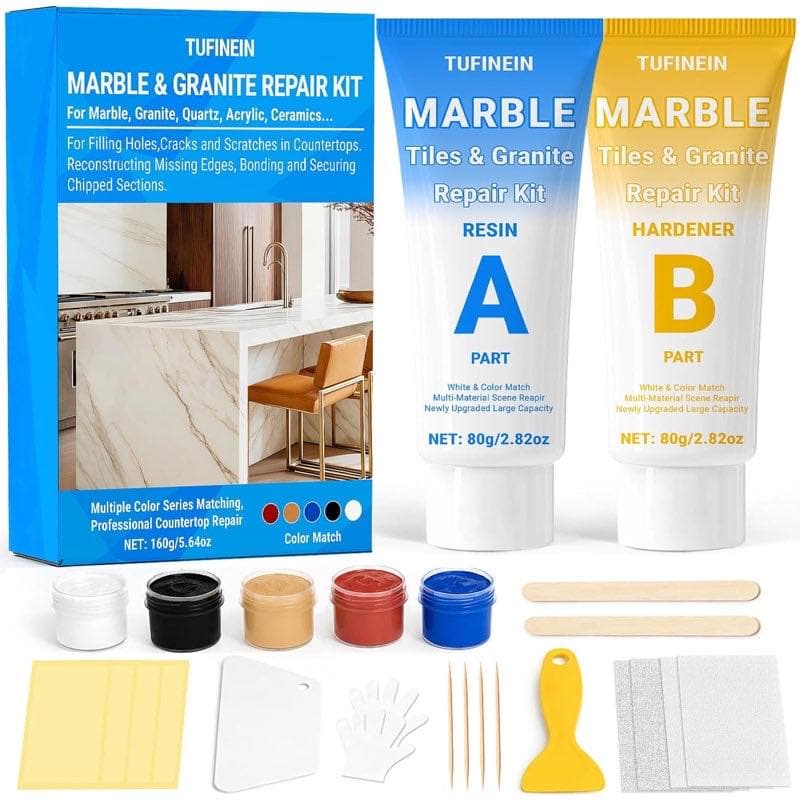
The kits in our tile repair comparison fill a chip, a scratch or a short crack in the surface. The top pick, Tufinein's 160 g stone and tile paste, is listed at £16.99 with 4.4 from 185 amazon.co.uk reviews, a 1:1 mix and a stated 24-hour cure. Reviews describe a second layer when the first fill sinks. All of that happens on the face you can see. Nothing in that box travels through a 10 mm porcelain tile into a void behind it.
Wax bars sold as repair kits are the same limitation in a softer material. They colour a chip. They do not re-bed a tile. If you are choosing between paste and wax, that choice belongs on a tile that rings solid. On a drumming tile it is the wrong shop.
Bromley Tilers' warning about grout belongs here too. A neat new joint over a loose tile looks finished until the tile works and the joint opens. You have spent the bag and you still have the void. Face filler can hide a chip at the edge of a hollow tile and leave the bed untouched, so the chip returns when the edge knocks the neighbour.
Fix-A-Floor's hollow-floor page describes an injection adhesive for voids. That product is not a tile repair kit in the sense of our comparison, and this page does not turn it into a drilling guide. Injection, where a tiler uses it, is for a limited void under tiles that are still whole. It is a different purchase from a 160 g paste. When the hollow area is spreading, lifting and re-bedding is the repair Topps Tiles' replacement guidance is pointing at: a damaged or failed tile comes up, it is not skimmed forever.
Doorways, showers and large tiles
Where you stand decides how long a void stays theoretical. A hollow tile in a doorway takes a heel strike on every trip to the kitchen. A void under a shower tile sits in water. A hollow tile under a washing-machine foot takes a point load the next tile never sees. Those three are poor "leave it" candidates even when the grout still looks complete, because the next symptom is a crack, not another dull note.
Large tiles make a small void louder and more dangerous. The tile spans the gap, sounds hollow, and then snaps across the unsupported span when a load hits the middle. A 600 mm tile with a dull centre is not the same object as a small wall mosaic with one quiet square. If the crack has already crossed the body, you are past a monitoring stage. The repair or replace page is the decision between a chip in a sound tile and a tile that has to come out.
Underfloor heating adds movement. A new hollow patch that arrives with a crack on a heated floor is a movement-joint and adhesive question. Paste on the glaze does not add the joint the floor needed. Walk gently until that is looked at. Do not "test" a rocking tile by stamping.
What to do next
Write down what you found: how many tiles sound hollow, whether any move, whether the grout is open, and whether the area is wet or on a walked route. One firm, dry, intact tile can stay. Photograph the tape map so you can see next month whether the patch grew. Growth is the signal to book a tiler, not to buy a larger tube.
A tiler re-beds when the area is spreading, when tiles move, or when cracks run through the body. Replacing a single failed tile is a normal job if you still have a spare from the original box. Topps Tiles' notes on damaged tiles start from replacement, which is the right frame once the tile is cracked or loose. A chip kit remains the right frame only for a chip in a tile that ticks like its neighbours.
If you rent, the floor is the landlord's finish as soon as you are talking about lifting. Tell them about movement and about water. Do not drill the tile to prove the void. The tap and the press test are enough to describe the fault. A hollow sounding floor tile you can leave is the firm, dry, isolated one. Everything else is the bed, and the bed is not in the paste tube.
Common questions
Does a hollow tile always mean it is loose?
How do I test the tile?
Can a repair kit fill the gap underneath?
Is one hollow tile different from a whole patch?
Is a hollow tile in a doorway worse?
What if the grout is also cracked?
Should I drill and inject something?
When do I stop walking on it?

Products Compared publishes British-English buying guides based on amazon.co.uk listings and public UK sources. We do not run a lab and we do not invent test scores.
Related articles

Cracked tiles over underfloor heating
A new crack on a heated floor is a movement-joint question. Paste on the face leaves the cause.
Cracked grout or cracked tile
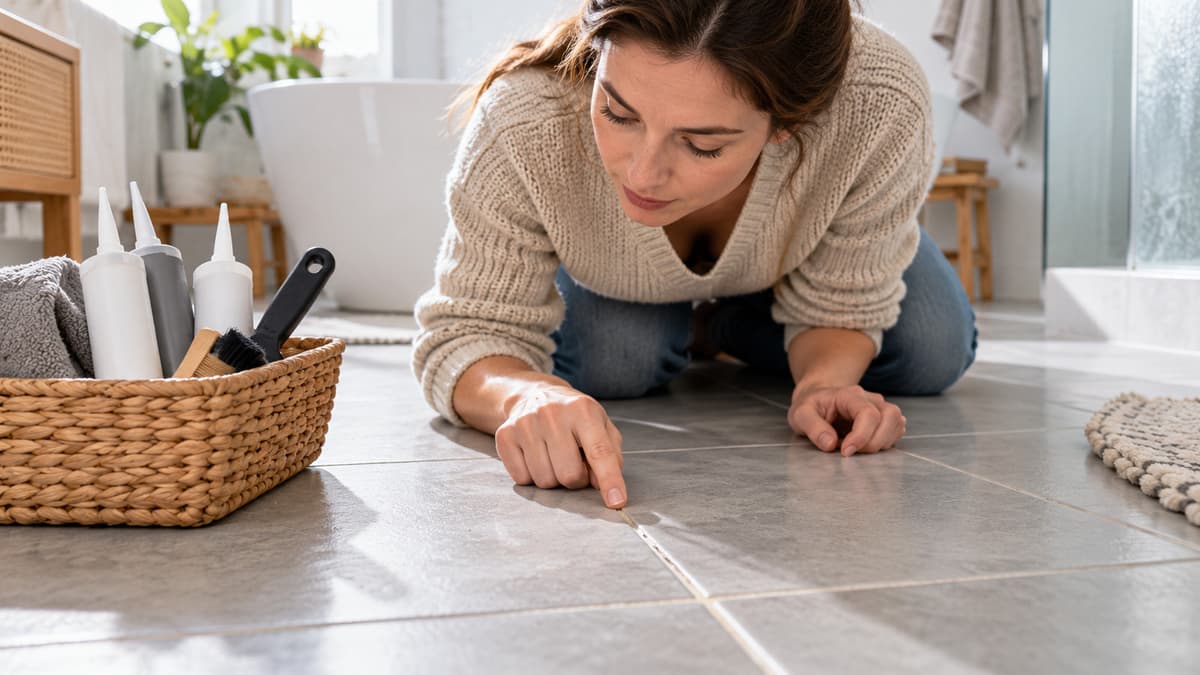
A line in the joint and a crack through the glaze are different jobs. A hollow note changes both.

Chipped tile repair cost UK: kit price or the visit
A chipped tile repair kit was £7.47–£23.99 on amazon.co.uk in October 2026. A visit is a different bill.