Independent comparisons. We may earn from shop links. More info

How to lay laminate underlay

Updated: October 2026

The roll is in the room, or you want the job straight before you order tape. How to lay laminate underlay, for the foil rolls and the XPS boards in this set, is a short sequence: a dry subfloor, foil towards the mineral floor where the listing has a foil, edges butted rather than overlapped, seams taped, then the planks with their own gap at the wall. Which roll to buy stays off this page. The [acoustic underlay comparison](/hub/flooring/acoustic-underlay) is the product table. The steps follow EGGER’s UK underlay note, Quick-Step’s UK install page, and the EPLF installation bulletin, plus the tape name these listings print. Products Compared has not laid these products. The shelf date is 19 October 2026.

The roll is in the room, or you want the job straight before you order tape.

Our top picks

On this page

Check the subfloor before you unroll

Start with the floor you can see, not with the colour of the roll. Click wood and laminate need a surface that is dry and flat enough that the underlay is only taking up minor imperfections. A roll of 3 mm foam will not correct a ridge you can feel with a straight edge, and it will not dry a damp slab. If the concrete is visibly wet, or a moisture meter is outside what your flooring sheet allows, stop. A professional should deal with a wet slab. Laying foil over standing damp traps water against the foam. One Smoothfit review describes foam that filled with water, with no leak the buyer could find, and laminate that lifted after a day. On a wood-based subfloor, EPLF’s underlay bulletin says not to add a vapour barrier, because the deck needs to breathe. A silver or gold foil face is the wrong extra there. On concrete or screed, the same bulletin treats a vapour-control layer as normal, with a practical sd of at least 75 m. These pages name a foil membrane on the silver rolls and on AcuStick’s gold roll. They do not print an sd value. Royale Sonic Gold does not name foil in the bullets at all. If that is the roll you bought, do not invent a gold face the page never claimed. Sweep grit first. A stone under 2 mm foam becomes a lump under the click joint, and the thin Royale foam tears if you drag it. FloorPro’s XPS pack is 21 sheets of 590 mm by 790 mm, and a review says they break easily, so carry them flat.

Foil down, edges butted, tape the seam

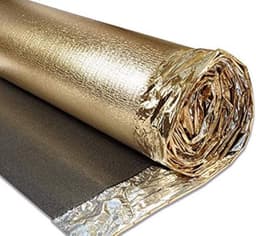
On a mineral floor, put the foil face down. EGGER’s UK note says the foil side goes towards the subfloor, the edges are butted, and the seams are taped. A FloorPro silver review says the same thing: foil side down on concrete. Do not flip the roll so the shiny side shows. Where the listing has no foil, you are laying foam only, and a concrete floor still needs a vapour layer from somewhere else if your plank sheet requires one. Do not overlap the foam. An overlap is a ridge. EGGER says butt the edges. Quick-Step’s UK laminate page says to run the underlay in the same direction as the planks, and to use the flap or tape so the moisture screen is continuous. These listings do not describe an overlap flap. AcuStick gold, the silver rolls from AcuStick, FloorPro, and Royale, and the XPS bullets, tell you to use Barrier Pro X tape. Royale silver calls that tape a warranty requirement. None of them says the tape is in the box. If the tape is still in a basket, the seams stay open. EGGER allows about 10 mm where the underlay meets the wall. EPLF’s installation bulletin puts the expansion gap of the finished floor at 8 mm to 12 mm. Follow the plank maker if their sheet names a different gap, including breaks in doorways and on long runs. The underlay should not creep up the wall and get trapped under the skirting.
Royale Royale 2 mm white foam

Testsieger

Royale Royale 2 mm white foam
6.4/10about £12.99

When the roll fights back

Tears are a handling fault, not a sign you should double the layer. Reviews of the AcuStick gold roll mention tears when the foam is walked on, and the 2 mm white foam tears if you rush it. Kneel on a board, or keep your weight on the subfloor, until the planks cover the foam. A small tear can be taped if the piece still lies flat. A long split that leaves a bare stripe should be replaced, because the click edge will sit on nothing. Gold-roll reviews say a stated 15 m² came up short, in one case under 12 m² against the 15 m² claim. Measure the roll before you start the planks. If the room is short of foam, you need another piece the same thickness, butted and taped, not a thicker offcut. The two-roll AcuStick title is not a reliable spare: its weight field is still 3 kg and its reviews match the single roll. Under the Consumer Rights Act 2015 the roll should match the description. That is a return, not a reason to stretch foam. Do not double the underlay. One review piled a second gold layer on the first. Two layers of 5 mm is a soft pad the plank sheet did not describe. Thickness belongs on 3 mm or 5 mm acoustic underlay, before a second roll comes out of the bag. Stop and get a fitter when the slab is wet, when a floor has already lifted, or when a separating floor must pass a national sound test. A taped seam does not produce an Approved Document E result.

A dry room is the job these steps describe

Foil down on a mineral floor, edges butted, seams taped with the tape the bullets name, and the wall gap left for the planks. A torn roll on a dry, flat bedroom floor is a DIY repair. A failed floor over heating, a wet slab, or a neighbour dispute about noise is not. If you are still choosing the roll, use the buying guide rather than compensating with extra layers on the day. A qualifying purchase through our links can earn a commission at no extra cost to you.

Common questions

Does the foil face the floor or the laminate?
On concrete or screed, the foil faces the floor. EGGER’s UK note and a FloorPro silver review both put the foil side down. The foam faces the laminate. Listings that never mention foil, including Royale’s 2 mm white roll and Royale Sonic Gold’s bullets, do not give you a foil face to aim. On a timber subfloor, do not add a vapour barrier the plank sheet did not ask for.
Do I overlap the rolls?
No. Butt the edges so the foam meets without a ridge, then tape the seam. EGGER says not to overlap. An overlap becomes a line under the planks. Quick-Step tells you to keep the moisture screen continuous with a flap or with tape. These rolls are the tape version, where the listing names a tape at all.
What tape do these listings name?
Barrier Pro X, on the AcuStick gold roll, the 3 mm silver rolls that mention tape, and the XPS board pack. Royale silver calls it a warranty requirement. The tape is not stated as included. Smoothfit and the 2 mm white foam do not name a tape. Buy the tape with the roll if the bullets tell you the seams must be joined.
How big a gap at the wall?
EGGER’s underlay note uses about 10 mm. EPLF’s installation bulletin uses 8 mm to 12 mm for the finished floor’s expansion gap. Use the figure your plank sheet prints if it differs, including doorway breaks. Do not run the underlay up the wall so the skirting pins it. The gap is there so the floor can move.
What if the roll tears while I walk on it?
Stop walking on the bare foam. Reviews of the 5 mm AcuStick roll and the 2 mm white foam both describe tears from rough handling. Tape a small split if the sheet still lies flat. Replace a piece that leaves a bare stripe under a joint. Do not fold a second layer over the tear.
What if the roll does not cover the room?
Measure it before the planks go down. A review of the gold rolls found less than the stated 15 m². Butt and tape a second piece of the same thickness, or return a roll that does not match its description. Do not stretch the foam, and do not stack a thicker offcut to fill the gap. The two-roll listing is not automatic proof you have 30 m².
When should I stop and get a fitter?
Stop if the slab is wet, if laminate has already lifted, or if a separating floor must be tested under the building rules. A weekend lay on a dry, flat room is the job these steps describe. Heating limits, a failed damp floor, and a noise test are not. The underlay page cannot sign off any of those.

Related pages

Sources

Public UK and trade sources used for this comparison. Listing prices, stars, and review counts are from amazon.co.uk on 19 October 2026.

  1. Approved Document E: resistance to sound (retrieved 19.10.2026)
  2. East Lindsey Guidance Note 53: resistance to the passage of sound (retrieved 19.10.2026)
  3. Technical Booklet G (2012), Northern Ireland (retrieved 19.10.2026)
  4. Scotland building standards, section 5.1 noise separation (retrieved 19.10.2026)
  5. SITMA: sub-floor testing under Approved Document E (retrieved 19.10.2026)
  6. EPLF underlay materials bulletin, December 2022 (retrieved 19.10.2026)
  7. BS EN 16354:2018 laminate underlays (retrieved 19.10.2026)
  8. Interfloor: underfloor heating (retrieved 19.10.2026)
  9. EGGER UK: how to lay a laminate underlay (retrieved 19.10.2026)