Independent comparisons. We may earn from shop links. More info

3mm vs 5mm underlay laminate

Updated: October 2026

You have two tabs open, a silver roll at 3 mm and a gold roll or a board pack at 5 mm, and the thicker one looks like the upgrade. 3mm vs 5mm underlay laminate is a stack-height decision, not a quietness contest. Thicker is not automatically quieter, and it is not automatically safer for click joints. This page stays on that trade. The [acoustic underlay comparison](/hub/flooring/acoustic-underlay) lists every kept ASIN. Prices are amazon.co.uk shelf prices from 19 October 2026. Products Compared did not measure deflection.

You have two tabs open, a silver roll at 3 mm and a gold roll or a board pack at 5 mm, and the thicker one looks like the upgrade. 3mm vs 5mm underlay laminate is a stack-height decision, not a quietness contest.

Our top picks

On this page

What 3 mm and 5 mm mean on these pages

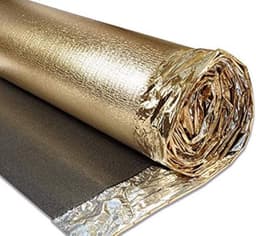
In this set, 3 mm is a silver foil roll. Royale Acoustic Silver, B079339YPH, is about £18.50 for a stated 15.0503 m², about £1.23 a square metre, 4.6 from 290 reviews, with a silver foil waterproof membrane in the bullets. FloorPro Acoustic Silver, B084QBN944, is about £19.88 for 15 m², 4.6 from 337, and names a damp-proof membrane for concrete or wood. AcuStick’s silver roll, B084LM1Z86, is about £23.75, 4.6 from 388, the same 3 mm foil idea at a higher price. FloorPro Smoothfit, B0DDGTPCYG, is also 3 mm silver, but only 1 m by 7.5 m at about £16.50, about £2.20 a square metre. None of these 3 mm pages prints a decibel number. Five millimetres is not one product. AcuStick Sonic Gold, B07WVFCS66, is a 5 mm roll, 1 m by 15 m, about £29.50, 4.5 from 682 reviews, with a gold foil moisture barrier and 24 dB in the bullets. Royale Sonic Gold, B00EZMY36G, is about £29.34 for 15 m² of 5 mm foam, 4.6 from 800 reviews, and the bullets say high acoustic properties without a dB figure or a foil line. FloorPro’s XPS pack, B0B324P5MB, is 5 mm boards, 21 pieces, 9.79 m², about £24.77, with claims of 23 dB and up to 2.2 tog. Smoothfit’s gold listing, B0D49DXYGH, says 5 mm and 7.5 m² at about £21.50 in the title, and the thickness field says 0.01 m. Those are four different buys, not a single upgrade path. A seller’s rule of thumb, from Simply Underlay, puts 3–4 mm in the usual foil band and treats 5 mm foam as thicker and often less dense. Luxury Flooring’s public note calls 3–5 mm foil a typical laminate underlay and warns that foam over 5 mm can upset click joints. Use your plank sheet as the limit. The wider checks are the acoustic underlay buying guide.

The decibel figure is not the millimetres

Only one 5 mm brand prints 24 dB, and that is AcuStick’s gold roll. The XPS boards print 23 dB. Royale’s 5 mm roll does not print a number. Every 3 mm roll in the set is blank on decibels. You cannot say 5 mm is 1 dB quieter, because 24 and 23 are claims on two listings, not a measured gap between thicknesses, and the silver rolls were never given a figure to lose by. EPLF’s underlay bulletin scores footstep sound as ISLam, with a method, not as a millimetre count. None of these bullets names ISLam or BS EN 16354. A flat buyer should not move from silver to gold to satisfy a neighbour. England’s Approved Document E tests the finished separating floor. A product claim of 24 dB is not L’nT,w. If the room needs a pass, thickness shopping will not produce one. The 24 dB line is a reason to pick AcuStick’s gold roll over Royale’s 5 mm foam when you already know 5 mm is allowed. It is not a reason to ignore a plank sheet that stops at 3 mm. Thick soft foam can let a click joint flex. One review of the 5 mm AcuStick roll reports some board movement. That is one report, not a deflection test. A 3 mm foil roll gives you less cushion and a lower stack. On concrete, FloorPro’s silver reviews include laying the foil side down, which is the membrane job, not a sound-lab job.
Royale Royale Sonic Gold 5 mm

Testsieger

Royale Royale Sonic Gold 5 mm
7.8/10about £29.34

When the thicker layer is the wrong stack

Stay at 3 mm when you want a foil roll of about 15 m² and the planks are specified for a thinner layer, or the sheet is silent and you would rather not add give under the clicks. Royale at about £18.50, FloorPro at about £19.88, and AcuStick silver at about £23.75 are that buy. You still purchase Barrier Pro X tape separately. You do not get a decibel figure. For a small room, Smoothfit’s 7.5 m² roll is the short version of the same thickness, at a higher price per square metre. A 12 m² room on 3 mm silver at about £18.50 is one roll. The same room on 5 mm AcuStick gold is about £29.50. The extra is the thickness and the 24 dB claim, not a larger floor. Move to 5 mm only when the plank maker allows that thickness and you accept a softer base. AcuStick at about £29.50 is the roll that prints gold foil and 24 dB. Royale at about £29.34 is the roll with more reviews and without those lines. Do not treat them as twins. The boards are a third format: 21 pieces and a claim of up to 2.2 tog. They are not the 5 mm roll, but square. If warmth from pipes is the next question, leave this page for laminate underlay for underfloor heating. A water-in-foam review sits on the Smoothfit gold listing, beside the 5 mm versus 0.01 m clash. Skip that ASIN when you need a thickness you can quote. Do not stack 3 mm on 5 mm to split the difference. That is a laying mistake, not a compromise thickness. Once you are laying, use how to lay laminate underlay.

Choose the millimetres the joints can live with

Choose 3 mm when the job is a foil roll and a lower stack, which is the usual click floor in this set. Choose AcuStick’s 5 mm gold roll when the instructions allow 5 mm and you want the printed 24 dB line. Choose Royale’s 5 mm foam when you want the larger review count and you already have a membrane. Choose the boards when you want sheets and you will live with up to 2.2 tog on an unheated floor. A qualifying purchase through our links can earn a commission at no extra cost to you.

Common questions

Is 5 mm quieter than 3 mm?
Not on these pages. The 3 mm rolls print no decibel figure. One 5 mm roll prints 24 dB, the boards print 23 dB, and Royale’s 5 mm roll prints none. Those are claims without a named test, not a before-and-after in your room. EPLF scores impact sound as ISLam, which none of these bullets uses. Thicker foam can feel softer underfoot. Soft is not the same as a proven drop in noise.
Will 5 mm make the click joints move?
It can. One review of the 5 mm AcuStick roll reports some board movement. Seller guides treat thick, soft foam as a risk for click joints, and foam over 5 mm as more so. Your plank sheet is the limit. If it allows only 3 mm, the gold roll is the wrong stack even though it prints 24 dB. If it allows 5 mm, the movement review is still a reason to expect a softer feel, not a defect you can ignore.
Which one has a foil membrane?
The 3 mm silver rolls name one: Royale, FloorPro, and AcuStick, plus Smoothfit’s short silver roll. AcuStick’s 5 mm gold roll names a gold foil moisture barrier. Royale’s 5 mm Sonic Gold does not name foil in the bullets. The XPS boards do not name a foil face. On concrete, a named membrane is the usual reason to prefer a silver roll when you are staying at 3 mm.
Is 5 mm warmer?
Only the XPS boards print a thermal figure, up to 2.2 tog, and that is insulation rather than a heating approval. The 5 mm rolls do not print a tog. A foam layer can feel less cold on unheated concrete. That feeling is not a tog, and it is not a reason to put 5 mm over underfloor heating.
Are the boards the same as the 5 mm roll?
No. The boards are 21 XPS pieces, 590 mm by 790 mm, covering 9.79 m² at about £24.77, with 23 dB and up to 2.2 tog as claims. A gold roll is 15 m² of foam at about £29.50, with or without a printed dB figure depending on the brand. You lay sheets instead of a 15 m length. They share a stated 5 mm on the board listing. They do not share a roll format, a coverage, or a tog.
What about the roll whose thickness field says 0.01 m?
FloorPro Smoothfit gold, B0D49DXYGH, at about £21.50. The title says 5 mm and 7.5 m². The item thickness field says 0.01 metres, which is 10 mm. Both lines are on the page. This comparison does not pick one. A review also describes water in the foam and lifted laminate. If you need a thickness you can trust, use a listing where the title and the field agree, such as the 3 mm silver rolls or AcuStick’s 5 mm gold roll.
Which is cheaper per room?
For about 15 m², Royale’s 3 mm silver roll at about £18.50 is the lowest foil price in the set. FloorPro silver is about £19.88 and AcuStick silver is about £23.75. The 5 mm rolls are about £29.34 and about £29.50. A 7.5 m² room can use Smoothfit 3 mm at about £16.50, which is dearer per square metre than the long silver rolls. The boards cover 9.79 m² at about £24.77. Cheaper here means the 3 mm foil roll, if 3 mm is allowed.
When do I stay at 3 mm?
Stay at 3 mm when the plank maker caps the underlay there, or when you want a foil roll and a lower stack and you do not have a reason, printed on the plank sheet, to add 5 mm of foam. The silver rolls from about £18.50 are that choice. Move to 5 mm only with permission from the flooring instructions, and then pick the gold roll for its 24 dB claim or Royale’s 5 mm foam for its review count, knowing those are different listings.

Related pages

Sources

Public UK and trade sources used for this comparison. Listing prices, stars, and review counts are from amazon.co.uk on 19 October 2026.

  1. Approved Document E: resistance to sound (retrieved 19.10.2026)
  2. East Lindsey Guidance Note 53: resistance to the passage of sound (retrieved 19.10.2026)
  3. Technical Booklet G (2012), Northern Ireland (retrieved 19.10.2026)
  4. Scotland building standards, section 5.1 noise separation (retrieved 19.10.2026)
  5. SITMA: sub-floor testing under Approved Document E (retrieved 19.10.2026)
  6. EPLF underlay materials bulletin, December 2022 (retrieved 19.10.2026)
  7. BS EN 16354:2018 laminate underlays (retrieved 19.10.2026)
  8. Interfloor: underfloor heating (retrieved 19.10.2026)
  9. EGGER UK: how to lay a laminate underlay (retrieved 19.10.2026)