Burn paper briquettes wood stove: poor as main fuel
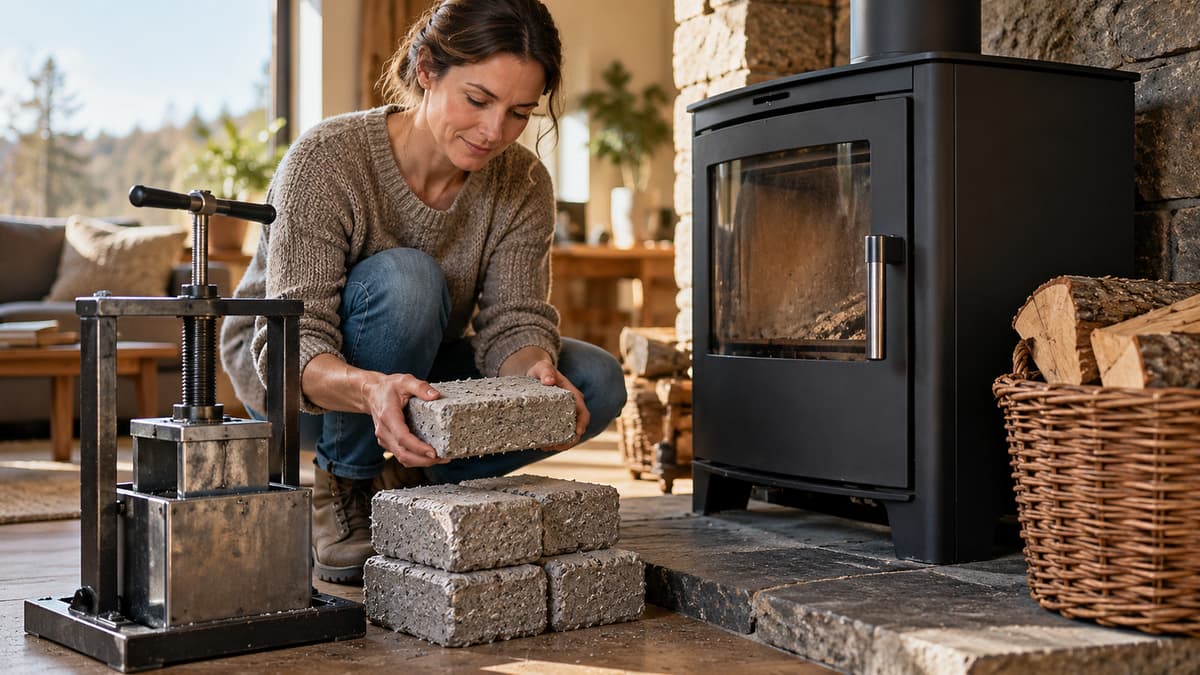
Newspaper bricks are a firelighter at most. Coloured print and cardboard are the wrong stock, and pressing paper does not make a Ready to Burn wood briquette.
On this page

You soaked a stack of newspaper, squeezed it in a steel press, and the brick on the hearth looks dense enough to replace a log. A product page may say one brick burns for up to two hours. The search behind that plan is burn paper briquettes wood stove, and the hope is that the brick will carry the evening. The press changes the shape. It does not change the material.
HETAS draws a narrow line. A small amount of black-and-white newspaper can stand in for a firelighter. Coloured printed paper is not fuel, and a large amount of newspaper smokes and lays deposits. A homemade brick leaves that allowance as soon as it becomes the load.
Prices here are GBP from amazon.co.uk listings we saved. A qualifying purchase can earn us a commission at no extra cost to you. We used those listings and public UK guidance, with no laboratory test of any press or brick, and with no emissions figure in the sources.
In short
A paper brick is pressed paper, useful at most as a small plain-newsprint starter. It is neither a wood briquette nor a Ready to Burn heat log. Coloured print, glossy paper, and cardboard stay out, and you do not add paper once the fire is already burning.
A paper brick is not a wood briquette
The two names share a shape. In the HETAS fuel guide, wood briquettes and heat logs are compressed clean wood by-products, and Ready to Burn is the cue on wood you intend to burn now. A homemade paper brick sits outside that sentence. In England, GOV.UK requires certification for retail wood and wood briquettes sold in volumes under 2 m³. A brick pressed at the kitchen table is not that scheme.
Clean wood offcuts, sold with the dryness mark, are a manufactured wood fuel. Newspaper is fibre and ink. Soaking and squeezing packs the same fibre tighter, and it produces no moisture certificate. If the brick hisses, it is still wet paper, and the fire spends heat driving that water off.
Seller times on amazon.co.uk are claims. The eBuzz bullets say up to two hours, and one UK review in that saved file says about 30 to 40 minutes. The note is one household, not a calorimeter. A stove manual that allows wood briquettes allows a named category under the maker's conditions. Paper is absent from that permission, however grey the block looks.
What HETAS allows newspaper to do
HETAS is explicit about quantity and colour. A small amount of black-and-white newspaper can stand in for a firelighter. Large amounts smoke and lay deposits. Coloured printed paper is on the do-not-burn list because it releases chemicals. A whole Saturday paper, pressed into one brick, is already past that scrap.
Newspaper bricks in a wood burner stay inside the allowance only when three limits hold. The sheet is plain black-and-white newsprint. The piece is about what you would crumple under kindling. The fire is being lit, not already alight. One pull of a lever uses far more paper than that scrap, which is why the tidy brick is still a fuel load.
The eBuzz press, ASIN B01M644WTP, is the top pick in our paper briquette press set at £19.99, with 4.2 from 95 ratings. Bullets describe a steel lever and a soak of a couple of hours for newspaper and magazines. The material field says Paper, the weight is 3 kg, and UK notes report a bent plate, strut, or basket. See the eBuzz paper log maker. That price is not permission to burn the brick as the load.
Dry sticks and a firelighter are the lighting layer in our kindling comparison. The top pick is the Log Barn box of 200 wax-wool lighters, model KNIND-10, at £12.99, with 4.7 from 22,250 ratings. That count is not stated as UK-only, and Ready to Burn on the page refers to the brand's wood, not these lighters. The box does not carry the evening.
Inks, card, and coatings
Printed paper in a stove is how a recycling brick goes wrong. Glossy magazines, leaflets, and till receipts sit outside the black-and-white scrap HETAS allows as a firelighter. Coatings make a page shiny or let a receipt print. These sources give no lab figure for a named ink.
Cardboard in a stove is the next shortcut. HETAS names it with treated wood, plastic, and household waste, because of adhesives, coatings, and the way it burns. Plain brown card stays in that ban. A UK review in the eBuzz file says a buyer made cardboard logs, while the bullets name newspaper and magazines. Crushing a box shows what the lever can do, and it is not a fuel test.
DEFRA's Ready to Burn note says not to burn household rubbish or treated waste wood. The mark is the cue for wood you intend to burn now. Plastic windows, foil, and glossy adverts belong with your council's recycling or rubbish. Presses that list magazines, including the eBuzz soak line, are describing the tool. If you already own one, the honest stove use is a scrap of plain newsprint, or no paper in the firebox at all.
Paper bricks and chimney embers
Devon and Somerset Fire and Rescue say not to put paper or rubbish on a fire that is already burning. Paper throws floating embers, which is how a paper bricks chimney fire starts. Light with kindling or firelighters, not with petrol or paraffin. A brick added because the log pile is short is paper on a live fire. The press does not stop that brick breaking up.
HETAS says large amounts of newspaper smoke and lay deposits, so homemade paper logs are not smokeless. Compressing them creates neither a smokeless fuel nor a smoke-control exemption, because paper is not an authorised fuel. Wet wood smokes because the firebox stays cool, while paper in quantity smokes because the material is wrong.
If smoke enters the room, put the fire out as your stove guidance allows, air the room, and get everyone outside if anyone feels unwell. Book a sweep before you light again. A clear pane the next morning does not show a clear flue.
Use paper only as the starter. Most homemade bricks fail the first step, because they are a whole paper in one block. Keep to this order.
- Take a small piece of plain black-and-white newspaper, and keep colour pages, magazines, receipts, and cardboard out.
- Set that scrap under dry kindling or a purpose-made lighter while you are still starting the fire.
- Let the kindling establish the flame, and add no more paper once the fuel is burning.
- Load only the fuel your stove is allowed to burn.
What to burn instead of paper bricks
Buy the job you have. For lighting, use a lighter or dry kindling, and keep newspaper to a scrap. The Log Barn box is £12.99 for 200 wax-wool lighters. Pieces vary, and one on the kindling, or two or three for kiln-dried logs without sticks, is the use the bullets describe.
For a manufactured wood fuel, look at wood briquettes and Ready to Burn heat logs, which are compressed wood by-products. HETAS says to store that fuel dry and indoors. England's rule for retail volumes under 2 m³ covers wood and wood briquettes that are sold. A paper brick dried on a radiator is outside that scheme, and a two-hour seller line is not a certificate.
Lignite briquettes are a manufactured solid fuel, and this site does not compare them as their own category. This article awards no bag and no price. The briquette still has to be a fuel your appliance may burn, and in a smoke control area it has to meet the authorised-fuel rules under its own name. Read the pack rather than matching a brown rectangle by eye.
Skip the press if you wanted heat logs. The eBuzz at £19.99 leads that comparison on price and on the saved UK commentary, with the bend notes left in view. The black Relaxdays press is best value on that scoring, at £32.90 against £34.90 for the silver model. A single 5.0 rating does not outrank it, and none of the scores is a measured burn or a smoke-control permission. A dearer press does not turn glossy paper or cardboard into fuel.
Common questions
Are newspaper bricks the same as wood briquettes?
Can I burn a paper brick as the main fuel all evening?
What about glossy magazines, leaflets, or till receipts?
Is plain cardboard safe once it is soaked and pressed?
Will paper bricks set off less smoke than wet wood?
Can I use a little newspaper only to start the fire?
Do smoke control rules care how the brick was made?
Which product page is the press, and which is real fuel?

Peter F. is the editor for DIY & tools at productscompared.co.uk. Comparisons in this category are checked against amazon.co.uk listings, review evidence and public UK sources.
Related articles

What you can burn in a smoke control area
Wood, kindling, and a smokeless label are not the same as an authorised fuel or an exempt appliance.

Fatwood or kiln-dried kindling
Resin sticks light fast, but they are a starter, not a certified substitute for a load of logs.

When to book a chimney sweep
Smoke in the room, a soot smell, or a flue that will not draw are reasons to stop and book a sweep.