






Screw holes before paint
You are filling ordinary indoor screw holes and small cracks, and you want the tube with the largest review file in this set. Stay inside the layer limit, then paint.
The best indoor wall fillers, compared.
Top pick: FPNNZ plasterboard patch kit Best value: Palace Fine Surface Filler 600 g – Lowest shelf price, about £1.25 for 600 g, at 4.6 from 2,247 reviews, with a 3 mm layer cap. Updated October 2026.


An indoor wall filler is a ready-mixed paste, or sometimes a powder, that you press into cracks, screw holes, and small areas of lost plaster so the surface will take paint. Prices were captured with the listings and were not re-. An everyday tub covers a screw hole if you stay inside its layer limit. Mesh is a plasterboard bridge you still fill over. A plug compound restores grip in an oversized hole. Stick-on tiles and vinyl trim do not fill a crack. If the job is a shallow skim across a surface rather than a hole or a crack, look at a [surface filler](/hub/fillers-adhesives-and-sprays/surface-filler) instead. UK buyers on amazon.co.uk are mostly decorating at home. Depth in one pass comes first, then whether you must layer.
An indoor wall filler is a ready-mixed paste, or sometimes a powder, that you press into cracks, screw holes, and small areas of lost plaster so the surface will take paint.

42 products checked · 58 hrs invested · +21,400 readers
Swipe for more
1-2 of 12


Personal buying guide
Question 1 of 2
What are you filling?
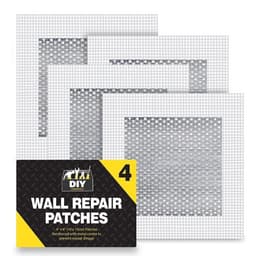
The FPNNZ pack is a seven-piece plasterboard patch kit at about £6.99, with 4.7 from 13 amazon.co.uk reviews. You get two 2 inch metal mesh patches, two 4 inch patches, two sandpapers and a trowel. The listing says you place the mesh, then apply filler or plaster, then sand, so the kit is the bridge and not the paste. The water-resistance attribute says not water resistant, and a separate feature line says waterproof. Thirteen reviews is a small sample next to the SOL 10 cm patches, which have 507. The size attribute is 10 x 10 x 0.2 cm, which does not describe a 4 inch patch on its own. A 4.7 here is not a stronger result than a filler with thousands of reviews.
Pros
Cons
Best for: A small interior plasterboard hole that fits a 2 inch or 4 inch patch, when you already have filler.
Less suitable: A hairline crack, a skim across a whole wall, or a hole larger than the 4 inch mesh.
Specifications
Common questions
Is this the filler, or a patch?
It is a self-adhesive metal mesh kit. The listing says you apply filler or plaster over the patch and then sand.
What sizes are in the pack?
Two 2 inch iron mesh patches, two 4 inch patches, two sandpapers and one trowel. The size attribute is 10 x 10 x 0.2 cm.
Is it waterproof?
The water-resistance attribute says not water resistant. A separate feature line says waterproof. The extract does not resolve that.
The Polycell Multi-Purpose Polyfilla tube, model PLCMPP330GS, is 330 g of ready-mixed white paste at about £3.49. amazon.co.uk lists 4.6 from 14,595 reviews, the largest file in this set, and the rank is 62 in DIY & Tools. Reviewers still paint the fill: one says it did not dry completely white, and one says to prime or the repair shows through. The seller bullets do not state a millimetre limit, though one captured review describes holes and cracks up to 10 mm. The listing attributes give a 2-hour full cure and a 2-hour initial hardening, and they mark the paste as water resistant. Polycell's multi-purpose page for this type of paste says to layer once the repair is above 10 mm. The item weight is 358 g against a 330 g fill. It is the top pick here for ordinary screw holes because of that review file, not because a lab measured the tube.
Pros
Cons
Best for: Ordinary indoor screw holes and small cracks when you want the tube with the largest review file in this set.
Less suitable: A hairline that needs a fine filler, a hole past about 10 mm in one pass, or a moving gap at a skirting.
Specifications
Common questions
Is a fill depth stated on the listing?
The seller bullets do not give a millimetre limit. One captured review describes holes and cracks up to 10 mm. Polycell's multi-purpose page for this type of paste says to layer once the repair is above 10 mm.
Does the white fill disappear under paint?
Reviews say you still paint it. One says it did not dry completely white, and one says to prime or the fill shows through.
How long does the listing say it takes?
The listing attributes say a full cure time of 2 hours and an initial hardening time of 2 hours.
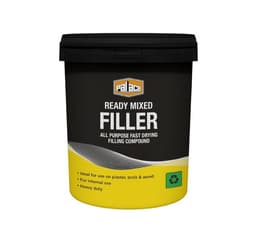
Palace Fine Surface Filler, model 68-4, is a 600 g tub at about £1.25, with 4.6 from 2,247 amazon.co.uk reviews. The seller says deeper repairs go on in layers of no more than 3 mm, then you feather the edge, sand, and use oil- or water-based paint. It is worded for interior plaster, masonry, timber, skirting and frames, not for a deep hole. One reviewer used it on big holes and thought that was the wrong job, and one review says fine cracks dry sooner while deeper fills need at least 24 hours. Reviewers say a poor seal lets the paste go hard, and that some tubs arrived split or leaked. The volume attribute says 120 ml against a 600 g fill, so those two fields cannot both describe the tub. It is the best value in this set for shallow nicks, because of the price and the review count, and it is the wrong paste once the crack needs more than a 3 mm layer.
Pros
Cons
Best for: Hairline cracks and shallow interior nicks when a 3 mm layer is enough.
Less suitable: A hole deeper than 3 mm in one pass, a plasterboard void, or a tub you will leave open.
Specifications
Common questions
How thick should each layer be?
The seller bullet says deeper repairs in layers of no more than 3 mm, and to let each layer dry.
Is it for hairline cracks or deep holes?
The title and bullets are for shallow depressions, cracks and fine nicks. One reviewer used it on big holes and thought that was the wrong job.
Why do reviews mention the lid?
Reviewers say a poor seal lets the paste go hard, and that some tubs arrived split or leaked.
The Decex kit is a 396 g Polycell tube sold with a 3 inch scraper and a 120-grit block, listed at about £13.90 with 4.6 from 15 amazon.co.uk reviews. The seller bullet says it fills holes up to 10 mm on plaster, masonry, concrete and brickwork, and that the surface is dry in 1–2 hours and recoatable in 2 hours. A further seller line says the fill is drillable once it has fully set, and that the kit is for indoors and outdoors. Those lines are the seller's, not the captured Polycell specification for this tube. Fifteen reviews is a thin file next to the 330 g Polycell tube's 14,595. You pay for the scraper and the block as well as the paste, so about £13.90 is not a cheap way to buy 396 g of filler. The listing does not state a water claim.
Pros
Cons
Best for: A small indoor repair when you want the scraper and sanding block in the same order as the tube.
Less suitable: A whole room of filling, or a screw you plan to put into the fill on the strength of the seller's drillable line.
Specifications
Common questions
Does this kit include a scraper?
Yes. The listing includes a Decex 3 inch scraper and a flexible 120-grit sanding block with the 396 g Polycell tube.
How deep does the seller say it fills?
The seller bullet says holes up to 10 mm deep, on plaster, masonry, concrete and brickwork, indoors and outdoors. That outdoor line is the seller's, not the captured Polycell page.
Can you drill it?
The seller bullet says the fill is drillable once it has fully set. That line is the seller's, not a separate Polycell specification in this extract.
The Palace Langlow ready-mixed acrylic filler, model 68-1, is a 1 kg tub at about £6.99, with 4.5 from 4,537 amazon.co.uk reviews. The seller says layers no thicker than 10 mm, each one dry before the next, with a skin in about 30 minutes and a full cure of up to 24 hours at 20 °C. You sand it, then use oil- or water-based paint. The listing says it is not for exposed exteriors or continuous immersion, even though a water attribute says waterproof, and one review describes outdoor use on a fascia. The item weight is 1.15 kg against a 1 kg fill. It is the larger everyday tub when the repair is past a fine filler and still inside a 10 mm layer. It is not a drillable deep-gap product.
Pros
Cons
Best for: Indoor cracks and holes you will build in layers no thicker than 10 mm, when 1 kg is a useful amount.
Less suitable: A hairline that only needs a fine filler, an exposed outside wall, or a screw fixing.
Specifications
Common questions
How thick is each layer?
The seller bullet says layers no thicker than 10 mm, with each layer dry before the next. Full cure is up to 24 hours at 20 °C.
Can you use it outside?
The seller bullet says it is not suitable for exposed exterior locations or continuous immersion. One review describes outdoor use on a fascia.
Can you paint it?
Yes, once it is dry and sanded, with oil- or water-based paint. The listing says it skins in about 30 minutes and is surface dry in about 1–2 hours.
The Sika Everbuild all-purpose tub is 600 g of ready-mixed paste at about £4.49, with 4.4 from 5,464 amazon.co.uk reviews. The seller states fills up to 9 mm deep and 25 mm wide, which is a written size the 330 g Polycell bullets do not give. It is listed for interior and exterior use if you seal an outdoor fix with oil-based paint, while the water-resistance attribute says not water resistant. Reviews praise a thin fill and say a thick layer is very hard to sand. The listing says you can sand it when dry and then use most paints, stains or wallpaper, and the seller calls it quick-drying without a timed cure on the card. The material attribute says PVA. It is the clearer written size when the hole is near that 9 mm by 25 mm limit, and a poor one if you pile it on and expect an easy sand.
Pros
Cons
Best for: An indoor hole or crack within 9 mm deep and 25 mm wide, when you want that size written on the listing.
Less suitable: A deep plasterboard void, a fine hairline, or an outdoor fix you will not seal with oil-based paint.
Specifications
Common questions
Can you use it outside?
The seller bullet says interior and exterior, and says to seal outdoor fixes with an oil-based paint. The water-resistance attribute says not water resistant.
What size of gap does the seller allow?
Up to 9 mm deep and 25 mm wide.
Is it easy to sand?
The listing says it is sandable when dry. Reviews praise a thin fill, and say a thick layer is very hard to sand.
The Sinto tub is 5 kg of ready-mixed white paste at about £16.33, with 4.4 from 768 amazon.co.uk reviews. The seller bullet says repairs up to 1 cm deep and claims zero shrinkage and no cracking. Captured reviews include lumps, sagging, and fills that shrank and cracked, so that no-crack line stays the seller's wording. The listing attribute gives a 12-hour cure, and reviews say deep holes take a long time to dry. The material field says silicone while another attribute says plastic, so the card does not describe one compound cleanly. Indoor or outdoor use is not stated. At about £3.27 per kilogram on the paste weight it is the large tub in this set, and it is still the wrong tub for a hairline or a loose plug.
Pros
Cons
Best for: A lot of shallow indoor filling when you actually need 5 kg and can wait for the 12-hour cure.
Less suitable: Hairline cracks, a hole you need to screw into, or anyone treating the no-crack bullet as a guarantee.
Specifications
Common questions
How deep can you fill in one go?
The seller bullet says repairs up to 1 cm deep. It also says to sand when the filler is dry.
Does the listing promise no cracking?
The seller bullet claims zero shrinkage and no cracking. Captured reviews include lumps, sagging, and fills that shrank and cracked. That no-crack line stays the seller's wording.
What is the stated cure time?
The listing attribute says a full cure time of 12 hours. Reviews also say deep holes take a long time to dry.
The SOL pack is four 10 cm self-adhesive mesh patches at about £5.29, with 4.4 from 507 amazon.co.uk reviews. The bullets say to use them with wall filler or plaster, and reviews describe filler over the mesh. Many reviews say the backing sticks and the mesh supports the fill. Others say the glue failed and the patch moved while plaster was applied. The listing marks the patches as not water resistant, and it does not state a paste depth because they are not a filler. The material field says metal. At about £5.29 for four patches this is the mesh with a real review count in the set, and it still leaves you to buy the paste.
Pros
Cons
Best for: A plasterboard hole about the size of a 10 cm patch, when you will press filler over the mesh.
Less suitable: A hairline crack, a loose wall plug, or a hole bigger than the patch.
Specifications
Common questions
Do you still need filler?
Yes. The bullets say to use the patch with wall filler or plaster. Reviews describe filler over the mesh.
Will the adhesive hold?
Many reviews say the backing sticks and the mesh supports the fill. Others say the glue failed and the patch moved while plaster was applied.
What size are they?
The title says a 4-pack of 10 cm mesh patches.
The Art3d strip is 10 ft of peel-and-stick PVC beading at about £6.99, with 4.3 from 3,270 amazon.co.uk reviews, sold for tile edges rather than cracks. The seller says you cut it with scissors and that the acrylic tape sticks to smooth surfaces. Reviews split: some say it holds, including near a kitchen sink, and others needed extra adhesive. A seller bullet claims heat and water resistance, and the extract does not name a test. The listing dimensions are 3 x 0.01 m, with a thickness of 0.1 inches. Included components are listed as none. It hides an edge. It does not fill plaster.
Pros
Cons
Best for: A tile edge, corner, or mirror frame on a smooth surface, when the tape holds on the first try.
Less suitable: A crack, a screw hole, or a plasterboard patch.
Specifications
Common questions
Is this a wall filler?
No. It is a 10 ft self-adhesive PVC strip for tile edges, corners, ceiling lines or a mirror frame.
Does it stick on its own?
The seller bullet says the acrylic tape sticks to smooth surfaces. Reviews split: some say it holds, including near a kitchen sink, and others needed extra adhesive.
Is it waterproof?
The seller bullet claims heat and water resistance. The extract does not name a test or a standard.
Plugdoh is four 5 g sachets of orange compound at about £6.99, with 4.3 from 269 amazon.co.uk reviews, for a loose wall plug rather than a skim. The seller says you knead, fill and insert, and that it sets in 10 minutes. Reviews describe softening orange beads in hot water and working quickly before the compound firms. The listing says four sachets cover 4–10 holes, depending on size. The colour is orange, so reviews say to paint or fill over it if the orange must not show. Indoor or outdoor use and a water claim are not stated. It restores grip for a screw. It does not feather a crack.
Pros
Cons
Best for: An oversized fixing hole where a curtain pole or bracket has lost its grip.
Less suitable: A crack you want to paint flush, or a deep plasterboard void you still need to skim.
Specifications
Common questions
Is this a skim filler?
No. It is a compound for a loose wall plug or an oversized fixing hole. The colour is orange, so reviews say to paint or fill over it if the colour must not show.
How do you use it?
The seller says knead, fill and insert, and that it sets in 10 minutes. Reviews describe softening orange beads in hot water and working quickly.
How many holes are in a pack?
Four 5 g sachets. The listing says that covers 4–10 holes, depending on size.
The TOFFCAEa listing is ten self-adhesive brick-effect panels at about £15.99, with 4.0 from 829 amazon.co.uk reviews, and it is not a wall filler. The title gives a coverage of 1.3 square metres, while a separate attribute says 30 items against the title's 10 pieces. The seller bullets in this extract describe a washable table runner, not the tiles. Reviews say the adhesive is very strong once the backing is off, and also that some panels would not stick to painted plaster or arrived in two shades of white. Tile size is given as 39.4 x 34.8 cm. You peel and stick them. You do not sand them into a crack.
Pros
Cons
Best for: A peel-and-stick brick effect on a sound painted wall, if the panels match and stick.
Less suitable: Any hole, crack, or loose plug you actually need to fill.
Specifications
Common questions
Is this a wall filler?
No. The title is 10 self-adhesive 3D brick-effect panels. The seller bullets in this extract describe a washable table runner, not the tiles.
How many pieces are in the pack?
The title and the included-components line say 10. A separate attribute says 30 items. Coverage is given as 1.3 square metres.
Do they stick first time?
Reviews say the adhesive is very strong once the backing is off, and also that some panels would not stick to painted plaster or arrived in two shades of white.
Mo's Super Store lists a 600 g ready-mixed filler with a flexible putty knife and 10 sandpaper sheets, at about £11.99. The grits named are 60, 100 and 150. amazon.co.uk shows 3.8 from 5 reviews, and the extract has no review text, so there is no account of how the paste behaved. The listing does not state a depth, a cure time, or whether the filler is for indoors only. The brand field is the shop name, and the extract does not name the filler manufacturer. Country of origin is printed as United Kingdom, and the pack weight is 950 g against a 600 g fill. At this price you are buying tools with an unnamed paste and almost no written reviews.
Pros
Cons
Best for: Someone who wants a knife and sandpaper in the same parcel and can accept an unnamed filler.
Less suitable: A job that needs a millimetre limit, a written review, or a named maker.
Specifications
Common questions
What is in the kit?
The listing includes all-purpose ready-mixed wall filler, a flexible putty knife, and sandpaper sheets. The bullets name 60, 100 and 150 grit and say 10 sheets.
How deep can you fill?
The extract does not state a depth or a layer limit.
Whose filler is in the tub?
The brand field is Mo's Super Store. The extract does not name the filler manufacturer.
We compared 12 amazon.co.uk listings in this set and scored them from the listing facts. Prices, stars, and review counts are the amazon.co.uk lines in this set. There was no laboratory test. Fill depth and dry time were not measured. The scores do not rank the wider UK market. The four weights below sum to 100.
Review evidence
40%Stars and review counts are the amazon.co.uk lines. A 4.7 from 13 ratings is not a stronger result than 4.6 from thousands of reviews.
Stated repair
35%Depth or layer cap, whether the listing is for indoors, and what it says after the fill sets: a timed cure, a named paint, or neither.
Shelf price
15%The shelf price of the pack, not a per-kilogram ranking. Under £4 scores higher than a tub at £15 or more.
Listing clarity
10%Points come off when the material field, pack count, or bullets contradict the product, or when review text is missing.
Match the depth, the movement, and the indoors-only line before you buy. Pressing the paste in, layering, sanding, and closing the tub is set out in [how to fill an indoor wall](/hub/fillers-adhesives-and-sprays/wall-filler-indoor/sub/wall-filler-indoor-how-to-fill).
An indoor wall filler is a ready-mixed paste, or sometimes a powder, that you press into cracks, screw holes, and small areas of lost plaster so the surface will take paint. UK buyers on amazon.co.uk are mostly decorating at home. The useful difference is the depth and the movement the product is specified for, not the star rating on its own. Depth in one pass comes first, then whether you must layer. Polycell Fine Surface stops at 2 mm.

Palace Fine Surface caps a layer at 3 mm. Palace 1 kg caps a layer at 10 mm. Polycell multi-purpose says layer once the repair is above 10 mm. A single thick pass past that limit is the mistake these pages warn against.
A rigid fine filler is the wrong tool for a gap at a skirting or frame. Polycell Flexible Gap is the joint product. Its product page says up to 5 mm wide and 12 mm deep. A how-to that says 20 mm wide disagrees. Do not use 20 mm as the limit.
SOL and FPNNZ are a plasterboard bridge you still fill over. Plugdoh restores grip and is orange. TOFFCAEa panels and Art3d trim do not fill a crack. The Decex outdoors and drillable lines are seller bullets, not the captured Polycell page.
Start with the layer the listing or the maker actually states. Palace Fine Surface says layers no more than 3 mm, then a feather edge, sand, and oil- or water-based paint. Sika's 600 g listing writes 9 mm deep and 25 mm wide. Palace 1 kg says layers no thicker than 10 mm, a skin in about 30 minutes, and a full cure of up to 24 hours at 20 °C. Sinto's seller bullet says up to 1 cm, with a 12-hour cure on the listing. Polycell multi-purpose says layer once the repair is above 10 mm.
A rigid fine filler does not belong in a gap that moves. Polycell Flexible Gap is for a joint at a frame. The product page says up to 5 mm wide and 12 mm deep, recoat 24 hours. A Polycell how-to also says 20 mm wide and paint as soon as it is dry. Those two pages disagree, so 20 mm is not the limit to use. Fine Surface, Quick Drying, and Deep Gap say indoors only.
Three typical situations, each with a recommendation from this comparison.
You are filling ordinary indoor screw holes and small cracks, and you want the tube with the largest review file in this set. Stay inside the layer limit, then paint.
You want a fine filler for shallow nicks, with layers capped at 3 mm, at the lowest shelf price in this set. It is the wrong tub for a deep hole.
A hole about the size of a 10 cm patch needs mesh plus filler, not paste alone. A curtain pole that has pulled its plug needs a grip compound, then paint.
Across these twelve amazon.co.uk listings, the top pick for ordinary indoor screw holes is the Polycell Multi-Purpose Polyfilla 330 g tube: about £3.49, 4.6 from 14,595 reviews, and a 2-hour cure on the listing. The seller bullets do not print a depth. Polycell's multi-purpose page for this type of paste says to layer once the repair is above 10 mm. The best value is Palace Fine Surface Filler 600 g at about £1.25, with 4.6 from 2,247 reviews and layers capped at 3 mm. It is the lowest shelf price in the set, and the wrong paste once the crack needs more than a 3 mm layer. Palace 1 kg is the next score, with 10 mm layers and a timed cure, and it does not take either badge.
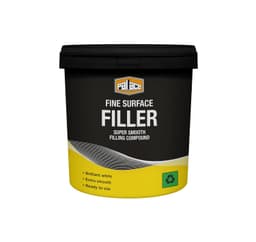
Palace Fine Surface Filler 600 g
Lowest shelf price, about £1.25 for 600 g, at 4.6 from 2,247 reviews, with a 3 mm layer cap.
Editorial

Products Compared publishes British-English buying guides based on amazon.co.uk listings and public UK sources. We do not run a lab and we do not invent test scores.
Guides on what to look for, how to use a product, and common mistakes.
Public UK sources used for this comparison. Listing prices are the GBP figures captured for these amazon.co.uk ASINs and were not re-checked on 16 October 2026.
Expert source (DIY & tools): Charlie White (Charlie DIYte) (external profile) – public expert commentary used as a research source, not as a contributor to our pages.
This page contains affiliate links to amazon.co.uk. If you buy through them, we may earn a commission at no extra cost to you. Prices, stars, and review counts are the UK listing lines. We did not run a lab test.