Fill a deep hole in plasterboard
A fine tub will not stay in a plasterboard hole you can put a finger through. To fill a deep hole in plasterboard you need the depth the paste is rated for, a bridge if the cavity is open, and a clear answer on whether you may screw back into the fill. The [indoor wall filler comparison](/hub/fillers-adhesives-and-sprays/wall-filler-indoor) lists the captured amazon.co.uk packs, including two mesh kits that are not the skim. Prep and the lid stay on [how to fill cracks in walls](/hub/fillers-adhesives-and-sprays/wall-filler-indoor/sub/wall-filler-indoor-how-to-fill). Prices were written up on 16 October 2026. This is not a lab test. A qualifying purchase can earn us a commission at no extra cost to you.
A fine tub will not stay in a plasterboard hole you can put a finger through.
A fine tub will not stay in a plasterboard hole you can put a finger through. To fill a deep hole in plasterboard you need the depth the paste is rated for, a bridge if the cavity is open, and a clear answer on whether you may screw back into the fill. The indoor wall filler comparison lists the captured amazon.co.uk packs, including two mesh kits that are not the skim. Prep and the lid stay on how to fill cracks in walls. Prices were written up on 16 October 2026. This is not a lab test. A qualifying purchase can earn us a commission at no extra cost to you.
Our top picks
| Badge | Product | Stated depth | Drill or grip | Product type | Note | Price | Offer |
|---|---|---|---|---|---|---|---|
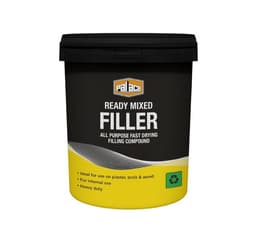
| Best overall |  Palace Palace Langlow filler 1 kg | Layers no thicker than 10 mm | Not stated | Ready-mixed filler tub | 9.2 | about £6.99 | View offer |
| Alternative |  Sika Sika All Purpose filler 600 g | Up to 9 mm deep and 25 mm wide | Not stated | Ready-mixed filler tub | 8.2 | about £4.49 | View offer |
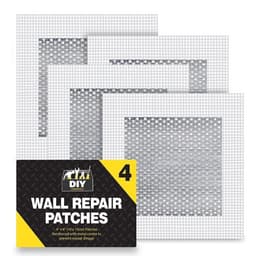
| Alternative |  SOL SOL 10 cm mesh patches, 4-pack | Mesh, not a paste depth | Bridge you fill over | Mesh wall patch | 6.2 | about £5.29 | View offer |

On this page
Three depths, not one deep filler
Plasterboard needs a bridge
Grip is a different job
What you can buy in this set
Common questions
When is a fine filler the wrong tub?
What does layer above 10 mm mean?
Do I need mesh on plasterboard?
Which published filler is drillable, and which is not?
Is Plugdoh the same as a deep filler?
The Decex kit says drillable. Is that Polycell's Deep Gap?
Related pages
Sources
Public UK sources used for this comparison. Listing prices are the GBP figures captured for these amazon.co.uk ASINs and were not re-checked on 16 October 2026.
- Polycell Multi Purpose Polyfilla Ready Mixed (retrieved 15 October 2026)
- Polycell Fine Surface Polyfilla (retrieved 15 October 2026)
- Polycell Deep Gap Polyfilla (retrieved 15 October 2026)
- Polycell Advanced Polyfilla (retrieved 15 October 2026)
- Polycell Flexible Gap Polyfilla (retrieved 15 October 2026)
- Polycell — fill awkward or large gaps (retrieved 15 October 2026)
- HSE — Construction dust (retrieved 15 October 2026)
- HSE CIS36 — Construction dust (retrieved 15 October 2026)