Filling cracks in damp walls: dry the wall first
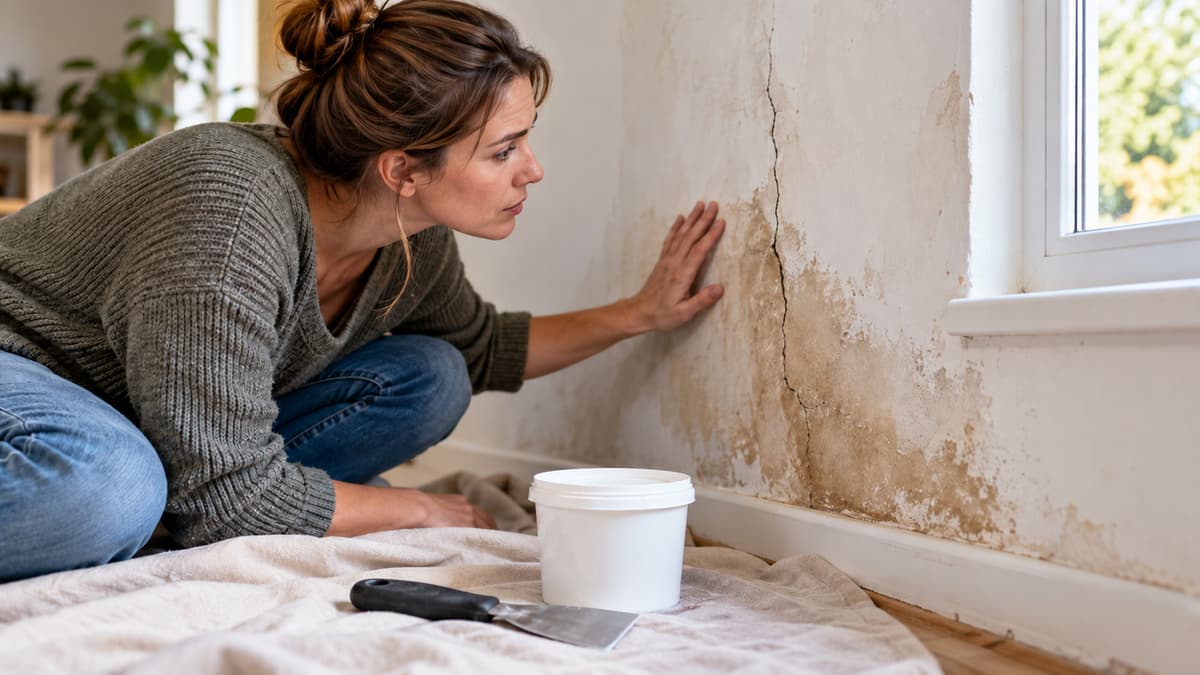
Filling cracks in damp walls hides the problem and the paste falls out. Fix the damp first. A musty patch, blown plaster, or a hollow tap is a hard stop.
On this page

The crack sits in a brown tide mark, or the plaster smells musty when you lean in. Filling cracks in damp walls is the job the tub cannot do. Paste on a wet, dusty, or hollow face hides the crack and then falls out. Gloss, dust, and damp bond poorly. Deal with the damp, then decide whether any crack that remains is only cosmetic.
Products Compared used the surface-filler notes, Checkatrade’s reason to call someone when damp sits with a crack, the BBC piece of 24 August 2026, and the NHBC cracking note. We did not prescribe a damp-proof course, an injection cream, or a moisture-meter reading. Those methods were not in the sources. Prices below are amazon.co.uk shelf prices from 15 October 2026. A qualifying purchase can earn us a commission at no extra cost to you.
In short
Fix the damp before you fill. Filler on a damp, dusty, or blown surface will not hold, and it hides a crack you may need to show someone. Call for help when damp sits with the crack, when plaster is blown over a wide area, or when the crack is wide, growing, or diagonal near an opening. Fill only a shallow cosmetic nick, and only once the wall is dry and stable.
Filler will not stick to a damp, dusty, or blown surface
Ready-mixed filler is a paste pressed into a sound, dry crack so you can sand and paint. Dust sits as a layer the paste grips instead of the plaster. Gloss gives it nothing to key to. Damp keeps feeding moisture into a material that dries by losing water. The patch skins, stains, or drops out in a curl. That is why the filler fell out, more often than because you bought the wrong brand of an otherwise suitable tub.
A musty smell, a tide mark, or paint that bubbles along the crack is the damp showing itself. Filling over it traps the look for a week, then the mark returns beside the new paint. Checkatrade’s hole-filling guide treats damp with the crack as a call, not as a cue to open a tub. A waterproof bullet on an interior card is not a way around that stop.
Palace’s 1 kg listing can say waterproof and still exclude continuous water immersion and exposed exteriors. A waterproof line is not a licence to fill a wet wall. Sinto’s natural-ingredients line is not one either. The surface filler comparison is for when the wall is allowed to take paste.
Fix the damp before you fill
Find why the wall is wet before you decorate the symptom. A leak, driving rain on an outside face, condensation on a cold external wall, or a plumbing weep can all show up as a crack in spoiled plaster. This page will not rank those causes or sell you a treatment. If you do not know the source, ask a builder, a plumber, or a damp specialist, rather than guessing with a tub that costs a few pounds and fails.
We are not describing an injected damp-proof course, a tanking slurry, or a number on a moisture meter. Those details were not in the sources. Watch what you can see: is the mark growing after rain, only behind furniture, or near a wet pipe? Write that down. The person you call needs the pattern. A filled crack deletes part of it.
Landlords should hear about damp and cracks together. Covering the crack before anyone has seen it becomes an argument about when it started. Photograph the stain with a date, then get the water stopped. A surveyor will tap for hollow plaster and look for a filled tide mark. Only a dry, stable wall is a filler wall.
Blown plaster and a hollow sound
Tap the plaster with a knuckle, working out from the crack. Solid plaster sounds dull and even. Blown plaster sounds hollow, and the face can move. Blown means the skim or the backing has lost its grip. A wide area is a replaster, not a feather of fine filler. If the background is already leaving, the repair leaves with it, often as a larger patch than the crack you started with.
The check you can do is the tap, the flake, and the smell. We did not copy a plasterer’s checklist we did not use as steps. A small blister in otherwise firm paint is a different scale from a sheet that drums across a whole pier. The sheet is the professional job. The blister still wants the damp understood before you skim it shut.
Do not screw or pin loose plaster and then fill the heads as if the wall were sound. The sources do not support that improvised fix. If the hollow area is larger than a postcard, get a plasterer to see it. A 600 g fine tub is for a shallow nick in firm material. It is not a laminating resin for blown skim.
Cracks that are more than damp
Damp can sit beside a crack that would have needed advice anyway. NHBC treats about 2 mm or less as cosmetic, and says get advice above about 5 mm, or if a horizontal or vertical crack is constantly more than about 2 mm, shows on both sides, or keeps growing. The BBC, on 24 August 2026, says mark an ordinary crack and measure again after a couple of weeks, and that a diagonal crack near an opening, or a crack into brickwork, needs a builder or a structural engineer first. Drying the wall does not retire those lines.
A sagging ceiling or a door that has started to stick, which Checkatrade also flags, means the crack is not only a damp stain. Keep the door gap and the crack width visible. The full geometry is in cracks in walls when to worry. A hairline in dry, firm plaster with none of those signs can become a filler job later. A 6 mm crack through a tide mark is not that case, even after you have fixed a gutter.
Exterior filler on the outside does not solve inside damp. It might be the right paste for a stable crack in dry render, if the tub says exterior. Scope of outside tubs is in exterior filler for outside walls. Read it after the water is understood, not instead of that.
Only fill once the wall is dry and stable
The wall is ready when the stain has stopped growing, the surface is dry to the touch, the musty smell has gone, and the plaster you will fill is firm under a tap. We will not give a number of days for a damp wall to dry. The sources do not support one, and a cold solid wall lies about speed. If you are unsure, wait and look again.
Once those checks pass, and the crack is a shallow cosmetic nick, follow how to fill holes in a wall. Clean dust out, stay inside the depth the tub states, let each layer dry, then sand and paint. Cure times assume a normal dry layer at a stated temperature. They are not a drying time for a damp wall. That wait is in how long filler takes before painting.
The comparison’s top pick for a small nick, once the wall is dry, is Polycell Multi-Purpose Polyfilla 330 g at about £3.49, with 4.6 from 14,595 amazon.co.uk reviews. The card does not state a fill depth. Polycell’s page for this paste allows indoor and outdoor use, and that scope is still not a damp-proofing system. Palace fine, 600 g, at £1.25 on 15 October 2026, is an interior paste for shallow work, in layers of no more than 3 mm. Either tub is wasted on a wet wall. If the dried crack still fails the NHBC or BBC lines, leave the comparison closed and make the call.
Common questions
Can I fill a crack in a damp wall?
Why did the filler fall out?
What is blown plaster?
Should I paint over a damp stain and a crack?
Do I fix the damp or the crack first?
Will exterior filler solve inside damp?

Products Compared publishes British-English buying guides based on amazon.co.uk listings and public UK sources. We do not run a lab and we do not invent test scores.
Related articles

Cracks in walls when to worry: filler or a builder
Width, direction, and growth decide filler or a builder. Damp beside the crack is already a stop.

Exterior filler for outside walls: what the tub says
An exterior tub on the outside face does not dry a damp room. Read the scope, then fix the water.

How long does filler take to dry before painting: the wait
Cure times assume a dry wall. They are not a drying time for damp plaster.