Exterior filler for outside walls: what the tub says

Exterior filler for outside walls is the product that says exterior. Palace’s 1 kg paste stays indoors. Polycell multi-purpose states indoor and outdoor use.
On this page

The crack is in the render, or in the mortar, and the tub in the shed is a white interior filler from the last bedroom. Exterior filler for outside walls is the product whose label says exterior, outdoor, or an equivalent scope for that exact paste. A white tub is not an outside filler because it looks like the one you used indoors. Palace’s 1 kg listing can say waterproof in a feature line and still exclude exposed exterior locations. The exclusion is the sentence that decides the job.
Products Compared read Polycell’s multi-purpose page, Polycell’s separate exterior page, and the eight amazon.co.uk cards checked on 15 October 2026. We did not weather a wall in a lab. Links to amazon.co.uk use the tag pcuk26-21. Fix damp before you fill, and get advice before you fill a crack that has entered the brick. The depth and pack order, once the tub is allowed outside, sits on the buying guide.
In short
Read the exterior line, not the colour of the paste. Polycell’s multi-purpose page allows that ready-mixed product indoors or outdoors, up to about 10 mm. Palace’s fine tub and Palace’s 1 kg tub stay indoors. The 1 kg exclusion of exposed exteriors beats a waterproof bullet. Polycell Exterior Polyfilla is a different, grey masonry product and it is not in this set of eight.
Read the exterior line, not the colour of the paste
Interior filler and exterior filler can both be ready-mixed and both look white in the tub. The difference is the sentence about where the paste may go. If that sentence says interior, the paste stays inside. If it excludes exposed exterior locations, an outside wall in the rain is outside the product, even when another bullet says waterproof. Waterproof on a feature list is not the same claim as “for exterior masonry”.
Gloss, dust, and damp bond poorly on an outside face as well as an inside one. Brush the crack, let the wall dry, and do not fill over live damp because you are in a hurry before a wet week. A filler that washes out, or that skins and then falls off, is often the wrong scope, not a thin coat of the right one. Quote the listing that applies. Do not promote a tub as frost-proof or waterproof unless that sentence is on the source you name.
The surface filler comparison is eight ready-mixed pastes. Only some of them state any outdoor scope, and they do not state it in the same place. The manufacturer page and the Amazon card can disagree by omission. When the card is silent, use the page for that named product, and say which source you are using. Silence is not a yes.
The Polycell product that states indoor and outdoor
Polycell’s multi-purpose ready-mixed page allows that product on plaster, masonry, concrete, and brickwork, indoors or outdoors, up to about 10 mm, then more layers after drying. Surface-dry is 1–2 hours on that page. The 330 g tube, B000TARAWM, was £3.49 on 15 October 2026, with 4.6 from 14,595 reviews. The Amazon card states full cure at 2 hours and initial hardening at 2 hours. It does not itself state interior or exterior. The outdoor scope you are relying on is the manufacturer page, not a line we found on that card.
The Decex kit, B0GZ5H4DJ9, at £13.90, repeats indoors and outdoors around a 396 g Polycell tube, up to 10 mm, with a scraper and a 120-grit block. It showed 4.6 from 15 reviews, not the 14,595-review file on the £3.49 tube. The kit is the card that prints the indoor-and-outdoor line. The plain tube is the smaller spend if you already use the manufacturer page for that scope.
About 10 mm is still a layer. A deeper chase in render is further layers after drying, not one pass. The best-of page says who each listing is for. It does not award an outside-wall winner.
Palace tubs that stay indoors
Palace fine surface filler, 600 g, is interior. The card names interior masonry, timber, plasterwork, beams, and skirting, with deeper repairs in layers of no more than 3 mm. It was £1.25. That price does not buy an outside repair.
Palace’s 1 kg ready-mixed filler is the one people misread. The card and the data sheet of 28 October 2024 say it is not for exposed exterior locations or continuous water immersion. Layers are no thicker than 10 mm. Surfaces include render, masonry, skirting, and frames, which sounds outdoor until you read the exclusion. A feature line says waterproof. The exclusion wins. An inside render coat, or a frame that stays dry, can sit inside the card. A rain-facing wall does not.
Sinto’s 5 kg card, at £16.33, does not state interior or exterior. Zawan’s listing says indoor and outdoor and “waterproof”, with no stated depth and no review line. Do not promote either as the exterior specification. A missing sentence is not a quiet yes, and an unscored “waterproof” bullet is not Polycell’s masonry page. If the tub you own is Palace, keep it for the interior job it describes.
Exterior Polyfilla is a different tub
Polycell Exterior Polyfilla ready mixed is a separate product page from multi-purpose. It is described for exterior masonry, ready mixed, drying to a grey weatherproof finish. The page says it will accept bolts and screws, states that it will not shrink or crack, and puts deeper repairs above 10 mm into layers. The page also said it was not for online sale when we read it. It is not a kept ASIN. We will not invent a price, a star rating, or an amazon.co.uk link for it.
Grey matters because people expect filler to be white. An exterior masonry filler that dries grey is doing a different visual job from a white interior paste you planned to emulsion. If you need white paint on the outside, that is a coating over a sound repair, not a reason to force a white interior tub into the crack. Match the filler to the masonry sentence first. Match the colour of the finish afterwards.
Do not treat “Polyfilla” as one drying time or one weather claim. The question “is Polyfilla waterproof?” skips the product name. Ask which Polyfilla, then read that page. The 330 g multi-purpose tube is the one in our comparison whose manufacturer page states indoor and outdoor. The grey exterior tub is the one that is not in the basket.
When an outside crack is not a filler job
A crack into the brickwork, or a diagonal crack near a window, a door, or a lintel, needs a builder or a structural engineer before filler. The BBC said so on 24 August 2026. NHBC treats about 2 mm or less as cosmetic, and says get advice above about 5 mm, or if a horizontal or vertical crack is constantly more than about 2 mm, shows on both sides, or keeps growing. Those lines apply on the outside as well as the inside. Exterior paste can hide a split you should have measured.
Damp sits in the same pause. Filling over a wet wall, inside or out, wastes the tub. Outside filler on the face does not cure damp in the room behind it. Tide marks, blown render, and a musty interior are reasons to deal with water first. The order is in damp before you fill. The geometry of the crack is in cracks in walls when to worry.
When the crack is a stable hairline in the render, the wall is dry, and the tub states an exterior scope, fill in the layers that product allows and let each layer dry. Do not claim the repair is frost-proof unless the source you are holding says so. Paint with a coating meant for outside, after that product’s own cure. If you are unsure the crack is only render, leave it open and ask. The £3.49 tube is cheaper than raking out a failed fill on a ladder.
Common questions
Can I use normal wall filler outside?
Is multi-purpose Polyfilla suitable for outside walls?
Is Palace ready-mixed filler exterior?
What is the difference between multi-purpose Polyfilla and exterior Polyfilla?
Should I fill a crack in the brickwork myself?
Can I paint exterior filler?

Products Compared publishes British-English buying guides based on amazon.co.uk listings and public UK sources. We do not run a lab and we do not invent test scores.
Related articles

Cracks in walls when to worry: filler or a builder
A crack into brickwork, or a diagonal near an opening, needs a builder before any exterior paste.
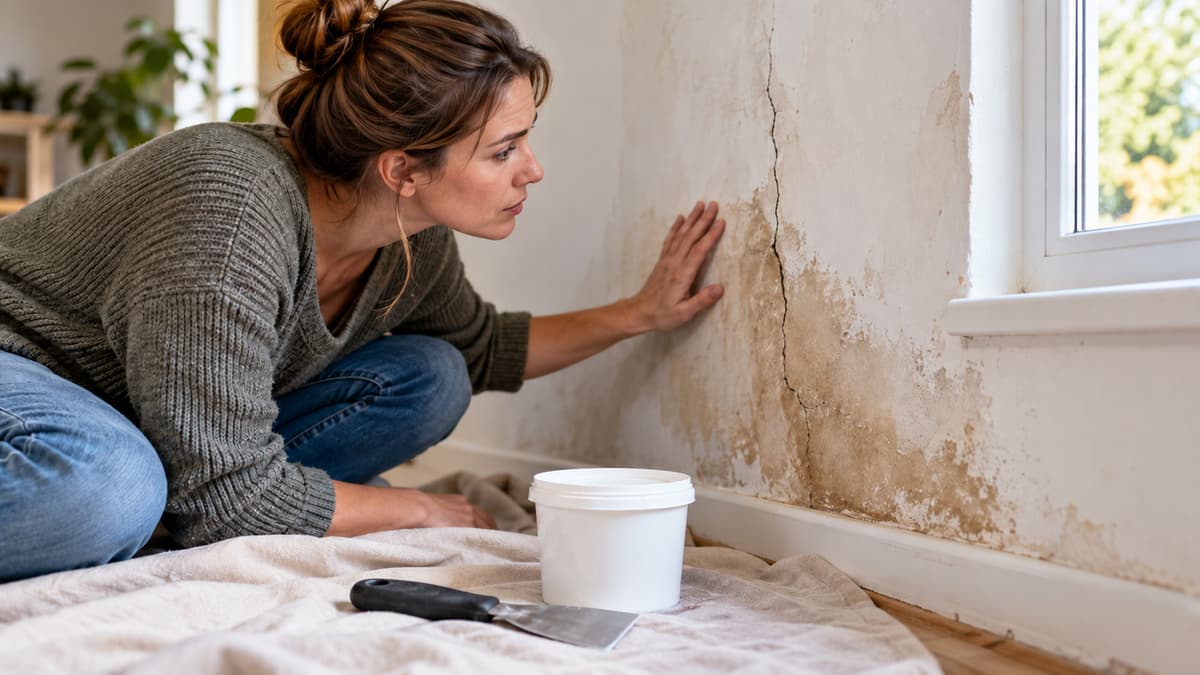
Filling cracks in damp walls: dry the wall first
Outside paste on the face does not cure damp inside. Deal with the damp before you fill.

Is wall filler non toxic? What UK labels mean
Waterproof on a feature line is not the same sentence as suitable for exposed exterior walls.