Independent comparisons. We may earn from shop links. More info

How to set up a solar electric fence energiser

Updated: October 2026

The unit is on the ground and you want a shock before the horses go in. How to set up a solar electric fence energiser is mostly the earth and the grass, not the switch. A short dry rod and a green line both look like a dead energiser. This page is that first connection for the units in our [solar electric fence energiser comparison](/hub/fencing-and-wire/solar-electric-fence-energiser). It does not rank them. Peter F. checked the box contents on 19 October 2026. A qualifying purchase can earn us a commission at no extra cost to you.

The unit is on the ground and you want a shock before the horses go in. How to set up a solar electric fence energiser is mostly the earth and the grass, not the switch.

Our top picks

Mekturm Mekturm 0.2 J

Best value

Mekturm Mekturm 0.2 J
5.8/10about £105.99
JKLESA JKLESA 5 km solar unit

Rank 3

JKLESA JKLESA 5 km solar unit
4.6/10about £115.99
On this page

Charge it, then face the panel

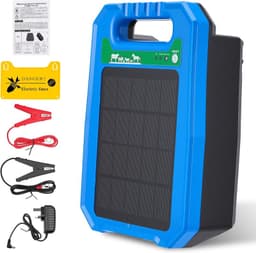
Give the battery a mains charge before you rely on a grey day, where the listing includes an adapter. My Animal Command and JKLESA name a 12 V / 2 A UK plug. The other four mention an adapter and do not state the plug type. One verified review of Trsaow’s SDWL2 says the battery held no charge from the mains. If it stays dead on the plug, the panel will not rescue it. Mount the housing with the panel in open light. These files do not print a compass heading. In Britain, face the panel south, clear of a hedge that shades it from late morning. A 3 W panel has less margin in cloud than a 6 W panel. ShockRite’s order is earth stake, mount, green lead, red lead, then the switch. If your housing prints different colours, follow that label.

Earth stake, then the live wire

Put the earth stake in damp soil, not in dry chalk or on gravel. My Animal Command includes a 50 cm rod. That is the box contents, not a legal minimum. JKLESA’s bullets name a rod, and one review says it was missing. Mekturm, ATMOREA and both Trsaow units do not list an earth stake. AHDB’s figure is about 30–40 cm of 16 mm rod per joule, and a reading above about 200 V means you add stakes. Keep them at least 10 m from the building earth and from metal water pipes, even on a 0.25 J unit. Connect the earth lead first, then the live lead, using fence cable rather than a scrap that leaks into wet grass. One energiser only, and no faster than one pulse a second. Do not connect the live lead to barbed wire.

Grass, dry soil, and a unit that clicks but does not sting

Grass and a dry rod both imitate a broken energiser. A 0.2 J or 0.25 J pulse has little spare once the line is green, so clear the fence before you order a larger unit. In a dry spell the 50 cm rod may not reach moisture. Add a stake in a damp patch and test again. If the tester is strong at the unit and weak at the far end, the fence is leaking or the earth is poor. If a short, clear wire is already weak at the unit, look at the battery. If the pulse, the earth and a clear wire are all sound and the animals still walk through, the joules are the limit. Sheep are on the solar electric fence energiser for sheep page. Winter charging is the solar fence energiser vs battery choice.

Paths, barbed wire, and one energiser only

Stop if the wire would cross a footpath or a bridleway. GOV.UK says you must not obstruct a public right of way or narrow its legal width. Cornwall asks for signs about every 50 m where a fence meets a path. Shropshire uses 100 m alongside a path, so copy your own authority. Mekturm and ATMOREA include a warning sign. The other boxes do not, and you still need signs where people meet the fence. Do not electrify barbed wire. Keep live conductors offset by at least 150 mm. If the route touches a path or an overhead line, call the rights-of-way team instead of adding a second solar box. If the joules are simply too low for the animal, that decision is the solar electric fence energiser buying guide.

Common questions

Do I charge it before I put it out?
Yes, where the box includes an adapter. A first mains charge fills the battery and shows whether it accepts power. My Animal Command and JKLESA name a UK plug. The other listings mention an adapter without a plug type. One UK review of Trsaow’s 0.2 J unit says the battery held no charge from the mains. A panel does not fix a battery that will not charge.
Which lead is live and which is earth?
ShockRite’s solar guide puts the green lead on the earth stake and the red lead on the fence, after the unit is mounted. Follow the colours printed on your own housing if they differ. Connect the earth first, then the live wire. My Animal Command includes crocodile clips for those leads. Several other included-component lines are thinner, down to a line that says only manual.
How long an earth rod do I need for a small unit?
My Animal Command supplies 50 cm, and that is a box fact, not a legal minimum. AHDB suggests about 30–40 cm of 16 mm rod per joule in UK conditions, and more stakes if the earth reading is above about 200 V. Electric Fencing Direct cites about a metre of rod per joule on systems that may be larger than these. Dry soil needs a damper spot or another stake either way.
Can the fence cross a footpath?
No. Do not obstruct a public right of way or narrow its legal width. Use signs where stock fencing meets visitors. Local sign spacing differs: Cornwall cites about 50 m where a fence meets a path, and Shropshire cites 100 m alongside a path. If the line would cross a path or a bridleway, speak to the rights-of-way team before you clip the live lead on.
What if the unit switches itself off?
Disconnect the fence and see if it stays on after a full charge. Reviews on JKLESA and Mekturm describe units that switched off or died while they should have been charged, and animals got out. That is a return, not a vegetation problem. If it only fails with the fence connected, walk the line for a short or a heavy weed load.

Related pages

Sources

Public UK sources and the amazon.co.uk listings for B0B494JWMW, B0G3X682PZ, B0GTPYTLV1, B0FCFJY8G5, B0FHGN2TZY and B0FDKDSG7H. Prices stored 19 October 2026.

  1. BSI, BS EN IEC 60335-2-76:2021+A11:2021, electric fence energizers (retrieved 19 October 2026)
  2. Voltimum UK, installation requirements for electric fencing (retrieved 19 October 2026)
  3. GOV.UK, public rights of way: landowner responsibilities (retrieved 19 October 2026)
  4. GOV.UK, the Countryside Code: advice for land managers (retrieved 19 October 2026)
  5. AHDB, components of an electric fence (retrieved 19 October 2026)
  6. Compel, electric fence energiser joule bands (retrieved 19 October 2026)
  7. Electric Fence Online, sheep energiser buyer’s guide (retrieved 19 October 2026)
  8. Farmcare UK, 12 V energisers and a winter mains boost (retrieved 19 October 2026)