Independent comparisons. We may earn from shop links. More info

Electric fence wire buying guide: check ohms first

Updated: October 2026

You are pricing red-and-white reels on amazon.co.uk, and the pence per metre looks like the whole decision. An electric fence wire buying guide starts earlier: the metres you will tension, whether the listing prints ohms per metre, and whether you need twine, tape, rope or steel. Every reel on the [electric fence wire comparison](/hub/fencing-and-wire/electric-fence-wire) is polywire, and none of the nine prints an ohms figure. Prices are amazon.co.uk extracts from 19 and 20 October 2026. Peter F. is the DIY & tools editor. A qualifying purchase can earn a commission at no extra cost to you.

You are pricing red-and-white reels on amazon.co.uk, and the pence per metre looks like the whole decision.

Our top picks

On this page

What to compare before the price

Resistance comes first, then visibility, then length. AHDB describes polywire as polyethylene twine with stainless filaments for temporary fences, and steel when the line is meant to stay. Shop six-strand with 6 × 0.20 mm stainless often sits around 3.8 to 4.7 ohms per metre: Gallagher Vidoflex 6 prints 3.8, Agridirect's 6-conductor page prints 4.7 with 6 × 0.15 mm, and Willis lists Hotline P21 at 4.15. Those figures belong to those products, not to these nine reels. Copper-bearing twine can fall under 1 ohm per metre. Gallagher's TurboLine is quoted at 0.06. Six strands in a title is not that number.

Length against the conductor you actually have

Match the reel to the metres you will tension. Entry prices are about £12 to about £14: XBLYL about £12.49 for 200 m, Rutland about £12 for a 250 m title, SolaceShine about £13.70 for 200 m. The 500 m band is about £23 to about £28, Longzhuo about £27.99. Yazhuo 1,000 m is about £36.64 and ohbien's 1,000 m nine-strand reel is about £47.99. Two hundred to 250 m covers strips you move. Five hundred metres is the usual paddock reel for ordinary six-strand stainless. A 1,000 m reel belongs only when the ohms and the energiser can hold one run. AHDB plans about one joule per mile of polywire before grass. A mile is roughly 1,600 m. Named picks sit on the best electric fence polywire page.

When the reel is the wrong family

Leave this set unless the job is a short temporary cattle or sheep strip. GOV.UK FG3 asks for a mains energiser, at least four mild-steel or high-tensile plain wires, a fence at least 1.05 m, and straining posts. Polywire is not a complying conductor. AHDB still allows polywire on a permanent farm fence in the everyday sense. Those two uses of permanent are different jobs. A horse that must see the boundary needs tape or rope inside a physical fence. Families are on polywire or polytape. The species limit is electric fence wire for horses. One energiser per fence, and barbed wire that stays dead, are AHDB rules.

Clashes that break a straight comparison

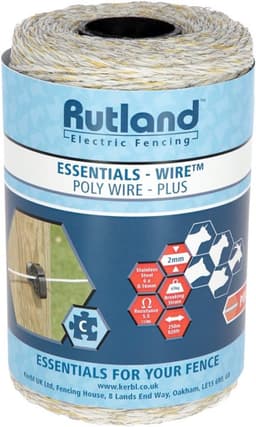
SolaceShine's title says 200 m and one bullet says 200/500 m. Rutland's title says 250 m, model 426117, and one bullet says a 500 m spool. You cannot divide about £12 by 500. Longzhuo's title says six strands and 500 m. One verified review says the advert stated nine and the pack stated six. Ohbien's 2 mm each and 3 mm each bullets are unverified, not filament diameter or ohms. APACALI's title says polywire and rope, one bullet says tape, and the diameter row says 2 mm. Rutland does print 6 × 0.16 mm and a 63 kg break load, and still omits ohms. Kerbl's table for 426117 prints a resistance the Amazon bullets do not. That shop figure stays off this row.

Common questions

What should you check before the price per metre?
Check the ohms per metre, the length you will tension, and whether you are buying twine, tape, rope or steel. None of the nine amazon.co.uk reels in this comparison prints ohms. A six-strand title is not a substitute for that figure. Shop examples of ordinary six-strand stainless sit around 3.8 to 4.7 ohms per metre, and those numbers belong to the products that print them.
Is six stainless strands a known ohms figure?
No single ohms figure belongs to the words six strand. Filament diameter and metal type change it. A 6 × 0.20 mm stainless polywire on UK shop cards is often near 4 ohms per metre, while a thinner 0.15 mm or 0.16 mm set sits higher, and a copper-bearing twine can fall well under 1 ohm per metre. The Rutland listing prints 6 × 0.16 mm and does not print ohms. Keep another seller's ohms figure on that seller's product.
When is 200 m enough, and when is 1,000 m too much?
Two hundred to 250 m is enough for one or two strips you move with the stock. Five hundred metres is the usual paddock reel when the conductor is ordinary polywire and you know the ohms. A thousand metres of six-strand stainless is a long commitment when the listing prints no resistance and the energiser is a small battery unit. AHDB's planning line is about one joule per mile of polywire before grass. A long thin reel at a low price per metre still has to carry that pulse.
Why do shop polywires publish about 4 ohms per metre while some lines sit under 1?
Ordinary stainless six-strand, around 0.15 mm to 0.20 mm filaments, is the higher-resistance family, often near 3.8 to 6.8 ohms per metre depending on the exact metal. Mixed-metal twine that adds copper drops sharply. Gallagher's UK page quotes 0.06 ohms per metre for a copper TurboLine. That gap is why strand count alone cannot rank a reel. The nine listings here publish neither family of number, so you cannot place them on that scale from the page.
Can these reels meet an FG3 grant fence?
They cannot meet FG3 as the conductor. GOV.UK requires a mains energiser and at least four plain steel or high-tensile wires, with the fence at least 1.05 m. Polywire is absent from that specification. AHDB's note that polywire can be used on a permanent farm fence is a different standard from the grant. If the paperwork says FG3, you leave this set and buy steel, with straining posts, rather than a polywire reel.

Related pages

Sources

Public UK sources and the amazon.co.uk listings in this set, checked on 19 October 2026.

  1. AHDB: Components of an electric fence (retrieved 19 October 2026)
  2. AHDB: How to set up electric fencing for cattle and sheep (retrieved 19 October 2026)
  3. AHDB: Types of electric fencing (retrieved 19 October 2026)
  4. GOV.UK: Permanent electric fencing (FG3) (retrieved 19 October 2026)
  5. BSI: BS EN IEC 60335-2-76:2021+A11:2021 (retrieved 19 October 2026)
  6. Cornwall Council: Electric fence guidance for landowners (retrieved 19 October 2026)
  7. British Horse Society: Fencing (retrieved 19 October 2026)
  8. amazon.co.uk: polywire electric fence (retrieved 19 October 2026)