Electric fence wire for horses: see the line first
The amazon.co.uk title says horses in the same breath as sheep and a crop edge. Electric fence wire for horses in this comparison is polywire, a narrow twine, not tape a horse can see at a canter. The British Horse Society and the British Veterinary Association point you at visible tape or rope inside a real boundary. This page is that one species, not a star table of the nine reels on the [electric fence wire comparison](/hub/fencing-and-wire/electric-fence-wire). Conductor shapes sit on [polywire or polytape](/hub/fencing-and-wire/electric-fence-wire/sub/electric-fence-wire-polywire-or-tape). Signs and earth for a stock line sit on [how to install electric fence polywire](/hub/fencing-and-wire/electric-fence-wire/sub/electric-fence-wire-how-to-install), except the clearances below. Peter F. is the DIY & tools editor. A qualifying purchase can earn a commission at no extra cost to you.
The amazon.co.uk title says horses in the same breath as sheep and a crop edge. Electric fence wire for horses in this comparison is polywire, a narrow twine, not tape a horse can see at a canter.
The amazon.co.uk title says horses in the same breath as sheep and a crop edge. Electric fence wire for horses in this comparison is polywire, a narrow twine, not tape a horse can see at a canter. The British Horse Society and the British Veterinary Association point you at visible tape or rope inside a real boundary. This page is that one species, not a star table of the nine reels on the electric fence wire comparison. Conductor shapes sit on polywire or polytape. Signs and earth for a stock line sit on how to install electric fence polywire, except the clearances below. Peter F. is the DIY & tools editor. A qualifying purchase can earn a commission at no extra cost to you.
Our top picks
| Badge | Product | Thickness claim | Colour | amazon.co.uk reviews | Note | Price | Offer |
|---|---|---|---|---|---|---|---|
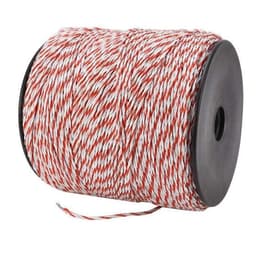
| Best overall |  Longzhuo Longzhuo polywire 500 m, 6-strand | n/a | Red and white | 4.6 from 39 | 8.5 | about £27.99 | View offer |
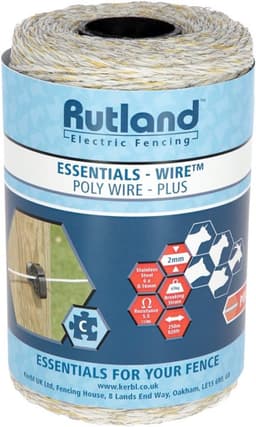
| Best value |  Kerbl Rutland polywire 250 m, 6-strand | 2.5 mm | White/yellow | 4.4 from 36 | 8.0 | about £12 | View offer |
 APACALI APACALI polywire 500 m, 6-strand | 2 mm | Blue and white | 2.9 from 2 | 3.1 | about £25.99 | View offer |

On this page
What a horse has to be able to see
What these nine reels actually are
What two buyers said, and the limit of that
Gates, bridleways, and the physical fence
Common questions
Can this polywire be the only fence for a horse?
What do BHS and BVA say you should be able to see?
What did the horse-related reviews prove?
Is a light twine safer because it snaps?
How high should the horse boundary be?
What clearance applies near a gate or a bridleway?
Related pages
Sources
Public UK sources and the amazon.co.uk listings in this set, checked on 19 October 2026.
- AHDB: Components of an electric fence (retrieved 19 October 2026)
- AHDB: How to set up electric fencing for cattle and sheep (retrieved 19 October 2026)
- AHDB: Types of electric fencing (retrieved 19 October 2026)
- GOV.UK: Permanent electric fencing (FG3) (retrieved 19 October 2026)
- BSI: BS EN IEC 60335-2-76:2021+A11:2021 (retrieved 19 October 2026)
- Cornwall Council: Electric fence guidance for landowners (retrieved 19 October 2026)
- British Horse Society: Fencing (retrieved 19 October 2026)
- amazon.co.uk: polywire electric fence (retrieved 19 October 2026)