Independent comparisons. We may earn from shop links. More info

How to install electric fence polywire on the strip

Updated: October 2026

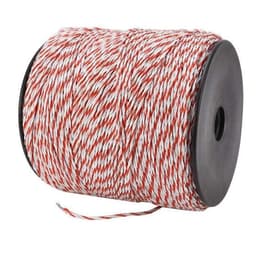
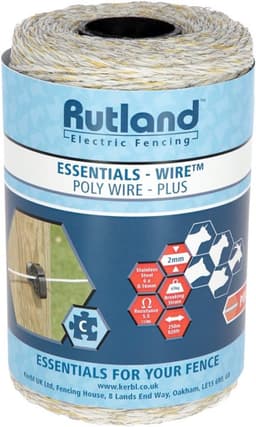
You already have a polywire reel, and the temporary cattle or sheep line is the job. The reel does nothing until an energiser, a tested earth, joins that conduct, and signs where the public can touch the wire are in place. This is how to install electric fence polywire. It does not rank the nine reels on the [electric fence wire comparison](/hub/fencing-and-wire/electric-fence-wire). Length and ohms sit on the [buying guide](/hub/fencing-and-wire/electric-fence-wire/sub/electric-fence-wire-buying-guide). Hang the conductor only after the earth and the public-path question are settled. Peter F. is the DIY & tools editor. A qualifying purchase can earn a commission at no extra cost to you.

You already have a polywire reel, and the temporary cattle or sheep line is the job.

Our top picks

On this page

What the reel does not include

None of the nine boxes lists an energiser, posts, insulators or a tester. SolaceShine and Longzhuo name a chuck in the title, and the included line is still the wire. A splice claim is not a joiner in the box. AHDB's example for about 300 m is two anchor posts, two struts, 20 fibreglass posts and 75 insulators, not a 1,000 m reel in one go. If the listing cannot agree 200 m or 500 m, measure the reel before you set the anchors.

Earth, one energiser, and a tester

A reel with no return path is not a fence. AHDB's rule of thumb is about 30 to 40 cm of 16 mm copper-coated rod per joule, in damp ground, linked so the join conducts. Above about 200 V on the earth after you short the live side, add rods. One energiser feeds one fence. AHDB separates systems by at least 2 m. Gallagher's UK page says 3 m, and an earth at least 10 m from the mains earth. Keep the larger gap. Do not electrify barbed wire.

Strands, posts and joins on a temporary line

AHDB's temporary cattle and sheep layout is up to three strands at 25 cm, 50 cm and 75 cm, bottom wire out of wet grass, with one gateway at the end. Posts are about every 12 to 20 m for sheep and calves and 15 to 25 m for cattle, closer on rolling ground. Electric Fence Online says a knot breaks the filaments. Use a Litzclip-style joiner up to about 3 mm, or a Gallagher-type connector, and test the join, the earth and the far end.

Signs, footpaths, and when to stop

AHDB wants signs every 50 m or less near a footpath, and a non-live crossing. Cornwall matches 50 m, allows one live strand on a footpath if the current is broken and the wire is insulated for at least 1 m, and bars an electric fence across a byway. Shropshire uses 100 m beside a path and advises against bridleways. There is no single UK spacing, so follow the highway authority and use the tighter figure if you are unsure. Stop for a right of way, a new mains circuit, or an animal on the wire. Horse clearance and tape sit on electric fence wire for horses and polywire or polytape.

Common questions

What has to be on the ground before the polywire is useful?
An energiser, an earth you have tested, posts, insulators, a tester, and a decision about any public path. The reel is the conductor only. None of the nine amazon.co.uk boxes in this comparison lists that kit. A chuck named in a title is not an energiser.
How many strands, and how high, for temporary cattle or sheep?
AHDB's temporary pattern is up to three strands, lowest wires at 25 cm, 50 cm and 75 cm, with the bottom wire kept out of the grass. Sheep and calves use posts about every 12 to 20 m, cattle about every 15 to 25 m, closer on rolling ground. One gateway at the end of the line is their usual temporary layout.
How deep should the earth rod be, and when is it not enough?
AHDB's rule of thumb is about 30 to 40 cm of 16 mm copper-coated rod for each joule of energiser output, in damp ground. After you short the live side, a reading still above about 200 V on the earth means you add rods. Gallagher's UK note also keeps the earth at least 10 m from the mains earth.
Why should you not knot the polywire?
A knot breaks the fine stainless filaments and the joint stops carrying the pulse, which Electric Fence Online and the joiner makers both describe. Use a metal polywire connector, then check across the join with a tester. Listings that say the wire is easy to splice do not include that connector. A knot can hold for a day while you fetch a joiner. It is not the lasting connection on a paddock.
Where do warning signs go, and why do Cornwall and Shropshire differ?
AHDB and Cornwall say signs every 50 m or less near a footpath. Shropshire's note uses 100 m beside a path. Those are different published figures, not one UK law you can quote as a single distance. Put signs where the public can reach the wire, and ask the highway authority for the path you are beside. If you are unsure which note binds you, use the shorter spacing until they confirm it.
What do you do if the line crosses a footpath?
Break the current at the crossing and insulate the wire for at least 1 m, which is Cornwall's footpath note, and give people a non-live place to cross, which is AHDB's. A single live strand is Cornwall's usual allowance on a footpath. Do not run an electric fence across a public byway. If you are not sure the line is a footpath, a bridleway or a byway, stop and ask the highway authority before the wire goes up.
When is this no longer a DIY job?
A new mains circuit belongs to an electrician. Any crossing of a public right of way, a bridleway or a byway belongs with the highway authority before you tension the reel. An animal tangled or injured on the line is an emergency, not a troubleshooting step. Grant fences that specify high-tensile steel are a different build from this temporary polywire run.

Related pages

Sources

Public UK sources and the amazon.co.uk listings in this set, checked on 19 October 2026.

  1. AHDB: Components of an electric fence (retrieved 19 October 2026)
  2. AHDB: How to set up electric fencing for cattle and sheep (retrieved 19 October 2026)
  3. AHDB: Types of electric fencing (retrieved 19 October 2026)
  4. GOV.UK: Permanent electric fencing (FG3) (retrieved 19 October 2026)
  5. BSI: BS EN IEC 60335-2-76:2021+A11:2021 (retrieved 19 October 2026)
  6. Cornwall Council: Electric fence guidance for landowners (retrieved 19 October 2026)
  7. British Horse Society: Fencing (retrieved 19 October 2026)
  8. amazon.co.uk: polywire electric fence (retrieved 19 October 2026)