Independent comparisons. We may earn from shop links. More info

How to install deer netting

Updated: October 2026

The roll will not stand up by itself. Installing deer netting means posts tall enough for the clear height you already chose, a net pulled tight without cutting a single strand, a base with no gap a roe or muntjac can use, and a gate that is the same barrier. Species heights stay on the [deer fence buying guide](/hub/fencing-and-wire/deer-fence/sub/deer-fence-buying-guide). The product table is the [deer fence comparison](/hub/fencing-and-wire/deer-fence). Updated in October 2026 by Peter F. from listings, reviews, and public UK advice. No lab test of these rolls.

The roll will not stand up by itself.

Our top picks

On this page

Posts before the net

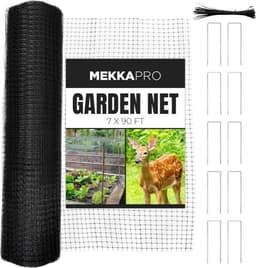
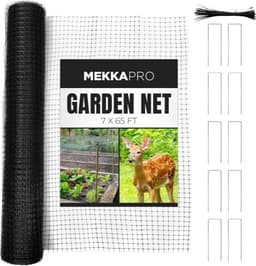
None of these listings includes posts. Feitore does not name pegs. MEKKAPRO claims 10 ground pegs and 50 zip ties, which hold a hem, not a fence line. If you planned 1.8 m, the posts have to carry that height after you lap the bottom. Set the posts before you unroll. A heavier-plastic seller's 2.4 m posts at 2.5 m centres belong to that sheet, not to these rolls. Call a contractor for strainers, a grant line, or a listed curtilage. An injured deer in the mesh is a reason to get help.

Tension without tearing a strand

Pull the net tight enough that it does not belly, and stop before the fixing cuts a single filament. A staple through one strand is a tear waiting for the next gust. Spread the load with a batten or several short ties, which is how a heavier-plastic seller fixes its own mesh. MEKKAPRO nets arrive folded, not on a roll, so work the creases out before you fix the height. Do not strain them like high-tensile steel. If a filament starts to cut, ease off. Walk the line after wind.

The bottom edge

Roe and muntjac use a gap under about 15 cm. The British Deer Society's muntjac note adds a lap of about 150 mm turned onto the ground, pegged or turfed. Forest Research describes the same sort of lap. Peg it so a nose cannot lift a bay. One trade method lifts plastic 100 mm to 125 mm and runs barbed wire underneath so rabbits can pass. That gap is the deer route you are trying to shut. Do not combine the two. If the aim is deer, the hem stays on the ground. Slack tape is a hazard, not a hem.

The gate and a deer inside

The gate has to reach the same height and the same closed base as the sides. A hurdle with a hand's width underneath is a door for muntjac. Latch it. An allotment gate left open is the usual gap, not a failure of mesh size. If a deer is already inside, do not chase it. The British Deer Society says not to shoo a deer in the garden. Under the Deer Act 1991 a fence may exclude deer, and it is not a trap. Open the gate, leave, and let it find the way out. Then check the lap. If the same deer is back through a tear, the material is the problem, which is the fork on plastic deer netting or a wire fence.

Common questions

Can I just unroll this and peg it?
You can peg a hem. You cannot make a deer fence from pegs alone. These nets sag unless they are held on posts and a top line, which is what Feitore reviews describe and what MEKKAPRO reviews say when the folded sheet is not stretched on a frame. Ten ground pegs, where the box includes them, do not replace posts.
How do I stop deer going underneath?
Keep any gap under the net below the roughly 15 cm that roe and muntjac use, and for muntjac turn about 150 mm of net onto the ground and peg or turf it. Check the lap after wind and after you have opened the gate. A shop method that lifts the net 100 mm or more so rabbits can pass is a different goal, and it reopens the deer route.
What posts do I need if the box has none?
You supply them. The clear height you chose on the buying guide has to remain after the bottom lap is turned. A heavier-plastic seller uses posts about 2.4 m long at about 2.5 m centres for their mesh. That is their build, not a measured spacing for these 40 GSM or 789 g rolls. Call a contractor if the run needs strainers or a grant specification.
Should I staple the plastic to the post?
A staple through one strand is a weak point on a light net. Spread the fixing with a batten, a lath, or several short ties, which is the same lesson as the trade advice to batten heavier plastic rather than staple it. MEKKAPRO's longer zip ties can load a single hole. Stop tightening when the filament starts to cut. Do not tension this garden net like high-tensile wire.
What do I do about the gate?
Build the entrance to the same height and the same closed base as the sides. A leaned hurdle with a gap underneath undoes the lap you pegged. Latch it. The RHS notes that entrances need deer-proof gates, and allotment advice says gates and corners are where lines fail. If you need the gap for a mower, make a gate you shut, not a permanent opening.
The MEKKAPRO net arrived folded. Does that change the job?
Yes, at the start. Reviews say it is folded and strapped, not wound on a roll, so creases fight you until the sheet is opened flat. Lay it out, stretch it, then fix it. Cutting needs scissors on the 19.8 m reviews. The fence after that is the same sequence: posts, a spread fixing, a pegged base, and a matching gate. Folded packing is not a reason to skip the base.

Related pages

Sources

Public UK sources and the amazon.co.uk listings used for this comparison, October 2026.

  1. RHS, Deer (retrieved 20 October 2026)
  2. British Deer Society, deer in gardens (retrieved 20 October 2026)
  3. British Deer Society, fencing and muntjac (retrieved 20 October 2026)
  4. GOV.UK, Countryside Stewardship FG9 deer fencing (retrieved 20 October 2026)
  5. Forest Research, Forest Fencing (retrieved 20 October 2026)
  6. Town and Country Planning (General Permitted Development) (England) Order 2015, Class A (retrieved 20 October 2026)
  7. Deer Act 1991 (retrieved 20 October 2026)
  8. amazon.co.uk deer-net listings (Feitore and MEKKAPRO) (retrieved 20 October 2026)