Independent comparisons. We may earn from shop links. More info

Aluminium vs steel DIN rail

Updated: October 2026

You are choosing a metal for a short rail, and a guide about earth or PEN has made aluminium and steel sound like opposite rules. They are not. Aluminium in this set is a dry clip-on choice when the reviews agree with the title. Zinc-plated iron or steel is the usual indoor panel metal. Neither of these eight amazon.co.uk packs is an earth bar or a PEN bar, whatever the title says. Prices and the eight-row table stay on the [DIN rail comparison](/hub/electrical-equipment/din-rail). The PE and PEN sentences are Weidmüller, Techna and Schneider, for their own rails, not a lab test of these offcuts.

You are choosing a metal for a short rail, and a guide about earth or PEN has made aluminium and steel sound like opposite rules. They are not.

Our top picks

On this page

What the eight packs actually claim

Five titles say aluminium or aluminium alloy: HUATEEN, Taiss, CHENYU, Chsoejuf and CKANDAY. Three say iron or steel: Finehenchi is C45 steel, Bigxin is zinc-plated iron, and JJL is galvanised iron. Iron is not a third profile. Two UK reviews of CHENYU, listed as aluminium at £5.99, say the pieces were steel and magnetic. A magnet is the check before you treat that title as the metal. Finehenchi has a UK review that says the rails were steel as described. Bigxin and JJL are sold as iron, and reviewers also say steel. How to read a conflicting listing is on the DIN rail buying guide.

Stiffness and the oxide layer

Taiss reviews describe a thin aluminium section, devices that sit loose, rough ends and lengths under the stated 250 mm. That is a clip problem, not an earth problem. Finehenchi's C45 steel is called a light section, with rough edges, and the listing prints both 8 mm and 6 mm. A thin rail lets a device rock whether the title says aluminium or steel. Schneider's TeSys Island guide asks for galvanised steel, not aluminium, on its own IEC 60715 top-hat, because aluminium forms a non-conductive oxide that gets in the way of the electrical connection that family uses for EMC. It is not a certificate for these packs.
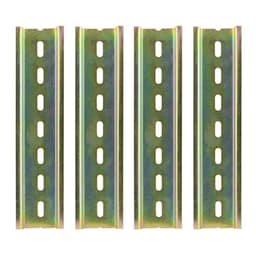
Bigxin Bigxin 8-piece 300 mm rail

Testsieger

Bigxin Bigxin 8-piece 300 mm rail
8.4/10about £10.99

Earth and PEN are not a metal slogan

Techna says its own steel rails, zinc plated and chrome passivated, in 1 m and 2 m trade lengths, may be used as a grounding busbar for PE and do not provide PEN. That sentence is about Techna's rails. For a PEN busbar, Weidmüller allows only E-Cu or aluminium profiles, and only with the short-circuit and thermal currents it publishes for those rails. Steel is outside that PEN sentence. Schneider refuses aluminium where its own product needs a conductive rail for EMC. None of those pages is a licence for these eight packs. Opening a home board is on DIN rail consumer unit.

When aluminium, when steel, when neither

Choose aluminium when the job is a light, dry clip-on row and the title survives a magnet check. In this set that is HUATEEN, Taiss, Chsoejuf or CKANDAY. CHENYU fails the magnet test on the captured UK reviews, so leave it out of the aluminium choice. Choose zinc-plated iron, galvanised iron or the listed C45 steel when you want the usual indoor panel metal and you accept the cut-quality notes. That is Finehenchi, Bigxin and JJL. Choose neither when the design asks the rail to be PE or PEN. These packs do not publish short-circuit currents, and copying Techna or Weidmüller onto them invents a conductor you have not bought. Which pack the UK notes support is on best DIN rail.

Common questions

Is aluminium or steel the normal rail for a dry enclosure?
Both appear in real panels. Zinc-plated steel or iron is the usual indoor rail. Aluminium is a reasonable clip-on rail in a dry box when you are not asking it to be the earth path. In this set, use aluminium only where the reviews do not say the parcel was magnetic steel. Use the iron and C45 listings when you want that usual panel metal and you can live with unstated or conflicting heights.
Does zinc-plated iron mean a different profile from steel?
No. Bigxin's zinc-plated iron and JJL's galvanised iron are ferrous rails with a coating, not a third clip shape. Reviewers call Bigxin steel as well. The profile you still need is 35 mm top-hat unless the device asks for something else. The coating is not a BS EN number, and it is not a PEN rating.
Why do two reviews say a listed aluminium pack is magnetic?
CHENYU's title and bullets say aluminium. Two UK reviews say the rails received were steel and magnetic, and one says the width was slightly short. Listings in this search sometimes swap the metal words. A magnet on arrival tells you which parcel you have. It does not turn that parcel into a certified earth bar.
Can I use any of these rails as an earth bar?
No. Techna allows PE, not PEN, on its own steel trade rails. Weidmüller limits PEN to specified copper or aluminium with published currents. Schneider wants galvanised steel for its own EMC connection and refuses aluminium there because of the oxide layer. None of those limits is a data sheet for these eight packs. Treat every pack here as a mounting rail only.
Why do some guides allow aluminium for PEN and others forbid it?
They are describing different products. Weidmüller allows aluminium for PEN only on profiles whose short-circuit and thermal currents it publishes, and it does not put steel in that sentence. Schneider forbids aluminium where oxide would spoil its own rail connection. Both can be true, and neither applies to an unbranded amazon offcut with no current figure.
What must I not claim about these unbranded packs?
Do not claim they are certified to BS EN 60715, UKCA or BS 7671. Do not assign Weidmüller's current figures to them. Do not say steel can never be earth, or that aluminium must be PEN. Do not call iron a separate profile. Say which manufacturer's sentence you mean, and keep these packs as mounting rail.

Related pages

Sources

Public UK sources from the research digest. Shelf prices and star lines are the amazon.co.uk figures in the display file. Listings do not show BS EN 60715, UKCA or BS 7671 compliance.

  1. RS DIN rails guide (retrieved 22 October 2026)
  2. Weidmüller UK: DIN rails and mounting rails (retrieved 22 October 2026)
  3. Weidmüller brochure: DIN rails and electrical busbars (retrieved 22 October 2026)
  4. Techna DIN rail datasheet (retrieved 22 October 2026)
  5. IEC 60715:2017 (retrieved 22 October 2026)
  6. GOV.UK: Approved Document P (retrieved 22 October 2026)
  7. Electricity at Work Regulations 1989 (retrieved 22 October 2026)
  8. HSE: Electricity at Work Regulations 1989, HSR25 (retrieved 22 October 2026)