Independent comparisons. We may earn from shop links. More info

SDS vs combi drill

Updated: 2026-10-23

Your combi drill already has a hammer setting, and the lintel has stalled. A combi rattles the bit with a ridged disc. An SDS-Plus rotary hammer hits a sliding shank with a piston. Keep the combi for 6–8 mm plugs in soft brick and for screws. Move to SDS-Plus for engineering brick, a concrete lintel, or a chisel, and keep the combi for timber. The six SDS tools in this set are on the [hammer drill SDS plus comparison](/hub/drilling-and-accessories/hammer-drill-sds-plus). Products Compared did not lab-test a combi against these hammers. A qualifying purchase can earn a commission.

Your combi drill already has a hammer setting, and the lintel has stalled. A combi rattles the bit with a ridged disc. An SDS-Plus rotary hammer hits a sliding shank with a piston.

Our top picks

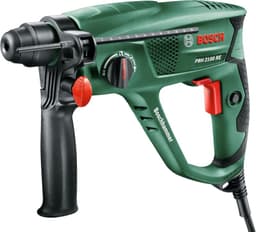
Bosch Bosch PBH 2100 RE

Best overall

Bosch Bosch PBH 2100 RE
9.2/10about £59.94
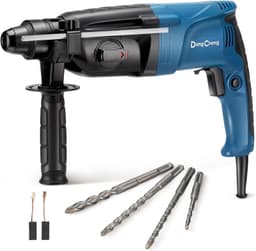
DongCheng DongCheng DZC05-26B

Best value

DongCheng DongCheng DZC05-26B
8.3/10about £47.17
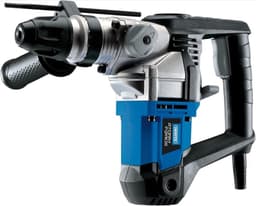
Draper Draper Storm Force 76490

Alternative

Draper Draper Storm Force 76490
6.4/10about £68.39
On this page

Two hammers, one word

Inside a combi drill, two ridged discs shake a straight-shank bit in a 13 mm keyless chuck. UK explainers often put that class under about 1 J. That figure is their guide, not your drill's datasheet. An SDS-Plus drill is electro-pneumatic: a piston strikes a 10 mm grooved shank that slides, while the chuck rotates it. You can stop the rotation and use a chisel. Pressing harder on the combi will not do that job. If the title never says SDS, and your bits are round, you are still on the combi side. How to read joules is the SDS drill buying guide.

Stay with the combi drill when

Stay with the combi for 6–8 mm plugs in soft brick or block, for timber, and for screws. Maker UK puts 5–8 mm plugs in ordinary brick on the combi and sends engineering brick, lintels and stone to SDS. Drill and Bit's split is similar: a combi around 8 mm in brick, SDS once holes pass about 10 mm or move into concrete. Those are guide sizes, not a test of your wall. If the bit is still cutting, and the dust is brick rather than a glazed ring, finish the job.
Bosch Bosch PBH 2100 RE

Testsieger

Bosch Bosch PBH 2100 RE
9.2/10about £59.94

Move to SDS-Plus when

Move when the combi stalls on engineering brick, a concrete lintel, or a hole that glazes. Bosch PBH 2100 RE reviews describe the old hammer drill bouncing off the lintel and the SDS-Plus drill going through. That is amazon.co.uk experience, not a timed test. UKLintels says a battery combi is a poor lintel tool. Tile lifting needs a rotation stop and a chisel, which the combi does not offer. In this set the Draper states a rotation stop. If the combi has already failed, add an SDS-Plus drill rather than a second combi.

You will still want the combi drill afterwards

An SDS-Plus chuck does not take your old masonry bits. They need an adaptor, and hammer mode stays off with that adaptor fitted. The Stanew lists a conversion mandrel. The Bosch and the Enventor do not. Wood and screws remain combi work, so keep both if the house has timber and hard masonry. Holes regularly past about 26–30 mm, or breaking out a slab, are SDS-Max or a hire tool. A structural opening or unknown tendons is a professional job.

Common questions

Will my combi drill do a brick wall?
Often, if the brick is soft and the plugs are about 6–8 mm. Maker UK and Drill and Bit both leave that job with the combi. Engineering brick and a hole that glazes are the point where those same guides move you to SDS-Plus. One successful hole in a partition is not evidence the lintel will behave. If the bit is polishing a dark ring and the drill is bouncing, stop and change tool rather than leaning harder.
What is actually different inside?
The combi uses a ratchet, two ridged discs, and a straight shank. The SDS-Plus drill uses a piston on a 10 mm grooved shank that slides while it is struck. The combi's blows are the small ones UK guides put under about 1 J. That 1 J line is their illustration, not a reading from a drill in this folder. Chisel mode, with rotation stopped, is the SDS feature the combi does not have.
Do I need both tools?
Yes, if the house contains both timber and hard masonry. The combi drives screws and drills wood with the bits you own. The SDS-Plus drill does the lintel, the engineering brick and the light chiselling. You do not need both on day one if every hole so far is a small plug in soft brick. You do need the SDS drill once that combi has stalled, and you still keep the combi for the screws.
Can an SDS drill drive screws and drill wood?
Only awkwardly. A straight-shank bit needs an adaptor, and the hammer must be off. Some listings include that adaptor and some do not. The clutch and the speed control on a combi are built for screws. Using the SDS drill as your only driver means fighting the chuck every time you pick up a wood bit. Keep the combi for that half of the job.
Why will my masonry bits not fit the SDS chuck?
Because they are straight shank and the chuck wants a 10 mm grooved SDS-Plus shank. An adaptor is a separate piece. Hammer mode with the adaptor fitted is how the adaptor gets damaged. SDS-Max bits will not fit either. If the whole reason you are hesitating is a drawer of round bits, price the adaptor, or accept that those bits stay on the combi.
Is a concrete lintel a combi-drill job?
Usually not. UKLintels warns against relying on a battery combi, and the Bosch reviews here describe combis that bounced off lintels and engineering brick. Start smaller when you do use an SDS bit, and move the hole if you hit reinforcing bar. A steel box lintel is a metal fixing, not a masonry hole. Do not drill chemical anchors through prestressing tendons.

Related pages

Sources

Public UK sources from the research digest, retrieved for the page dated 22 October 2026. Shelf prices, stars and review counts are the amazon.co.uk figures in the display file.

  1. HSE: Control of Vibration at Work Regulations (retrieved 22 October 2026)
  2. HSE: advice to employers on hand-arm vibration (retrieved 22 October 2026)
  3. HSE: CN3 drilling and cutting concrete and masonry (retrieved 22 October 2026)
  4. HSE: electrical equipment at work (retrieved 22 October 2026)
  5. GOV.UK: Electrical Equipment (Safety) Regulations 2016 (retrieved 22 October 2026)
  6. Bosch DIY UK: PBH 2100 RE (retrieved 22 October 2026)
  7. SDS Drill: corded SDS-Plus models (retrieved 22 October 2026)