Independent comparisons. We may earn from shop links. More info

How to use an SDS drill

Updated: 2026-10-23

You have an SDS-Plus rotary hammer in your hands, or you are about to borrow one, and the hole is in brick, block or a concrete lintel. The mistakes that waste the afternoon are leaning on the tool, leaving the hammer on for timber, and a bit that never clicked home. This is the sequence for one hole, then when to stop. It is not a ranking. The six drills we compared are on the [hammer drill SDS plus comparison](/hub/drilling-and-accessories/hammer-drill-sds-plus). Products Compared used UK guidance and the review notes on those listings. A qualifying purchase can earn a commission at no extra cost to you.

You have an SDS-Plus rotary hammer in your hands, or you are about to borrow one, and the hole is in brick, block or a concrete lintel.

Our top picks

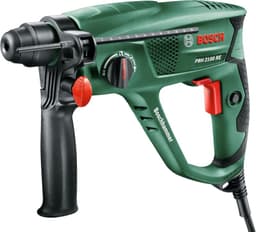
Bosch Bosch PBH 2100 RE

Best overall

Bosch Bosch PBH 2100 RE
9.2/10about £59.94
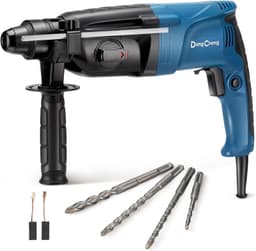
DongCheng DongCheng DZC05-26B

Best value

DongCheng DongCheng DZC05-26B
8.3/10about £47.17
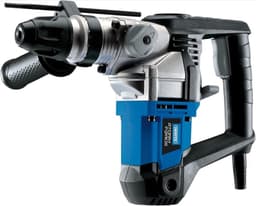
Draper Draper Storm Force 76490

Alternative

Draper Draper Storm Force 76490
6.4/10about £68.39
On this page

Before the trigger

Find cables and pipes before you mark the hole. Fit the side handle and use it. Grease the SDS-Plus shank lightly, pull the chuck collar back, push the bit in, twist until it clicks, and pull-test it. The bit should slide a little and should not come out while the collar is forwards. Mark the depth with tape, or use the depth rod if one was included. Set hammer-drill for masonry and drill-only, hammer off, for timber or steel. Change mode only when the tool is switched off, which the Enventor listing states. Round-shank bits do not go in this chuck. The Stanew lists an adaptor. The Bosch and Enventor boxes do not.

The hole itself

Hold the drill square and let the piston work. Feed is light. Pushing harder glazes the tip, and a clutch, where one is fitted, can drop the rotation while the hammer still taps. Bosch reviewers mistake that slip for a breakdown. If rotation stops, ease off and check for steel. Pull the bit out every few centimetres so the flutes clear, and ease off as it breaks through. On a concrete lintel, UKLintels says to start smaller and to move the hole if you meet reinforcing bar. Stop at a steel box lintel and change to a metal bit. Do not drill chemical anchors through prestressing tendons.
Bosch Bosch PBH 2100 RE

Testsieger

Bosch Bosch PBH 2100 RE
9.2/10about £59.94

If the bit will not click or will not stay

A bit that will not enter is often the wrong shank. SDS-Plus is the 10 mm grooved shank. An SDS-Max bit or a round masonry bit will not lock. Clean the chuck, grease the shank, pull the collar fully back, and twist while you push. Then pull-test. If the collar is forwards and the bit falls out, stop. One DongCheng corded review reports bits that would not stay. Do not hold the collar back with your hand. Hammer mode with a jaw adaptor fitted is how those adaptors get damaged.

Chisel mode, briefly

Tile lifting uses hammer-only, with the rotation stopped. Switch off, select the chisel setting, and set the angle before you start. A flat chisel under a tile wants a shallow angle. The Draper listing is the one in this set that states a rotation stop in so many words. If the dial has no hammer-only mark, that drill is the wrong one for the chase. Do not run a chisel in rotary-hammer mode.

When to stop

Stop if the housing is too hot to hold, if the trigger sticks on, or if the bit has hit steel you did not expect. Stop if a chemical anchor would pass through prestressing tendons, or if you do not know the services. Dust from concrete and some brick contains respirable crystalline silica. HSE sheet CN3 expects dust caught at the bit where you reasonably can, and respiratory protection at assigned protection factor 20 when you cannot. A decorating paper mask is not that specification.

Common questions

How hard should I push?
Hardly at all. The piston strikes a shank that is meant to slide. Your job is to keep the bit square, clear the dust and hold the side handle. Extra body weight slows the cut, overheats the tip and makes a clutch feel like a fault. If the hole is not advancing with a light feed, the mode, the bit or the material is wrong. Leaning will not invent joules the drill does not have.
How do I know the bit is locked?
Pull the collar back, insert an SDS-Plus bit, twist until you feel the click, release the collar and pull the bit towards you. It should slide a little and it should not come out. If it falls out with the collar forwards, stop. Clean and grease once. A second failure is a bad bit or a bad chuck, which matches both forum reports and the single DongCheng review of bits that would not stay.
Which mode is for concrete, and which is for a chisel?
Hammer-drill, with rotation and the piston, is the concrete and brick hole. Hammer-only, rotation stopped, is the chisel. Drill-only is timber and metal, and the hammer stays off. Change mode with the tool stopped. The Enventor listing says that explicitly. A chisel spinning in rotary mode is the wrong setup, and so is a wood bit left in hammer mode.
How do I drill a concrete lintel?
Mark the depth, start with a smaller SDS-Plus bit than the plug, and use a light feed with the side handle on. If you hit reinforcing bar, move the hole rather than drilling through the bar, which is the UKLintels method. A steel lintel means you stop and change to a metal bit. Do not drill chemical anchors through prestressing tendons. Naylor's note on their lintels is that limit, and a curtain-rail plug is a different, smaller hole.
What mask do I need for the dust?
For a short run of holes, catch the dust at the bit if you can. If you cannot, HSE CN3 calls for respiratory protection at assigned protection factor 20. A loose paper mask is not APF 20. Tight masks issued at work need a face-fit test.

Related pages

Sources

Public UK sources from the research digest, retrieved for the page dated 22 October 2026. Shelf prices, stars and review counts are the amazon.co.uk figures in the display file.

  1. HSE: Control of Vibration at Work Regulations (retrieved 22 October 2026)
  2. HSE: advice to employers on hand-arm vibration (retrieved 22 October 2026)
  3. HSE: CN3 drilling and cutting concrete and masonry (retrieved 22 October 2026)
  4. HSE: electrical equipment at work (retrieved 22 October 2026)
  5. GOV.UK: Electrical Equipment (Safety) Regulations 2016 (retrieved 22 October 2026)
  6. Bosch DIY UK: PBH 2100 RE (retrieved 22 October 2026)
  7. SDS Drill: corded SDS-Plus models (retrieved 22 October 2026)