How to drill into brick with a combi drill
You are fitting a shelf to an internal brick wall and you want one clean hole, not a crater, a spinning plug, or a cloud of red dust. How to drill into brick with a combi drill, for that hole, is a masonry bit the same size as the plug, a square start, hammer only after the tip has bitten, and a stop if the hole stalls. The tool needs a real hammer mode. If the listing is only a drill-driver, check that before you mark the wall. The kit table is the [combi drill comparison](/hub/drilling-and-accessories/combi-drill). The screw afterwards is not this page. A qualifying purchase can earn us a commission at no extra cost to you.
You are fitting a shelf to an internal brick wall and you want one clean hole, not a crater, a spinning plug, or a cloud of red dust.
You are fitting a shelf to an internal brick wall and you want one clean hole, not a crater, a spinning plug, or a cloud of red dust. How to drill into brick with a combi drill, for that hole, is a masonry bit the same size as the plug, a square start, hammer only after the tip has bitten, and a stop if the hole stalls. The tool needs a real hammer mode. If the listing is only a drill-driver, check that before you mark the wall. The kit table is the combi drill comparison. The screw afterwards is not this page. A qualifying purchase can earn us a commission at no extra cost to you.
Our top picks
| Badge | Product | Chuck | Hammer mode | Gears | Note | Price | Offer |
|---|---|---|---|---|---|---|---|
| Best overall |  Ryobi Ryobi R18PD3 ONE+ starter kit | 13 mm | Yes | 2 | 8.6 | about £97.80 | View offer |
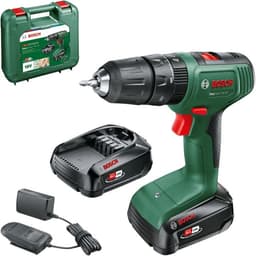
| Alternative |  Bosch Bosch EasyImpact 18V-40 (2 x 2.0 Ah) | 13 mm | Yes; type field says driver | 2 | 7.6 | about £75.23 | View offer |
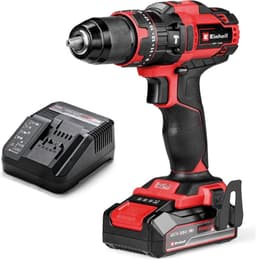
| Best value |  Einhell Einhell TE-CD 18/44 Li-I | 13 mm | Yes | 2; field says 21 | 7.9 | about £44 | View offer |

On this page
Match the plug, the bit and the chuck
Start square, then add the hammer
Dust, and what is behind the plaster
When this hole is the wrong tool
Common questions
What size masonry bit do I need for a wall plug?
How deep should the hole be?
Should I drill the brick or the mortar joint?
What do I do about the dust?
My bit has stopped moving. Do I push harder?
Will a 10 mm chuck take a plug bit?
Related pages
Sources
Public UK sources from the research digest for this comparison, retrieved 22 October 2026. Shelf prices, stars and review counts are the amazon.co.uk figures in the stored listings.
- HSE, vibration duties (retrieved 22 October 2026)
- HSE INDG175, hand-arm vibration (retrieved 22 October 2026)
- HSE CN3, silica from drilling masonry (retrieved 22 October 2026)
- Control of Noise at Work Regulations 2005, regulation 4 (retrieved 22 October 2026)
- GOV.UK, Supply of Machinery (Safety) Regulations 2008: Great Britain (retrieved 22 October 2026)
- BSI, BS EN 62841-2-1, hand-held drills and impact drills (retrieved 22 October 2026)
- GOV.UK, accepting returns and giving refunds (retrieved 22 October 2026)
- ToolStore UK, combi drill torque bands (retailer guide) (retrieved 22 October 2026)