Independent comparisons. We may earn from shop links. More info

How to fit a euro escutcheon

Updated: October 2026

You have a new rose, a euro cylinder, and a door that still locks. How to fit a euro escutcheon, in the like-for-like case, is a check of the hole and the projection before any screw is driven home. This is not a ranking of plates. Prices are on the [security escutcheon comparison](/hub/door-and-window-security/security-escutcheon). Peter F. used the 2023 joint cylinder guide, the Master Locksmiths Association projection figure, ERA's measuring sheet, and the UK review notes in this set, updated 19 October 2026. There was no fitting of these plates. A qualifying purchase through an amazon.co.uk link can earn a commission at no extra cost to you.

You have a new rose, a euro cylinder, and a door that still locks. How to fit a euro escutcheon, in the like-for-like case, is a check of the hole and the projection before any screw is driven home.

Our top picks

On this page

Check the hole and the cylinder before any screw

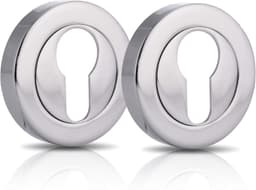
A euro rose only fits a euro cylinder. If the bar is a smooth oval, or the hole is a narrow mortice slot, stop and change the plate. The Infinity Decor Victorian cover is the mortice flap, with a keyhole listed at 22 × 8 mm. AXS sells oval as a different option from the euro pair. Which outline you have is on the euro profile escutcheon page. The Master Locksmiths Association domestic guideline says the outside cylinder shall not protrude more than 3 mm beyond the door face or the lock furniture. ERA's 3-star measuring sheet uses the same limit, with the security side facing outside. A 35/35 cylinder and a 40/35 cylinder are different doors. A new rose does not change that sum. AXS lists 10 mm projection for the satin brass pair. That is how far the plate stands off the door, not a licence for the cylinder to stick out 10 mm. Measure before you throw the old plate away.

Fit the rose without loading the cylinder

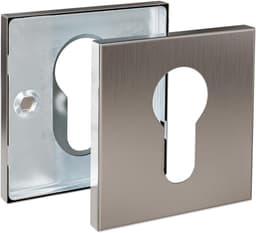
The 2023 joint cylinder guide, from the Guild of Architectural Ironmongers, the Door and Hardware Federation, the Glass and Glazing Federation and the Master Locksmiths Association, says to loosen the escutcheons and the handles first. Do not lever the cylinder out at an angle. The cam should be central before the cylinder moves. If you are only changing the rose, you may not need to remove the cylinder at all. If you do slide the cylinder, the retaining screw on the edge of the door comes out first, by hand. The guide says not to use a power tool on that screw. A drill can snap the head or drive the screw into the gearbox. Forcing the cylinder can trigger a snap groove on a cylinder that has one. Refit the screw by hand, then check that the key turns. Offer both sides of a two-part rose up together. Amig's UK reviews split: one found the square pair easy, and one found an inner oval hole tricky to line up. If the hole fights the euro bar, do not file it. Concealed pairs such as XFORT use a screw plate. The standards difference is on the security escutcheon versus cylinder guard page.

When the screws or the plate fight you

There is no single screw length for every UK door. On the Infinity Decor Victorian cover, UK reviewers say the supplied screws are too long. One says they clash with the mortice unless the door is about 80 mm thick, and names an M3 × 10 mm countersunk screw as the screw they used. That size is one reviewer's mortice fix, not a specification for a euro rose on a composite door. If the screw tip meets metal, stop. A shorter screw of the same thread is the next step. A second Victorian review says the rivet on the back is a little long and holds the escutcheon off the door. If the gap is the rivet, a return is cleaner than a workshop repair on a cover at about £8.95. XFORT's reviewers say the screws round off, and that a pair arrived screwed together and would not separate. If the halves will not unscrew by hand, do not grip them in a vice. A seized pair is a return. HanaMoon's swing cover needed a little persuasion before the flap moved freely. Work the flap before you fix the plate. None of these faults is a reason to attack the cylinder screw with a drill.

Test, then stop

Test with the door open. The key should throw and withdraw, the handle should still drop the latch, and the rose should not rub the key bow. Close the door only after that works. If the key turns when the door is open and binds when it is shut, the door or the keep has moved. A tighter rose screw will not cure it. Stop and call a locksmith when the multipoint lock will not throw, when the cylinder will not enter square, when you have crossed the threads on the retaining screw, or when an insurer has named TS 007, Sold Secure, or PAS 24. Stop if the door is a certified fire door. Adding holes, or changing ironmongery on a fire door, can void the certificate. If you have not ordered yet, the buying decision is on the security escutcheon buying guide. A like-for-like rose, with the cylinder already within 3 mm, is a householder job. The gearbox is not.

Common questions

Do I remove the cylinder first?
Only if the rose will not pass over it, or you are changing the cylinder as well. Many screw-on roses fit with the cylinder left in place. If you do remove it, take out the retaining screw on the edge by hand, keep the cam in line, and do not lever the bar. Put the screw back by hand and test the key before you close the door.
How far may the cylinder stand out?
The Master Locksmiths Association domestic guideline and ERA's 3-star sheet both use 3 mm as the maximum the outside cylinder should stand beyond the door face or the external handle. Measure it. A rose listed with 8 mm or 10 mm projection is describing the plate, not raising that 3 mm limit.
What if the supplied screws hit the lock?
Stop turning. On the Victorian mortice cover, UK reviewers found the screws too long, and one replaced them with an M3 × 10 mm countersunk screw on a thick door. That size is their fix, not a universal euro-door screw. Use a shorter screw of the same thread, or return the plate. Do not keep driving into the lock case.
Should I use a drill on the cylinder screw?
No. The 2023 joint installation guide says not to power-drive the retaining screw. A hand screwdriver lets you feel when the screw is seated. A drill can snap the head or push the screw into the mechanism. If the screw is already damaged, a locksmith is the next step, not a bigger driver bit.
When do I stop and call a locksmith?
Call one when the lock will not throw, the cylinder will not sit square, the retaining screw is crossed, the door is a certified fire door, or a policy names a security standard. A rose can wait. A damaged gearbox cannot be improved by a tighter escutcheon screw.

Related pages

Sources

Public UK sources for escutcheon and cylinder rules, plus the amazon.co.uk listings in this set. Last checked 21 October 2026.

  1. Door & Hardware Federation, TS 007 (retrieved 21 October 2026)
  2. Carlisle Brass, TS 007:2014 + A2:2018 guide (retrieved 21 October 2026)
  3. Sold Secure, domestic security brochure (retrieved 21 October 2026)
  4. Master Locksmiths Association, domestic security guideline, January 2025 (retrieved 21 October 2026)
  5. Master Locksmiths Association, lock-snapping FAQ (retrieved 21 October 2026)
  6. GOV.UK, Approved Document Q (retrieved 21 October 2026)
  7. Joint cylinder installation guide, 2023 (retrieved 21 October 2026)
  8. ERA, 3-star cylinder measuring sheet (retrieved 21 October 2026)
  9. Door Controls Direct, Eurospec AEB1750 2-star escutcheons (retrieved 21 October 2026)
  10. Ultion, Sweet escutcheon (retrieved 21 October 2026)