Independent comparisons. We may earn from shop links. More info

How to fit a mini door closer

Updated: October 2026

You have the closer in the box, the diagram is tiny, and the door still stands open. How to fit a mini door closer depends on screws, pads or a hole in the edge of the leaf. Use the fixings in this box, trap a loaded chain before you release it, and stop if the door is a fire door. The [mini door closer comparison](/hub/door-and-window-security/mini-door-closer) is the set these examples come from. This page does not rank them. Peter F. followed the amazon.co.uk listings dated 19 October 2026. A qualifying purchase can earn a commission at no extra cost to you.

You have the closer in the box, the diagram is tiny, and the door still stands open. How to fit a mini door closer depends on screws, pads or a hole in the edge of the leaf.

Our top picks

On this page

Before you drill

Look at the door before the drill. You want solid timber where the screws land, and a clear idea of which way the door swings. Vurlexat’s listing says a 180 degree turn covers left and right. YUOIP says a one-way opening. If the page is silent, fit it on the face the sheet shows and stop if the arm binds. A fire sign, intumescent strips or a flat entrance are the point to stop. The shut test is on the mini door closer fire door page. Empty the box and count pins, washers and screws. One GINTON parcel arrived without screws, both pins and the hold-open washer. If a part is missing, do not invent a washer. A steel frame you cannot identify is the other stop. HBL' says pre-drill steel at 3/16 inch for its own screws, which is that listing’s figure, not a universal bit.

Screw-in springs and pneumatic tubes

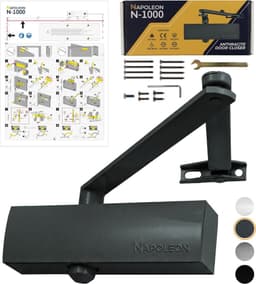
Hold the body where the arm can meet the leaf, and mark the screws before you commit. One buyer returned the best value PCKOBEVER because the cylinder was too big for the frame, so offer it up first. Pilot the holes in timber. Two of four screw heads snapped on one install, and paint in the arm thread stopped the adjuster until it was cleaned. Reviewers on that closer needed 15–20 minutes. Set the force after the screws are home. On Vurlexat, turn anticlockwise and start below the fourth hole, where a spring came loose on a 50 kg door. On YUOIP one air screw meters the last part of the close, and reviewers still get a bang into the lock. Check a GINTON box for the washer before you drill. CASONNIK’s diagrams are tiny, and one reviewer says the screws are JIS, so a Phillips or Pozidriv bit can cam out. The top pick, Napoleon’s N-1000, includes its own paper template. Follow that sheet, and do not redraw it from another maker. How a spring differs from that air screw is on the spring versus pneumatic mini door closer page.

Adhesive cables

DODUOS is the adhesive option: two white bodies, a cable the listing calls 1.2 m, and pads, at about £7.99. The page says no tools. Across 521 reviews the pads peel, because the pull is strong and there is no valve. If you try the pads, clean the faces and leave them about 24 hours before you load the cable. Many still fail. One pack lasted over a year, which is the exception. The fix that lasts longer in the same reviews is to screw the body down. The hex keys release the shut distance and do not set the pull. A stickier pad will not soften a cord that is too strong for a fly-screen or a walking stick. Whether that limit suits the door is the mini door closer buying guide.

A concealed chain

ZAVIA’s closer sits in the door edge. The listing says drill a 22 mm hole past the cylinder depth, pilot the screws and chisel a shallow recess. The kit lists an anchor plate with chain, a cylinder, plates, eight screws and a tensioning key. It also says the job is not DIY friendly. There are two reviews, and one is a short shipment, so check the contents before you drill a hole you cannot undo. Do not copy a Perko drawing onto this closer. That sheet is a different product. The chain is loaded. Clip or trap it before you unscrew the anchor plate, because the spring bites when the plate comes free. A forum note is not a standard. Set the tension a little at a time, and back it off if a child cannot open the door.

The shut test, then stop

The closer is finished when the door behaves the same way twice. Let it go from fully open, then from about 15 degrees. Both times the latch should take. If it stops short, the force is low or the leaf is binding. Winding a spring tighter will not plane a sticking edge. Then have the person who uses the door open it. If the force is too high, reduce it. A slam into the lock is the limit of that mechanism. Call a joiner or a fire-door fitter if the door has strips or a fire label, if it is a flat entrance, if the leaf binds, or if the frame is steel and you do not know the section. Do not mortice a fire door to a hole size from a video.

Common questions

How do you fit a surface spring closer?
Offer the body up so the arm reaches and the cylinder clears the frame, then pilot the screws in timber. Set the tension from a low setting until the door latches from fully open and from a small opening. On the PCKOBEVER, screw heads can shear, and reviewers needed 15–20 minutes. On Vurlexat, do not use the top hole on a door near 50 kg, because one spring came loose there.
How do you adjust chain tension without trapping a finger?
Trap or clip the chain before you release the anchor plate. The spring is loaded, and it bites if the chain is free. Use the tensioning key in the ZAVIA box, a little at a time, then run the shut test. Do not assume a forum’s clockwise matches your key, and do not copy Perko hole depths onto this closer.
Can you stick a cable closer and trust it?
You can stick the DODUOS pads for a trial, after cleaning the faces and leaving them about 24 hours. The reviews do not support trusting them. Pads peel and mechanisms snap. Screwing the body down is the fix reviewers use. The pull is not adjustable.
What drill size does the ZAVIA listing give?
A 22 mm hole in the door edge, past the cylinder depth, plus pilot holes and a shallow chiselled recess. The listing says this is not DIY friendly. That 22 mm figure is ZAVIA’s bullet. It is not the hole pattern on a Perko sheet for a different chain closer.
What if the instructions are only on the box?
Read the box before you throw it away. YUOIP’s instructions are scattered over the packaging, and CASONNIK’s reviewers call the drawings tiny. One DODUOS pack had no sheet at all. If you cannot tell which bracket is which, do not guess a hole pattern from a different product.
When should you stop and call a joiner?
Stop if the door is a fire door or a flat entrance, if the leaf binds, if the frame is unknown steel, or if the closer needs a 22 mm mortice you do not want to cut. Also stop if parts are missing, as with the GINTON washer and pins. The lightest tension a child can open, if it still will not latch, means the wrong product.

Related pages

Sources

Public UK guidance and trade sources from the research digest, used for this page in October 2026. Prices, stars and review counts are the amazon.co.uk figures dated 19 October 2026. A listing claim of BS EN 1154 is not treated as a certificate for your door.

  1. The Fire Safety (England) Regulations 2022, regulation 10 (retrieved 19 October 2026)
  2. GOV.UK: Fire Safety (England) Regulations 2022, fire door guidance (retrieved 19 October 2026)
  3. Approved Document B: fire safety frequently asked questions (retrieved 19 October 2026)
  4. BSI: BS EN 1154:1997 controlled door closing devices (retrieved 19 October 2026)
  5. Firesafe: coding system for fire door closers in BS EN 1154:1997 (retrieved 19 October 2026)
  6. GAI door closer safety checklist (retrieved 19 October 2026)
  7. Code of Practice: hardware for fire and escape doors (retrieved 19 October 2026)
  8. MB Direct: hydraulic versus pneumatic door closers (retrieved 19 October 2026)