Independent comparisons. We may earn from shop links. More info

Edge banding trimmer or knife

Updated: 23 October 2026

A Howdens end panel trimmed with a Stanley knife looks chewed where the blade dipped into the face. An edge banding trimmer or knife is that choice: a body that registers on the board, or a blade you already own. A guided trimmer keeps the edge on the overhang more of the time. It does not remove the cut. The scored tools are on the [edge band trimmer comparison](/hub/diy-supplies/edge-band-trimmer). Peter F. used UK forum notes and HSE leaflet PPS12(rev1). This is not a lab test. A qualifying purchase can earn a commission at no extra cost to you.

A Howdens end panel trimmed with a Stanley knife looks chewed where the blade dipped into the face. An edge banding trimmer or knife is that choice: a body that registers on the board, or a blade you already own.

Our top picks

On this page

What the knife gets wrong

A July 2019 DIYnot thread starts with a Howdens end panel and a Stanley knife: 2.1 m of 25 mm iron-on tape on 18 mm melamine, with about 3 mm of overhang. The knife has no fence, so it dips into the face or into the other hand. HSE leaflet PPS12(rev1) is a plastics-factory sheet, not a kitemark for these listings. It says the usual injury is a slip into the other hand, and the first control is to remove the open knife where you can. A guided trimmer is an attempt at that control. The factory percentages stay off this page. The Axminster trimmer bought in that thread is not an ASIN here.

The trimmer’s limit

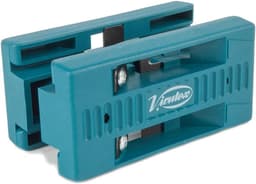
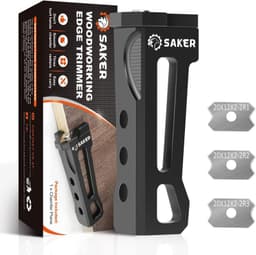
The Kaaeiccr, B0H7VKZNX8, at £5.59, has one UK review of a V notch butted at 90 degrees, used either way. The captured price does not match the £4.39 in that note, and no thickness is stated. It shows the motion, not a long record. The AU93 at £29.23, 4.4 from 830 ratings, is the large sample kept for thin melamine. It still has a blade: birch tear-out, a marked face, and a pressure band that leaves tape proud or cuts the face. Saker buyers went back to a chisel when the arc tool ripped the band. A guided blade is still exposed.

Scraper and plane iron

The DIYnot method is a Stanley glass scraper or a sharp block-plane iron, skewed, never square, with the flat on the face. Square-on, the corner digs. On thin melamine this can match a trimmer. Contributors would still keep the Virutex for that melamine. Veneer is where the trimmer is weaker. You already own the blade. It has to be sharp, skewed, and flat on the board. Worktop lipping is the edge they would not trim with the double-edge tool. A long 2.1 m run is where a registered body stops you steering a free blade.

The edge is still sharp

The arris still cuts skin. The March 2021 note uses an MDF block about 150–200 mm by 80–100 mm, P120, and two light passes at about 45 degrees. You are dubbing the corner, not sanding back to the chipboard. Do that after the glue is cold and the faces are flush, which is how to trim edge banding. Worktop lipping and tape around 2 mm are outside both the knife and the trimmers in this set.

Common questions

Is a sharp chisel enough for thin melamine tape?
It can be. DIYnot contributors describe a sharp block-plane iron or a Stanley glass scraper, skewed, flat on the face, matching a trimmer on thin melamine. The chisel has to be sharp, and it must not meet the edge square-on. A long run, such as 2.1 m of 25 mm tape, is where people in that thread still preferred a registered trimmer because the free blade is tiring to steer. Veneer is the case they would not trust to a cheap copy of a trimmer.
Why did the Stanley knife leave a bad finish?
On the Howdens panel, the knife had no fence on about 3 mm of overhang, so it dipped into the melamine. The same thing happens with a box cutter, which the Kaaeiccr review contrasts with a V notch: you either leave a step or you cut the wood. A new blade helps only if you also keep the flat supported. Otherwise you repeat the dip with a sharper edge.
Does a trimmer stop me cutting my other hand?
It is an attempt to keep the blade on the overhang, which is the direction PPS12 points when it says to remove the open knife where you can. The sheet is about plastics factories, not these listings, and a trimmer still has an exposed blade. UK reviews include ripped tape and a marked face when the pressure is wrong. You have changed the slip. You have not removed the cut.
Should the scraper be square to the edge?
No. The forum method is skewed, never square, with the flat on the face. Square-on, the corner catches and digs. The skew lets the edge shear the overhang while the back of the blade rides the laminate. A trimmer’s 90 degree butt, in the Kaaeiccr note, is a different tool: the body is the fence, so the square registration is the point of that notch.
Do I still sand if I buy a trimmer?
Yes. The flush cut leaves a sharp arris. Two light passes with P120 on a small block, at about 45 degrees, are the dub the forum describes, on a block about 150–200 mm by 80–100 mm. The Feabolee notes include sandpaper after the cut. You are taking the bite off the corner, not cutting the tape back to the board.
When do people throw the trimmer away and go back to the chisel?
When the tool is the wrong cut. Saker reviews include buyers who got a cleaner flush result from a chisel or a utility knife after the arc trimmer ripped the band. Veneer tear-out is the other return, in an AU93 note and in the forum caution about wood. They are not saying a Stanley knife is better on thin melamine as a first try. They are saying a chamfer tool, or a torn veneer, sends you back to a blade used flat.

Related pages

Sources

Public UK sources and the amazon.co.uk listings compared on this page. Updated 22.10.2026.

  1. Virutex AU93 spare parts (retrieved 22.10.2026)
  2. SL Hardwoods: Virutex AU93 (retrieved 22.10.2026)
  3. Ostermann: manual processing of edgings (retrieved 22.10.2026)
  4. Cutwrights: edge banding (retrieved 22.10.2026)
  5. CBJ: edge banding explained (retrieved 22.10.2026)
  6. Lawcris: decorative edging (retrieved 22.10.2026)
  7. HSE: PPS12(rev1) knife safety (retrieved 22.10.2026)
  8. Cutlist Lab: edge banding (retrieved 22.10.2026)