Independent comparisons. We may earn from shop links. More info

Polystyrene or plaster coving, with polymer beside them

Updated: 23 October 2026

You are choosing a rigid cove from a merchant, and the two words in the search leave out the material UK guides actually add. Polystyrene or plaster coving is a real choice, and polymer sits beside both. Plaster is the heavy, crisp profile with its own adhesive. Polystyrene is the light length that solvents can spoil. Polymer, often sold as duropolymer, is the rigid option those guides treat as moisture-tolerant. This page is that decision, not a mitre lesson and not a ranking of the tapes on the [Coving comparison](/hub/diy-supplies/coving). Prices are GBP stored for 19 October 2026. There is no lab test. A qualifying purchase can earn a commission at no extra cost to you.

You are choosing a rigid cove from a merchant, and the two words in the search leave out the material UK guides actually add. Polystyrene or plaster coving is a real choice, and polymer sits beside both.

Our top picks

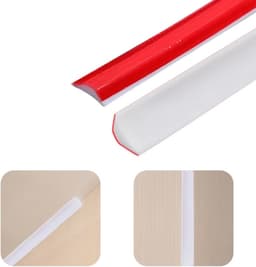
Conwang Conwang silicone U-trim

Best overall

Conwang Conwang silicone U-trim
7.6/10about £15.99
Lifuncren Lifuncren quadrant trim

Best value

Lifuncren Lifuncren quadrant trim
7.0/10about £16.99
On this page

Plaster cove

Paper-faced gypsum is the traditional cove: heavy, sharp at the arris, and fixed as a plaster product. Gyproc Cove 100 is a 3000 mm C profile. The data sheet cites EN 14209:2017 and reaction to fire A2-s1, d0. Those declarations belong to that sheet, not to foam. The 100 mm name is the girth. The guide lines are 67 mm down the wall and 67 mm across the ceiling. Cove 127 uses 83 mm lines. Gyproc Cove Adhesive needs keyed paint and no wallpaper in the glue line. Repeated moisture can make it lose strength, so a bathroom that steams cannot take that bag. Robert Price listed Cove 100, 100 mm × 3 m, at £12.98 including VAT, one merchant price rather than a national rate. Ornate cornice, a bay that is not 90°, or a crack that is still moving is a plasterer before you order lengths.

Polystyrene cove

Polystyrene is the light option, and it dents. The Coving & Cornice Warehouse describes it as cheap, soft, and low-melting, finished with emulsion. Toolstation calls it the cheaper, rougher choice that needs more paint. Solvents can melt the foam. Wickes' Arthouse instructions say no solvent adhesive and no solvent paint, water-based paint only, and about 24 hours before decoration. The stored price for that 100 mm × 2 m length is from £6.50. A water-resistant line on a Wickes listing is that listing's claim. It does not give polystyrene the damp-room role merchant guides give polymer, and it does not cancel the denting. Everbuild's coving adhesive names plaster and polystyrene and refuses polyurethane and permanently damp conditions. If you will keep solvents away, polystyrene is the cheaper rigid buy. If you need a crisp arris or a steamy ceiling, leave it.
Conwang Conwang silicone U-trim

Testsieger

Conwang Conwang silicone U-trim
7.6/10about £15.99

Polymer, the third rigid option

Polymer is why a two-word search is incomplete. Toolstation describes it as light, sharper, and suitable for a kitchen or bathroom because it copes with moisture. Wickes names duropolymer or a polyurethane blend, plus a waterproof coving adhesive. That phrase is not Gyproc Cove Adhesive. A plain C can be polymer. You do not have to buy ornate cornice to leave plaster. Toolstation's Pro Cove Lite, a 6-pack of 2 m lengths at £32.29, stays a pack price. A damp-room cartridge named for one polymer range is for that range. It is not a licence to stick Gyproc or a TPE tape.

What this choice is not

The seven amazon.co.uk strips are about 9–42 mm of self-adhesive trim. They are not plaster, polystyrene cove, or polymer cove. Approved Document B, volume 1, 2019, England, takes cover moulds out of the wall-and-ceiling lining definition for Requirement B2. A cove is a cover mould in that sentence. That is not a ban on polystyrene coving, and it is not an approval for a polystyrene ceiling tile. The A2-s1, d0 line stays on the Gyproc Cove 100 sheet. The cutting sequence is on how to fit coving.

Which rigid cove to buy

A tape from the table does not settle plaster, polystyrene, or polymer. Pick the rigid material for the room's moisture, then the adhesive that maker names for it.

Common questions

Should I buy polystyrene or plaster coving?
Buy plaster when you want the crisp gypsum cove, the room stays dry, and you will use Gyproc Cove Adhesive on a Gyproc length. Buy polystyrene when you want a light, cheaper length and you will keep solvent glue and solvent paint away from it. If the ceiling sees repeated steam, neither of those is the first choice. Polymer is the rigid option the merchant guides name for that room.
Where does polymer fit if I only searched those two?
It is the third rigid material. Toolstation and Wickes describe it as lighter than plaster, sharper than basic polystyrene, and the one they point at kitchens and bathrooms. Some sections flex for a curve. You can buy a plain profile. Ornate cornice is not the price of leaving plaster.
Will polystyrene dent, and will solvent glue melt it?
Yes to both, in the guides this page uses. It is soft enough to dent, and solvents can melt it. Wickes tells you to use solvent-free adhesive and water-based paint on Arthouse polystyrene, and to wait about 24 hours before decorating. A shop line that calls the foam stronger than plaster is not the description followed here.
What does 100 mm mean on a Gyproc length?
On Cove 100 it is the product name for the girth, not a 100 mm drop down the wall. The sheet's guide lines are 67 mm on the wall and 67 mm on the ceiling. Cove 127 on an older sheet uses 83 mm lines. Measure and mark the lines for the cove you bought, not the number in a different product's name.
Can I paint polystyrene with the same paint as plaster?
Plaster cove can take the paint system you use on the wall once the adhesive has had about 24 hours. Polystyrene is limited to water-based paint such as emulsion. Solvent paint is in the same danger zone as solvent adhesive. Polymer makers add their own decorate wait, often another 24 hours, on their own sheet.
Is polystyrene coving a fire-safety problem in the rules?
The cover-mould sentence in Approved Document B does not ban polystyrene cove, and it does not give foam an A2 rating. A2-s1, d0 is the Gyproc Cove 100 declaration. A polystyrene ceiling tile, which covers area rather than sitting as a narrow mould, is a lining and a different question. Do not read the cove exclusion as a tile approval.

Related pages

Sources

Public UK sources and the amazon.co.uk listings compared on this page. Updated 22.10.2026.

  1. British Gypsum: Gyproc Cove 100 data sheet (retrieved 22.10.2026)
  2. British Gypsum: Gyproc Cove Adhesive data sheet (retrieved 22.10.2026)
  3. British Gypsum: Cove Adhesive installation guidance (retrieved 22.10.2026)
  4. Approved Document B volume 1, 2019, dwellings (retrieved 22.10.2026)
  5. Toolstation: How to fit coving (retrieved 22.10.2026)
  6. Wickes: How to put up coving (retrieved 22.10.2026)
  7. Wickes: Arthouse polystyrene coving 100 mm × 2 m (retrieved 22.10.2026)
  8. DIY Doctor: Coving (retrieved 22.10.2026)
  9. The Coving & Cornice Warehouse: Choosing your material (retrieved 22.10.2026)