Independent comparisons. We may earn from shop links. More info

Bathroom coving for steam, condensation and splash

Updated: 23 October 2026

The ceiling above a shower or a bath that steams every morning is a different job from a cove in a dry landing. Bathroom coving has to survive repeated condensation, and the adhesive has to be one the maker allows in that damp. Gyproc Cove Adhesive is not that product. Polymer cove, with the adhesive that maker names for moisture, is the rigid route UK merchant guides describe. A waterproof line on a peel-and-stick bead is a claim. Prices are GBP from amazon.co.uk on 19 October 2026. There is no lab steam test. A qualifying purchase can earn a commission at no extra cost to you. The listings are on the [Coving comparison](/hub/diy-supplies/coving).

The ceiling above a shower or a bath that steams every morning is a different job from a cove in a dry landing.

Our top picks

On this page

What a bathroom does to the ceiling line

A cloakroom that never steams is not this page. The problem is repeated moisture: shower steam on a cold ceiling, condensation along the wall join, a bath edge that stays wet. That cycle softens a gypsum adhesive even when the cove looks like a narrow cover mould. A hairline and a 20 mm crack are different products. The beads in this amazon.co.uk set are about 9–42 mm. A merchant polymer cove is a rigid length with a girth, not a quadrant. If the room still steams after you close a small joint, the steam is the constraint, not the width of the bead.

Plaster adhesive is the wrong system here

British Gypsum's Gyproc Cove Adhesive sheet says not to expose the product to repeated or prolonged moisture, because it can lose strength and adhesion. Wickes says you can fit coving in a bathroom with duropolymer or a polyurethane blend, and a waterproof coving adhesive. That phrase is not the Gyproc bag. Everbuild's coving grab names plaster and polystyrene and says it is not for permanently damp conditions and not for polyurethane. A damp-room cartridge for a named polymer range belongs to that moulding. Working time and the 24-hour paint wait stay on how to fit coving. If the room stays damp, leave the gypsum adhesive in the shed.
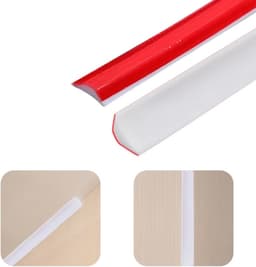
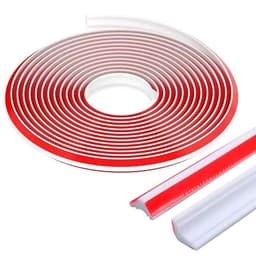
Conwang Conwang silicone U-trim

Testsieger

Conwang Conwang silicone U-trim
7.6/10about £15.99

Polymer, and where polystyrene sits

For a rigid cove in this room, follow the merchant guides: polymer or duropolymer, with the adhesive that maker allows where there is moisture. Toolstation describes polymer as resistant to high moisture, easy to wipe, and suited to a kitchen or bathroom. Some ranges flex for a curve. That curve is still a plasterer's call when you are unsure of the mitre. Polystyrene is sometimes sold as water resistant on a Wickes listing. Keep that as the listing's claim. The foam stays dentable, and solvents can still melt it. It is not the moisture-resistant rigid choice here. That role stays with polymer. In this room the recommendation is polymer, unless the maker's sheet for the exact length you bought sets a different limit.

What the tape listings actually promise

A waterproof bullet does not turn a 9–42 mm bead into polymer cove. sokey says waterproof and names bathrooms, with 4.0 from 423 reviews. Conwang says hydrophobic and includes a promoter, with 4.2 from 182 reviews. Those two are the counts you can read if you still want a bead. Lifuncren's field says waterproof, then the page asks whether it is waterproof and does not answer. The title, a bullet, and the spec disagree on the material. Woobroo says water resistant and also says it is not for damp, dirty, uneven, or flaking surfaces. Gkhlg's mould-resistance question is unanswered. Both GDWD highlights are 5.0 from one rating, with no review text. The surface still has to be clean, dry, and sound when you press the tape. A shower threshold strip is a floor barrier, not ceiling coving.

What to fit in a steamy room

Buy polymer and the adhesive that maker allows in moisture, and leave Gyproc Cove Adhesive in the shed. A waterproof tape line is a claim, and the surface has to be dry when you press.

Common questions

Can I fit coving in a bathroom at all?
Yes, if the material and the adhesive are meant for repeated moisture. Wickes names duropolymer or a polyurethane blend and a waterproof coving adhesive. That is polymer cove, not a gypsum system, and not a guarantee that every white bead online will survive the steam. A dry cloakroom with no condensation is a milder room and can follow the dry-room material page.
Can I use Gyproc Cove Adhesive above a shower?
No. The British Gypsum sheet says repeated or prolonged moisture and condensation can make it lose strength and adhesion. Everbuild's coving grab is also outside permanently damp rooms, and outside polyurethane. Use the adhesive the polymer maker specifies for damp conditions, and keep that cartridge on that maker's mouldings.
Is polymer the rigid option for a steamy room?
It is the option Toolstation and Wickes describe for kitchens and bathrooms: light, wipeable, and treated as moisture-resistant. You still follow that range's own adhesive. A plain profile is enough. You do not have to buy a heavy decorative cornice to get off gypsum adhesive.
Is polystyrene cove acceptable, or only polymer?
Polystyrene cove is not banned here. It remains dentable and solvent-sensitive, and a water-resistant line on one listing does not give it polymer's role in the merchant guides. If you use it, stay with solvent-free adhesive and water-based paint. For a ceiling that condensates every day, polymer is the recommendation on this page.
Does a waterproof bullet on a tape mean it will stay up?
It means the listing claims it. sokey and Conwang have the readable review counts, and the wider set still has peel as a repeated complaint, including after cleaning. The surface has to be dry when you stick the bead, even if the bullet says waterproof. Woobroo says water resistant and also says not to use it on a damp surface.
Which listing tells me not to stick it on a damp surface?
Woobroo does, in the same file that claims water resistance and names bathrooms. sokey's notes also say not to paste onto damp, dirty, or peeling surfaces. Conwang's method is clean and dry, then the promoter, then press. A waterproof claim and a dry-surface instruction can both be true, and the dry surface is the one that decides the first hour.
Is a shower threshold strip the same as ceiling coving?
No. Threshold and dam strips in those search results are floor barriers at a tray or a wet-room edge. Some state they are not for a barrier-free shower. Ceiling coving is the moulding where the wall meets the ceiling. Do not buy a dam because the title borrowed the word coving.

Related pages

Sources

Public UK sources and the amazon.co.uk listings compared on this page. Updated 22.10.2026.

  1. British Gypsum: Gyproc Cove 100 data sheet (retrieved 22.10.2026)
  2. British Gypsum: Gyproc Cove Adhesive data sheet (retrieved 22.10.2026)
  3. British Gypsum: Cove Adhesive installation guidance (retrieved 22.10.2026)
  4. Approved Document B volume 1, 2019, dwellings (retrieved 22.10.2026)
  5. Toolstation: How to fit coving (retrieved 22.10.2026)
  6. Wickes: How to put up coving (retrieved 22.10.2026)
  7. Wickes: Arthouse polystyrene coving 100 mm × 2 m (retrieved 22.10.2026)
  8. DIY Doctor: Coving (retrieved 22.10.2026)
  9. The Coving & Cornice Warehouse: Choosing your material (retrieved 22.10.2026)