Independent comparisons. We may earn from shop links. More info

How to use plastic sheeting

Updated: 23 October 2026

You have a folded sheet and a room, a pile, or a short outdoor job, and the plastic will move or tear if the edges are left loose. How to use plastic sheeting well comes down to three sequences: tape a decorating cover, weigh a temporary outdoor sheet, and stop if the sheet is being asked to act as a damp-proof membrane. The five listings in our [construction film comparison](/hub/diy-supplies/construction-film) are the sheets this method assumes. Only the ZHXGO pack includes tape. Peter F. drew the indoor steps from decorator practice and the lap figures from Visqueen's own notes. A qualifying purchase can earn a commission at no extra cost to you.

You have a folded sheet and a room, a pile, or a short outdoor job, and the plastic will move or tear if the edges are left loose.

Our top picks

On this page

Cover a room for decorating

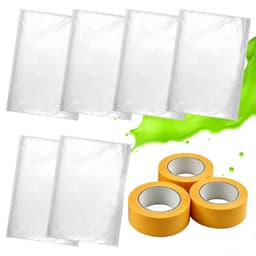
Vacuum the room, including the gap where the floor meets the skirting, before any sheet goes down. Lay the sheet with a little spare at the wall, then tape the edges. In this comparison, that tape is in the ZHXGO box. The other four listings do not include it. Overlap a join by a hand's width or more and tape the overlap, or the sheets will walk apart. At the skirting, tape the carpet gap first, then bring the sheet to the board. The sheet should not be the only seal at the timber. On a sofa, tuck the film so a drip runs onto plastic. If you will walk the floor all afternoon, the plastic dust sheets for painting page is the better place to choose the cover.

Hold a sheet outdoors for a few days

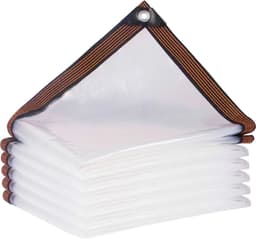
A short cover over a rubble pile, a broken pane, or a stack of timber needs weight, not a drum-tight skin. Loose-lay the sheet with spare at the edges. A length of timber, with bricks sitting on the timber rather than on the bare film, keeps a gust from cutting a corner. Nailing through a single skin leaves a hole that runs. Pulling an eyeleted sheet tight does the same thing at the eyelet. VOGANLL, stated at 0.12 mm, creases from vacuum packing. Leave those creases. If you tension them out, the fold and the eyelet both start tears. This hold-down is wrong for more than a few days of wind, or for a roof you will live under.

If the sheet is meant to be a membrane

Jointing a damp-proof membrane belongs to a sheet that was specified for the floor. Visqueen's notes for their own membrane, not for a decorating film, describe a loose lay on a smooth blinding, a minimum lap of 150 mm, double-sided tape on the lap and then single-sided tape over it. The surface should be clean and dry. A puncture is patched so the patch extends 150 mm beyond the hole. Reinforcement is kept off the film. That 150 mm figure is Visqueen's figure for their system. It is not a licence to lay one of these five listings under a slab. Stop for a ground-bearing floor, basement water pressure, or anything you suspect is asbestos. HSE's CIS36 treats sheeting as an extra dust control, not the control by itself. The 300 micrometre rule sits on the polythene sheet vs damp proof membrane page.

Take it up again

Fold the dirty face inward as you lift a decorating sheet, so paint flakes and plaster dust stay in the bundle. A split, paint-covered sheet is finished. Do not burn the plastic. Bag it with the non-recyclable household waste unless your council accepts this film. If you suspect hazardous dust, ask whoever is managing that risk before you bag it with ordinary waste.

Which sequence to use

Tape a decorating cover, including the skirting gap, and fold the dirty face inward when you lift it. Weigh a short outdoor sheet with timber under the bricks, and leave vacuum-packing creases in a loose cover. Stop when the plastic is being asked to resist ground moisture, basement water pressure, a roof you live under, or anything you suspect is asbestos. Those jobs need a specified product, and asbestos needs a survey before anything is lifted.

Common questions

Do I tape the sheet to the skirting or to the floor?
Tape the floor sheet at its edges, and tape the gap at the skirting as a separate seal. Vacuum that gap first. If the film is the only thing touching the board, paint runs under it. On furniture, tuck the overlap so the drip stays on the film. Only the ZHXGO pack in this comparison includes tape, so the other sheets need a roll you already own.
How much should two sheets overlap?
On a decorating cover, overlap the join by a hand's width or more and tape it. That is a practical cover, not a measured membrane joint. On a specified damp-proof membrane, Visqueen's notes use a minimum lap of 150 mm, with double-sided tape and then single-sided tape, on a clean dry surface. Use that figure only with a membrane specified for the floor.
What do I put under a sheet before concrete?
Visqueen's damp-proof membrane is loose-laid on a smooth blinding that will not puncture the plastic, with sealed laps and a patch on any hole. That bed is part of their system. A folded decorating sheet on hardcore is not a substitute. If you are about to pour a ground-bearing floor, stop and use a specified product before you unroll anything from this comparison.
How do I hold a sheet in wind without punching holes?
Weigh the sheet so the load is spread. A timber batten, with bricks on the timber, holds an edge without a nail through the film. Nailing a single skin leaves a hole that runs. On the eyeleted VOGANLL sheet, stated at 0.12 mm, do not pull the film tight to flatten the vacuum-packing creases. A few days under weight is the limit of this method.
Can I walk on plastic while I paint?
You can step onto a taped sheet to reach a corner. Do not treat plain polythene as the floor you work from all day. A UK review of the ZHXGO film describes it shredding underfoot so paint reached the carpet. For a floor you will cross, use a poly-backed cotton dust sheet.

Related pages

Sources

Public UK sources and the amazon.co.uk listings compared on this page. Prices captured 20 October 2026. Updated 22.10.2026.

  1. Approved Document C, GOV.UK (retrieved October 2026)
  2. Approved Document C PDF, paragraph 4.8 (retrieved October 2026)
  3. HSE CIS36 Construction dust (retrieved October 2026)
  4. HSE Asbestos Essentials em3 (retrieved October 2026)
  5. Visqueen DPM (retrieved October 2026)
  6. Visqueen Vapour Barrier (retrieved October 2026)
  7. Bath and North East Somerset building control, loft ventilation (retrieved October 2026)