When to call a joiner for a sticking door: read the gap
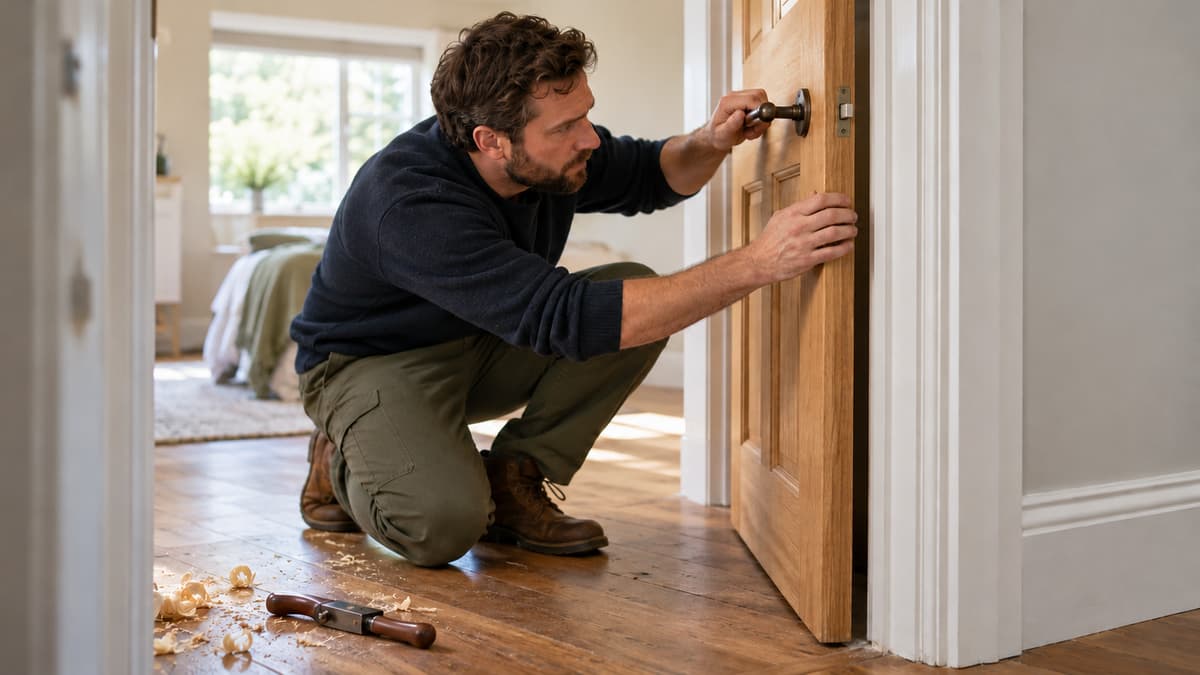
A sticking door is a hinge, winter swell, or a moved frame. Plane one local rub only. Call a joiner before a fire door or a gap that is already uneven.
On this page
The latch side scrapes, the handle needs a shove, and a spokeshave is already on the floor. When to call a joiner for a sticking door is the question that scrape is asking, because the next shaving can hide a hinge that has dropped or a frame that has moved. Read the gap with the door closed before you book anyone and before you cut. A dropped hinge, a winter swell, and a frame out of square leave different marks. Only one of those marks is a local rub you can ease yourself.
This page is from Peter F., editor for DIY & tools. The door patterns come from DIY Guides and DP Carpentry, both read as UK repair notes on 15 October 2026. Tool figures are the amazon.co.uk listing stored for the spokeshave comparison: price, star line, and review count as captured there. We did not visit your hallway, measure your gap, or survey call-out fees. A qualifying purchase through our links can earn a commission at no extra cost to you.
In short
Call a joiner when the frame has moved, the hinge no longer holds the door square, you would have to change a fire-door gap, or the bind needs more than a skim. A door that sticks only in winter should be sealed, not planed, and not paid to be planed. Tighten a loose screw yourself. The spokeshave stays in the drawer until the hinge is sound, the rub is one spot, and the door is not fire rated.
Read the gap before you book anyone
Close the door slowly and read the gap before you decide whether to call a joiner or pick up a tool. Look along the head, the latch stile, the hinge stile, and the threshold. A piece of card slid into the closed gap shows where the leaf is touching. Polished paint is the mark to pencil.
A door dropped on the hinge catches the top of the latch side and opens the gap towards the bottom on the hinge side. Tightness along the whole latch edge points to swell or a frame that has moved. Contact only at the bottom may be a new carpet, a raised board, or a leaf that has dropped. A rub on the hinge side may be paint under the hinge, or a screw head standing proud. Planing from the sound alone takes timber off the wrong stretch. A sticking internal door in the UK is often settled at the hinge or by waiting out the weather.
Sticking door hinges you can tighten
Sticking door hinges are a screwdriver job when one fixing is loose, and a joiner's job when the hinge no longer holds the door square. Open the door part way and lift gently at the handle edge. A clunk means the leaf is moving on its screws. Tighten those screws and close the door again before you look at the edge. Many upper-latch rubs disappear then, because a door dropped on the hinge was catching the latch corner.
A screw that spins has lost its thread. Pack the hole, or drive one longer screw into the stud. DIY Guides put that longer screw at least 60 mm, then retest. "Pulled out" means the timber has split, the lining has torn, or the leaf drops the moment you let go. People who search "plane or call a carpenter" are describing that fork: for an internal door it is the same booking, a rehang or a refix, not a skim of an edge you have not checked.
A winter bind is not a joiner and not a shave
A door that binds only in winter is neither a joiner's plane nor a spokeshave job. Wet weather swells a timber leaf and dry weather lets it close again. Planing it while it is swollen, or paying someone to plane it then, cuts the size you will want back in summer. The gap you create in January is the rattle you hear in July.
Seal bare timber on the top and bottom edges with the same finish already on the face, then judge the door again after a change of season. A weekend is not that test. A door that sticks in August as well as in January is not a swollen timber door waiting to dry. Chris Crooks and other trade pages frame summer sticking as a reason to book. This page uses the DIY Guides rule instead: do not plane a door that is moving with the weather.
A moved frame, a repeated plane, or more than a skim
A door frame out of square, a leaf already planed until the gaps are uneven, or a cut deeper than a skim is when to call a joiner for a sticking door. If the lining leans, or the gap is a wedge rather than a ribbon, the opening has moved. DIY Guides tell you to have that frame looked at rather than to keep taking timber off the door. DP Carpentry's judgement, not a price, is that a new leaf is usually tidier when the frame is out of square, the leaf is coming apart in layers, or the gaps are already uneven. Continuing a taper with a spokeshave repeats that mistake.
One fine shaving off a pencil mark, then a close-and-test, is a skim. A broad strip, a change to the door's height or width, or a bind that returns the moment you shut it, is not. There is no universal millimetre figure in the notes this page relies on, so a plan that starts with "take off 3 mm" is already the wrong plan.
A sticking fire door changes the answer even when the mark looks local. Gaps, seals, and any intumescent strip are part of the doorset. This article has not measured your gap. If you cannot confirm the permitted cut, do not take a trial pass. The longer warning is Do not plane a fire door. Handing staff a spokeshave, when nobody owns sharpening and inspection, is a work-equipment question. We did not price a joiner's hour.
The one rub that is still a spokeshave
You can still ease the door yourself when three things are true together. The hinge screws hold and the leaf does not drop when you lift the handle. The rub is one constant spot in wet weather and in dry weather, marked in pencil. The door is not fire rated, and you are not about to change its overall size. Anything else on this page is a reason to put the tool down.
Use a flat sole. A straight stile needs a sole that sits on the edge. A round sole bridges and digs. Set a fine shaving, try it on a scrap of timber first, and take one pass on the pencil mark only. If it still kisses that spot, one more fine pass is the limit. If the contact has spread along the stile, stop. The sequence is on easing a sticking door with a spokeshave.
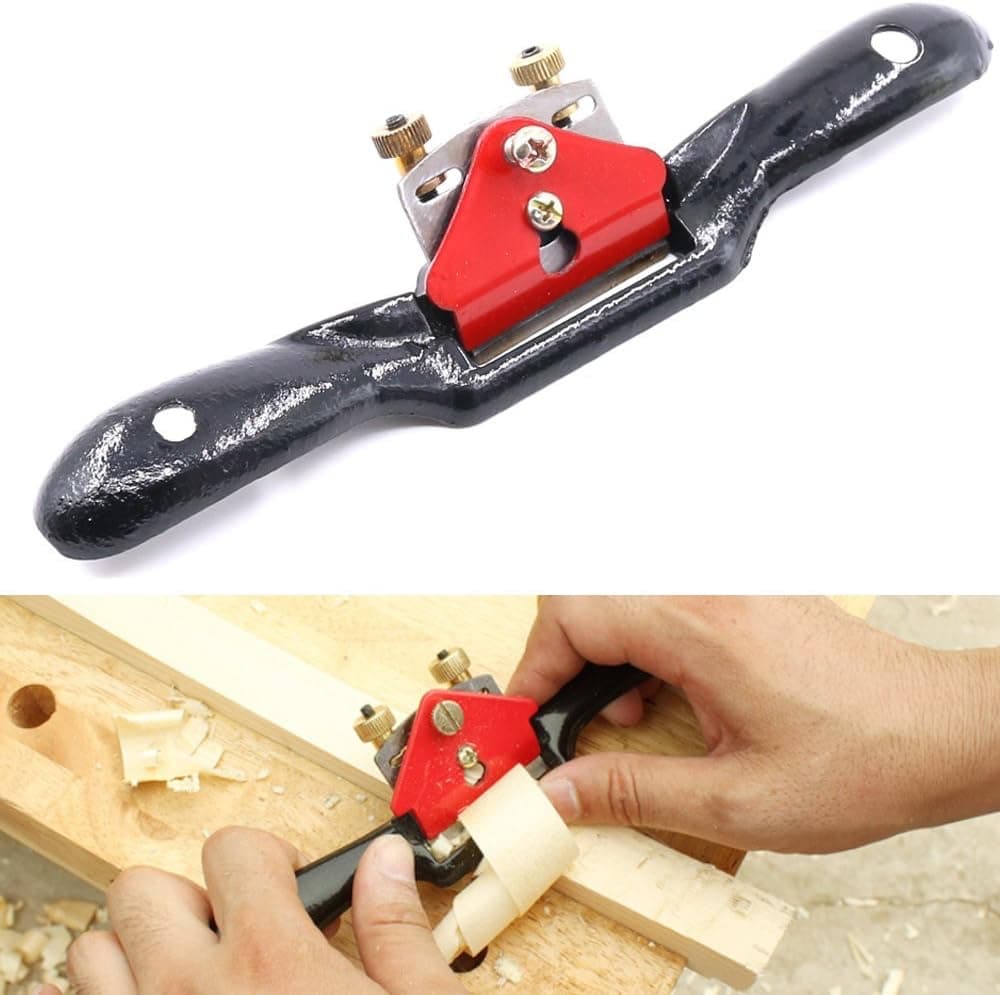
The flat tool in this comparison's top pick is the Swpeet single shave, ASIN B0773LKJ5Y, listed at £8.99 on amazon.co.uk with 3.9 from 1,928 reviews. The bullet names a flat base and a 46 mm carbon-steel blade, and the tool length is 25.5 cm. Reviewers say it can ease a door edge once the blade is set. They also report a painted or uneven sole, a blade that needs sharpening, and a fiddly adjustment. No spare-blade count is stated. It is the top pick for a first flat shave if you will tune it, and a poor buy if you wanted a tool that cuts cleanly out of the packet.
A painted sole will not take an even shaving, and a blunt blade will tear the stile. Which sole belongs on a curve is on flat versus round. How to set the blade is on how to use a spokeshave. Who should skip this £8.99 shave is in the spokeshave comparison. It is the right tool for one marked high spot after the hinge is sound, the season has been ruled out, and the door is ordinary joinery rather than a fire doorset.
Common questions
How do you tell a dropped hinge from a swollen door?
Can you plane a door that only sticks in winter?
What does a moved frame look like at the gap?
When is more than a skim a joiner's job?
Are loose hinge screws a carpentry call or a screwdriver job?
Does a sticking fire door change the answer?
What can you still do yourself once the hinge is tight?
Should a garden gate be treated like an internal door?

Peter F. is the editor for DIY & tools at productscompared.co.uk. Comparisons in this category are checked against amazon.co.uk listings, review evidence and public UK sources.
Related articles

Do not plane a fire door
A fire-door gap and its seals are part of the doorset. Trimming the edge is not an ordinary clearance job.
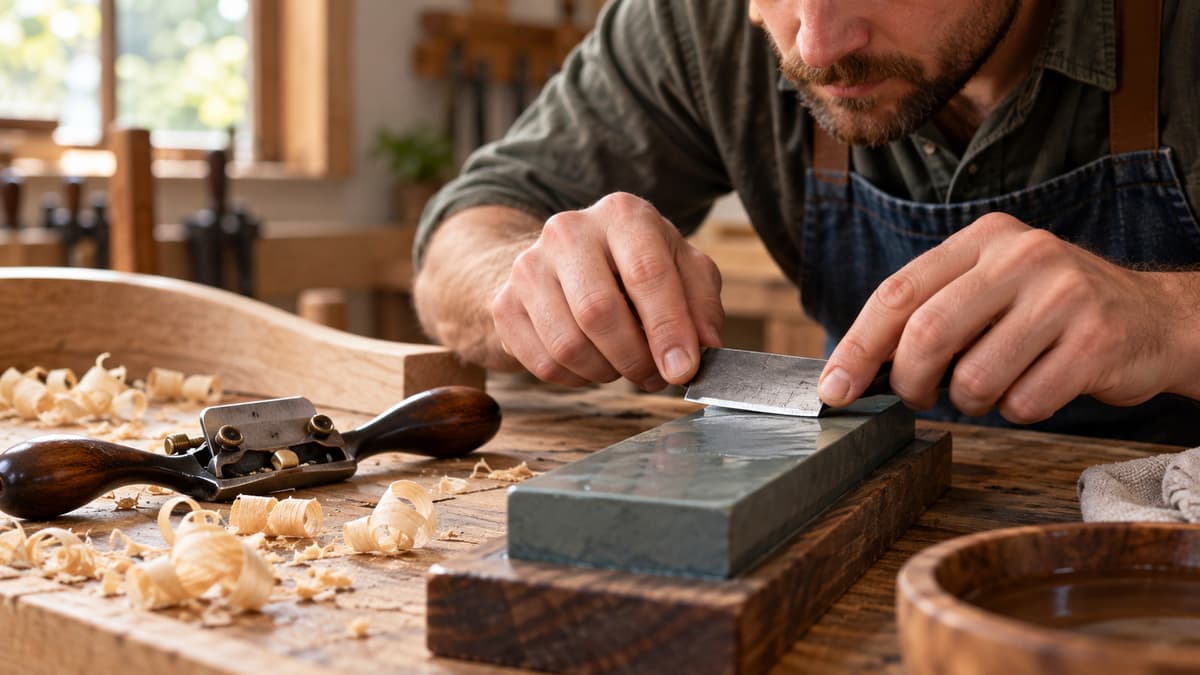
How to sharpen a spokeshave blade
If the blade skids or tears, hone it. A spare in the box is not a sharpening method.

Spokeshave or block plane
A block plane and a spokeshave overlap on a chamfer, then diverge as soon as the surface bends.