Can I plane a fire door UK: leave the certified edge

Can I plane a fire door in the UK? Leave the edge alone. The gap, the seals and the certificate are the doorset. Ask the maker or a joiner before you trim.
On this page
- 1.In short
- 2.A fire door is the leaf, the seals, the frame, and the certificate
- 3.What one inspector's page says about trimming
- 4.England's check-the-door guidance is not a how-to
- 5.An ordinary sticking door is a different job
- 6.A spokeshave does not create a trimming allowance
- 7.What this page will not claim
- 8.Common questions
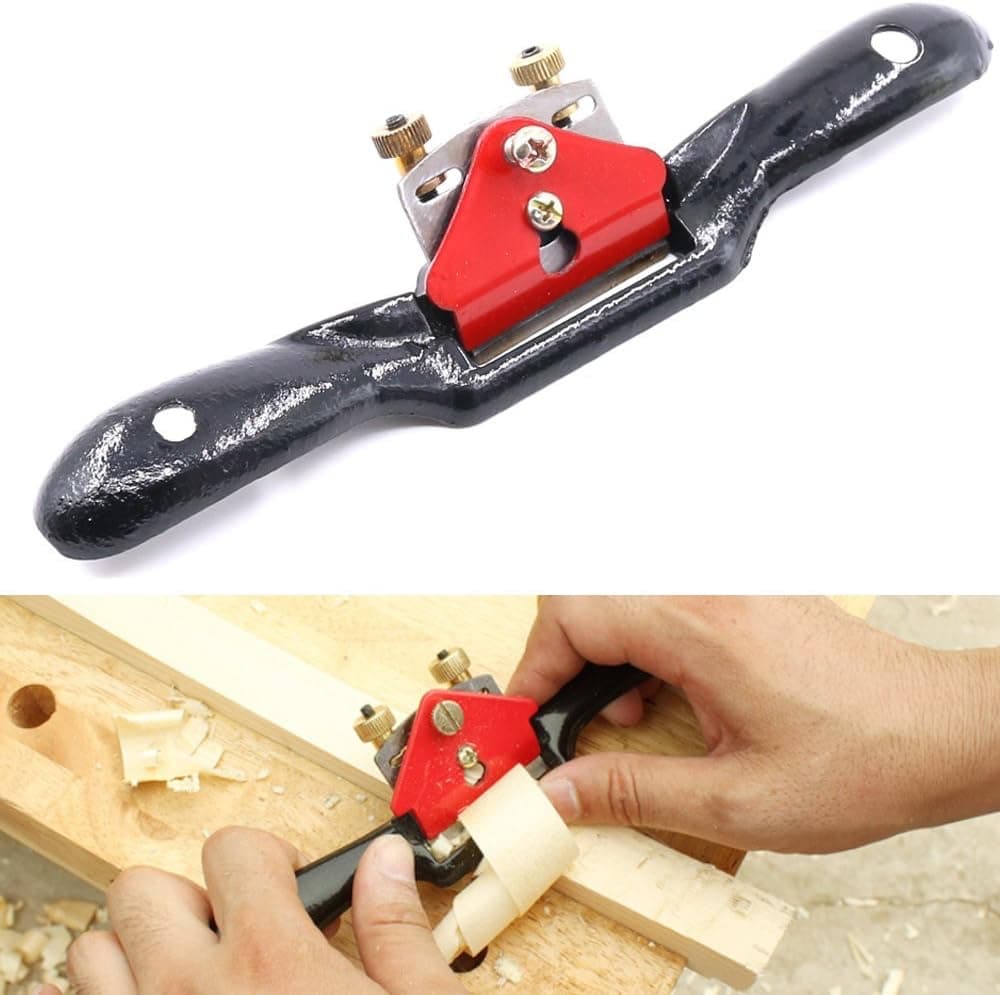
The latch stile catches, the closer still pulls the door shut, and a spokeshave is the nearest tool. Can I plane a fire door UK is the question that catch is asking, and the answer here is no. Do not take a shaving off a fire door to make it close. A light pass can spoil the gap the door was certified with, or cut into an intumescent seal. If the leaf is labelled, plugged, fitted with a strip, or hung with a closer, put the blade down and ask the manufacturer or a competent person before any timber comes off.
This page is from Peter F., editor for DIY & tools. The fire-door points come from Firedoor Assessment, the GOV.UK guidance on the Fire Safety (England) Regulations 2022, DIY Guides, and DP Carpentry, read on 15 October 2026. Tool figures are the amazon.co.uk listing for the spokeshave comparison. We did not inspect your door, measure a gap, or test a doorset. This is not a fire-risk assessment or legal advice. A qualifying purchase through our links can earn a commission at no extra cost to you.
In short
Do not plane a fire door with a spokeshave. The leaf, the seals, the frame, and the certificate are one system, and a sticking fire door is a reason to stop. Firedoor Assessment sometimes allow a small bottom trim, often and typically no more than 3 mm, and they usually do not allow the top or the sides. That figure is theirs. It is not a clearance this project measured, and it is not a rule for every certificate.
A fire door is the leaf, the seals, the frame, and the certificate
A fire door is a tested doorset, not a thick piece of timber that happens to shut. Firedoor Assessment, a certified inspector's commercial page, describe the core, the seals, the hinges, the glazing, the hardware, and the frame as one system. A shaving off the stile changes that leaf. A strip in a groove, a plug in the leaf, a label on the top edge, or a closer on the face is the stop. If any one of those signs is there, the spokeshave is finished.
Fire door certification is the record of that test, not a sticker you can plane past. A missing label does not prove the door is ordinary, because paint hides labels. If you cannot show the door is plain timber, treat it as a fire door. DP Carpentry say that on a fire-rated doorset the gaps and the closing action are part of performance, and you do not adjust them by easing the leaf. DIY Guides say not to plane a fire door beyond the manufacturer's stated allowance, and to get advice before you alter one.
What one inspector's page says about trimming
Firedoor Assessment is the page we opened on trimming, and it is a commercial page, not a statute. They say trimming is sometimes allowed on the bottom, often and typically no more than 3 mm, and that the top or the sides are usually not allowed. They name BS 8214 and test evidence, and they say a wrong modification can leave the responsible person liable under the Regulatory Reform (Fire Safety) Order 2005. This project did not copy a clause out of BS 8214, and it did not measure 3 mm on a door.
A sticking fire door usually rubs on the latch stile or the head, which is the timber they usually say you do not touch. Taking those millimetres off the edge that is catching is the error. A side shaving is the cut a spokeshave makes easiest with the door still hung, and ease of access is not an allowance. The data sheet may allow nothing, a different amount, or a bottom trim only while the seal and the gap still match the evidence. A deeper bottom cut can take out the groove the seal sits in, and a strip stuck on the face is not the detail they described.
England's check-the-door guidance is not a how-to
The GOV.UK page on the Fire Safety (England) Regulations 2022 is written for Responsible Persons in England. It is about checks, not a permission to plane. A door that fails to close, or a fire door gap that looks wrong, is a reason to have the doorset looked at. It is not the fire-door code for Scotland, Wales, or Northern Ireland, and we did not open those codes. If you are in Glasgow, Cardiff, or Belfast, do not treat the England list as the local rule. The certificate and the seals still travel with the door.
This article does not apply the Regulatory Reform (Fire Safety) Order 2005 as if living in the house made you the Responsible Person, and it does not map the duty onto a single private dwelling. A bedroom door is a different problem from a flat-entrance door, a workplace door, or a door onto a shared stair. A landlord, an employer, or the person who manages the common parts is closer to the reader that guidance was written for. This blog is not that assessment.
An ordinary sticking door is a different job
An ordinary timber door has no fire label, no plug, no intumescent seal, and no closer. It can stick because a hinge screw has loosened, because winter moisture has swollen the stile, or because the lining has moved. A loose screw wants tightening before timber comes off. A door that binds in the wet and closes in summer wants the bare top and bottom edges sealed, then a wait through the season. A lining out of square wants a joiner, because planing the leaf to a crooked opening widens the summer gap. Those stops are in when to call a joiner for a sticking door.
The spokeshave job, if it is one, is one polished spot in every season, with the hinge holding and the size of the door left alone. Mark it, take one fine shaving, and close the door. The sequence is on easing a sticking door with a spokeshave. A round sole will not sit on a straight stile. Which sole belongs on a curve is on flat versus round, and setting the blade is on how to use a spokeshave. None of that starts while a closer is still on the face.
A spokeshave does not create a trimming allowance
Buying a hand tool does not create a fire-door trimming allowance. The top pick is the single Swpeet flat shave, ASIN B0773LKJ5Y, listed at £8.99 on amazon.co.uk with 3.9 from 1,928 reviews. The bullet names a flat cast-iron base and a 46 mm carbon-steel blade, and the bullet length is 25.5 cm. On that listing, 10 inches is the tool length, not the cutter. Reviewers say it can ease a door edge once the blade is set. They also report a painted or uneven sole, a blade that needs sharpening, and fiddly adjustment. No spare-blade count is stated. It is the top pick for a first flat shave on ordinary timber if you will tune it.
The tool still must not touch a certified edge. A sharper blade only removes the seal groove more cleanly. The table, including who should skip this tool, is the spokeshave comparison. If a fire-door gap has to change, call a joiner.
What this page will not claim
This page will not claim that 3 mm is the law, that every certificate allows a bottom trim, or that a side shaving is fine if the seal is hard to see. We will not paste BS 8214 or fill a gap table we did not open.
If the door serves a flat, a workplace, or a shared escape route, ask whoever manages the building. No fire test was run. Until a competent person and that door's data sheet say a stated bottom allowance still exists, do not plane a fire door.
Common questions
The questions below use the same four UK sources and the same amazon.co.uk listing. A live price can move after 15 October 2026. Nothing here is a fire-risk assessment or legal advice. If the door is labelled, plugged, sealed, or self-closing, ask the manufacturer or a competent person before you touch the edge.
Common questions
Can you take a light shaving off a sticking fire door?
Is trimming the bottom different from trimming the sides?
Is about 3 mm the law?
What is a fire door as a system, not just a thick door?
Does the Fire Safety (England) Regulations guidance apply in a private house in Scotland?
Who is a Responsible Person on that GOV.UK page?
What should you do with an ordinary timber door that is not a fire door?
Does a spokeshave from this comparison change the answer?

Peter F. is the editor for DIY & tools at productscompared.co.uk. Comparisons in this category are checked against amazon.co.uk listings, review evidence and public UK sources.
Related articles
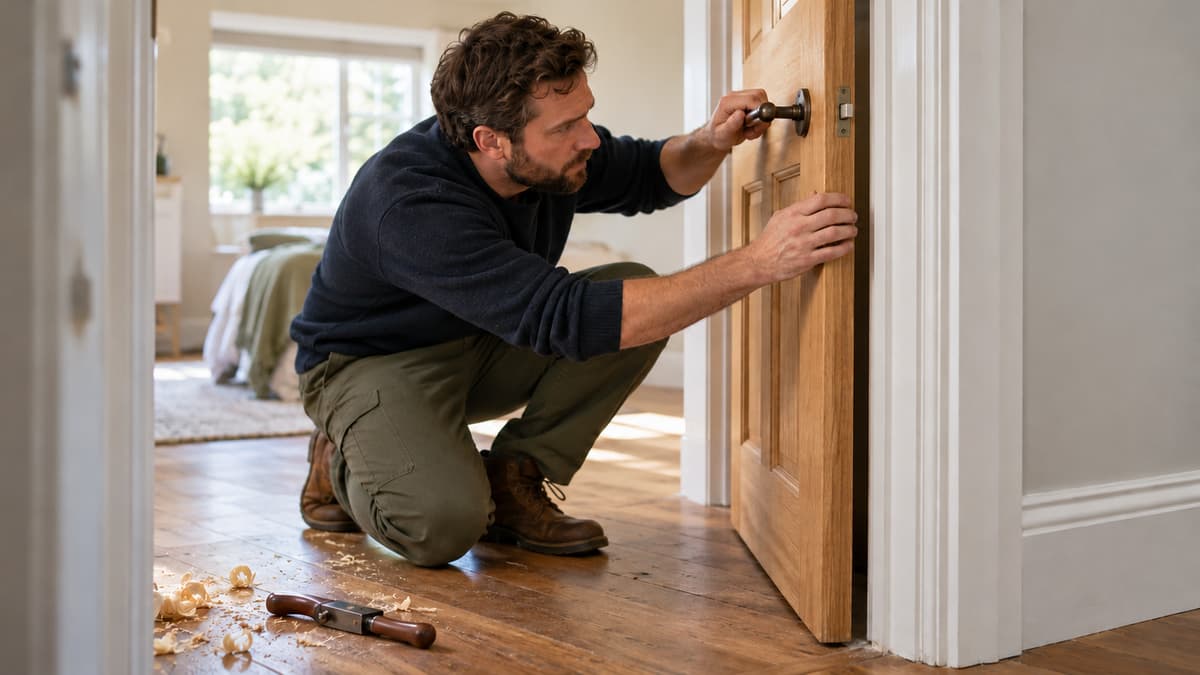
When to call a joiner for a sticking door
Read the gap first. A moved frame, a dropped hinge, or a fire door is a joiner's visit, not another shaving.
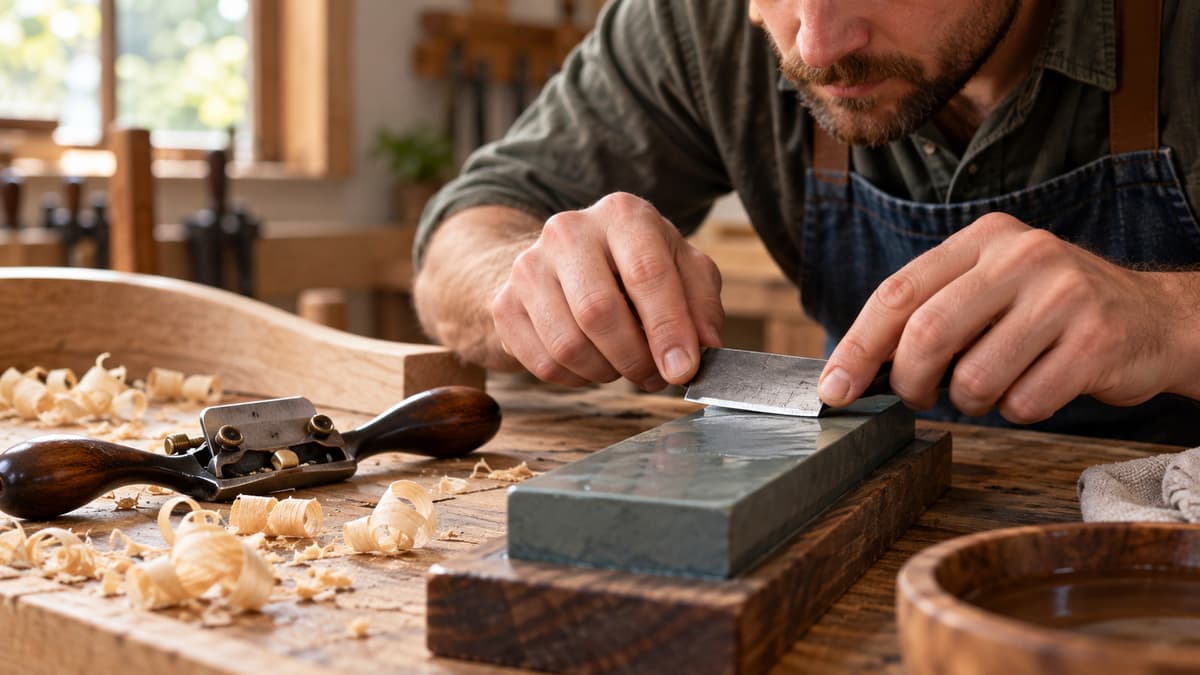
How to sharpen a spokeshave blade
If the blade skids or tears, hone it. A spare blade in the box is not a sharpening method.
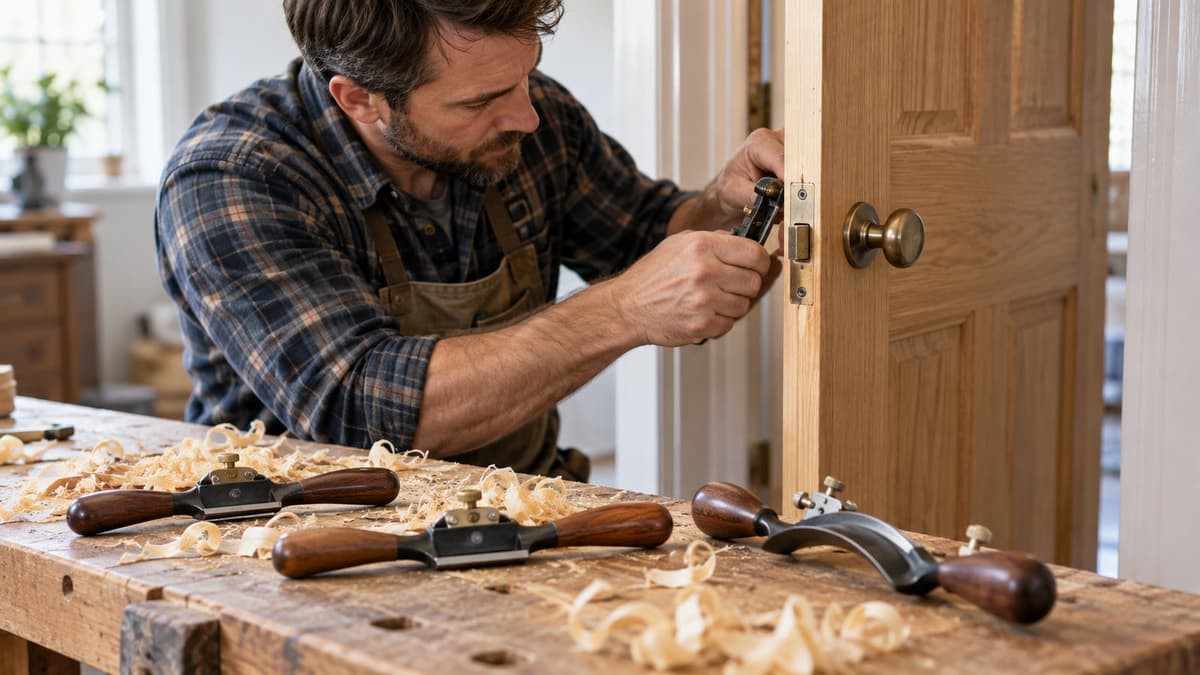
What a spokeshave costs in the UK
A cheap pair and an £8.99 flat shave are not the same buy. Shelf price is not the only figure.