Sharpen a spokeshave blade: hone it before it skips
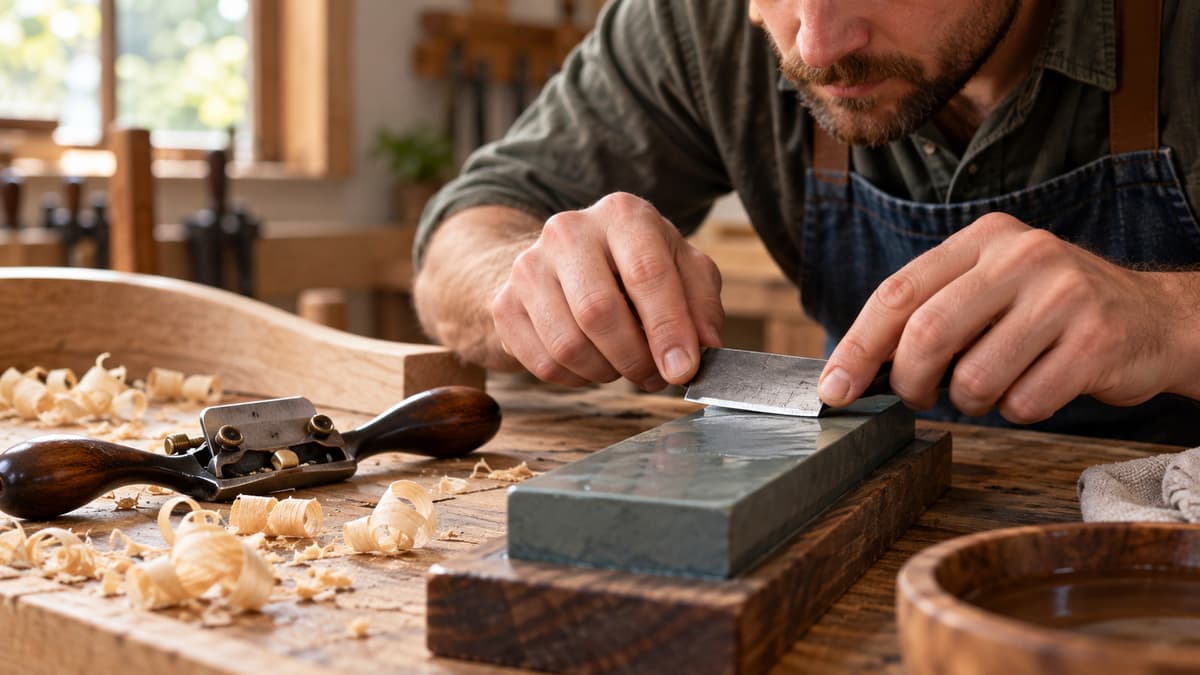
The iron skids even with the depth already set. Hone a bevel-down spokeshave blade on the bevel, lightly camber the corners, and treat a new chip as a return.
On this page
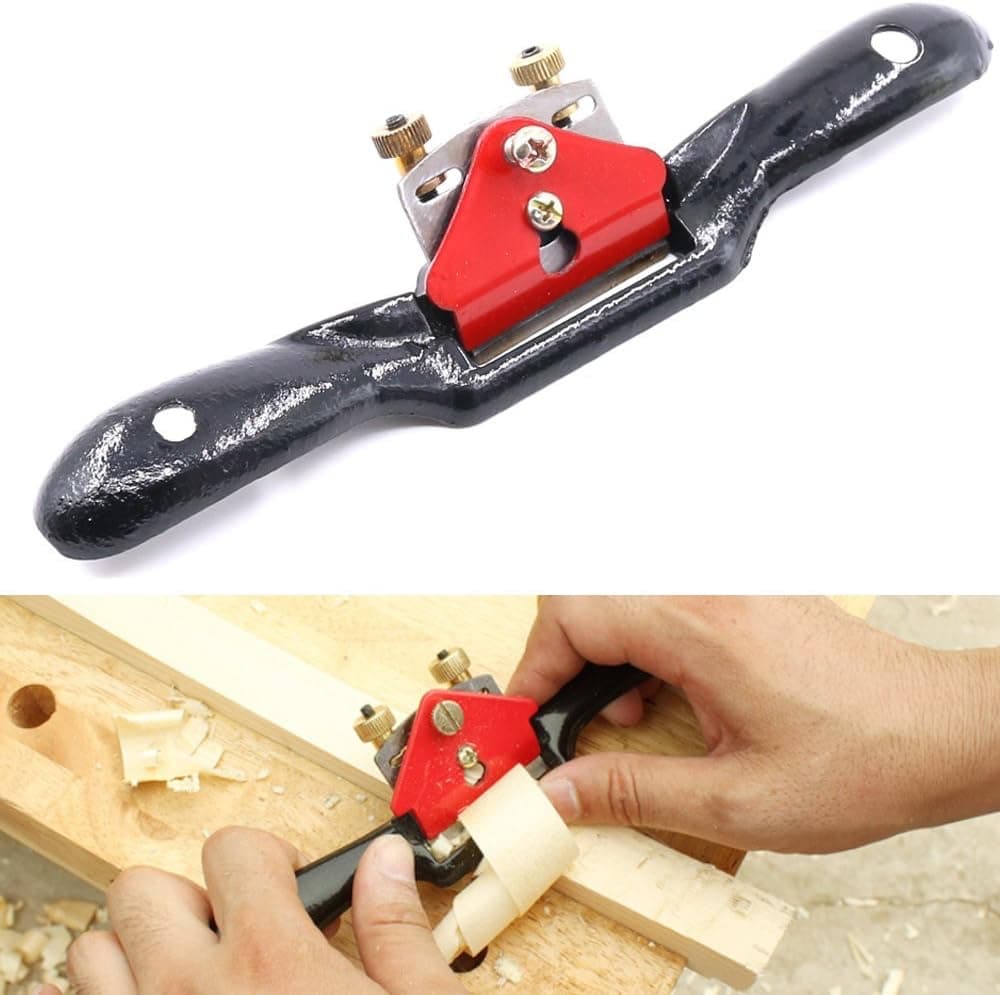
The shaving comes off as dust, or the iron skids and tears, and the depth is already set. Sharpen a spokeshave blade is the job that is left. Extra depth will not put an edge on a blunt iron, and backing off until the tear stops only means you are no longer cutting. UK reviews on the amazon.co.uk listings in our spokeshave comparison say both that a tool arrived sharp and that it needed a hone first.
Prices, stars, and review counts are the amazon.co.uk figures stored for that comparison, captured around 15 October 2026. The sharpening method follows public notes from Common Woodworking, Woodcraft, and Fine Woodworking. We did not measure bevels on these twelve tools, and we did not test hardness in a lab. A qualifying purchase through our links can earn a commission at no extra cost to you.
In short
If the iron skids or tears after the depth is set, hone the bevel and finish on the heel, then lightly camber the corners so the edge does not leave steps. About 25° and no more than 30° are two different checks, not one angle you must hit. A chipped new blade is a conversation with the seller, and a spare in the box is not a hone.
Hone if the iron skids
Set the depth first, the way the spokeshave how-to-use guide describes, and take a short stroke on the timber you mean to shape. A keen iron makes a continuous ribbon, or at least a clean surface, at a light setting. A blunt iron polishes the wood, then tears when you advance it. Hone before you file the sole, swap the screws, or decide the wood is too hard.
The busiest flat-base listing is the Swpeet B0773LKJ5Y, at £8.99 with a 3.9 average from 1,928 ratings and a claimed 46 mm carbon-steel blade. Some buyers cut straight away. Others had to fettle the iron first. That split is a listing average, not a sharpness test. Treat sharp on the product page as a claim to check with one shaving.
A light hone and a new bevel are different jobs. A flat bevel that raises a wire in a few strokes is a refresh. A rounded tip, a chip along the length, or a heel that no longer leads means you are grinding, and a short iron has little metal to spare. Stop when the edge cuts. SK2 at 58–60 HRC on a seller bullet is a catalogue claim. We have no hardness reading for these twelve blades.
Bevel-down and two published angles
The ordinary adjustable spokeshave here is bevel-down, Stanley 151 pattern: bevel to the sole, flat back towards you. Common Woodworking says to hone that bevel and finish on the heel. Polish only the tip and the edge sits proud of the heel, so a bright iron still will not cut. Lower the hands so the stone meets the heel, with the blade facing away from you.
Woodcraft says to maintain about 25° on a bevel-down blade. Common Woodworking, checking a secondhand iron with a protractor, says no more than 30°, because a steeper bevel lifts the edge above the heel and the shave will not cut. Neither figure was measured on the Swpeet, Glarks, or Spear & Jackson irons here. If the heel still meets the stone, the bevel is working. Past 30°, more pressure on the tip only makes it steeper.
The bed angle is not the hone. Fine Woodworking separates a low-angle, bevel-up shave, often quoted around 20°–35°, from a standard bevel-down tool whose bed sits nearer 45°. None of these twelve amazon.co.uk listings states a bed angle, so do not copy 45° onto the stone. Paul Sellers warns that this bevel is easy to get wrong. The error you can see is a heel that no longer touches. Honing the flat face dubs the edge that should stay flat against the cap. Match the iron to the sole in the flat and round spokeshave guide. A round sole changes the hollow you can enter. It does not change which side carries the edge.
Hold a short iron and camber the corners
These irons are often about 44–46 mm across. A 10 inch cutting width field is usually the tool length, not the blade. A chisel grip has nowhere to go. Common Woodworking uses a shop-made extender, and Paul Sellers shows a wooden holder, which we have not transcribed. Keep both hands off the edge and the stone. Use a coarse plate for a damaged bevel and a fine plate for the wire. If the holder slips, stop and reseat it.
Work in this order, in full strokes, with the edge pointing away from your body:
- Seat the iron in a holder, or grip only the tang if your fingers cannot reach the stone.
- Lay the bevel flat and lower your hands so the stroke ends on the heel, around 25°, and no steeper than 30°.
- Hone until a fine wire runs along the edge, then take that wire off on the flat back, kept dead flat.
- Tilt onto each corner for a few light strokes. A square corner leaves a step at each side of the mouth.
- Refit the iron, set a light cut, and try the same timber before you blame the stone.
Camber is a small tilt, not a hollow grind, so the iron does not leave tracks. A deep curve is a shaped blade, which is slower and easy to spoil. A heavy camber that no longer reaches the wood in the middle has to be stoned back, and each pass shortens the iron.
Cap iron and sole are setup
A bright edge still skips if the sole rocks or the cap holds the blade off the work. Common Woodworking files paint on the cap’s leading edge back to a bright line, then flattens the underside. Paint in the mouth is a spacer, and compensating with more depth turns a light cut into a dig. Diamond stones take a slight hollow off a flat sole. A wavy casting needs a file before the stone. Check the sole with a straight edge before you blame the blade. The full routine is in flatten a painted spokeshave sole. If the blade cannot project evenly, or the screws will not hold, that is a faulty tool.
The £8.99 Swpeet is our top pick for a named flat sole and a large review sample, and it still needs checking, sharpening, and adjustment. That fit is for general flat work. It does not mean the iron arrived at 25° or that the sole was already lapped.
Spares and a curved blade
A spare blade is a second iron you will also have to hone. UK buyers in this set report both that the promised spares were in the box and that the packet was empty. Count a spare only when you can hold it. The Glarks pair that states two extra blades, and the sets that advertise four, are buying decisions, not a sharpening method.
A straight iron of about 44–46 mm is the hone above. A curved blade is slower, because the stone has to follow the curve. The Spear & Jackson SSCON pair uses curved blades, not a flat 151 plus a round-sole 151R. No radius is printed on these twelve listings. Roll the iron until the whole curve meets the plate, and stop if the curve flattens. For a door edge or a chamfer, sharpen the straight iron. The curved pair is for a hollow too tight for a flat sole, the split in the best spokeshave notes.
When honing is the wrong next step
A chip on a new edge, or spares the title promised and did not send, belongs with the seller. A blunt, complete iron belongs on the stone for a quarter of an hour, then one test cut. If the heel still misses the wood, lower your hands on the next pass. Do not press harder on the tip.
Common questions
A live price can move after 15 October 2026. A degree printed for a Stanley bed is not the angle of the iron in your hand, and a spare in a photograph is not a spare in the parcel. A chip on arrival is a question for the seller, not a coarser stone.
Common questions
Should you hone a new spokeshave before the first cut?
How do you hold a very short spokeshave blade?
Which face do you hone on a bevel-down iron?
Why do guides say both about 25 degrees and no more than 30?
What does cambering the corners do?
Is a painted sole or a thick cap iron part of sharpening?
When is a chipped iron a return rather than a stone?

Peter F. is the editor for DIY & tools at productscompared.co.uk. Comparisons in this category are checked against amazon.co.uk listings, review evidence and public UK sources.
Related articles

Spare blades are not a sharpening plan
A box that promised four blades is not a hone. Spares run out, and some parcels never contained them.

Flatten a painted spokeshave sole
A keen edge still skips if the sole is painted or rocky. Flattening is setup, until the mouth itself is wrong.

Your rights if a spokeshave arrives faulty
A chipped new iron or missing spares can be a quality problem. A blunt but complete blade is a hone.