Mixing mortar with a shovel: choose the right size
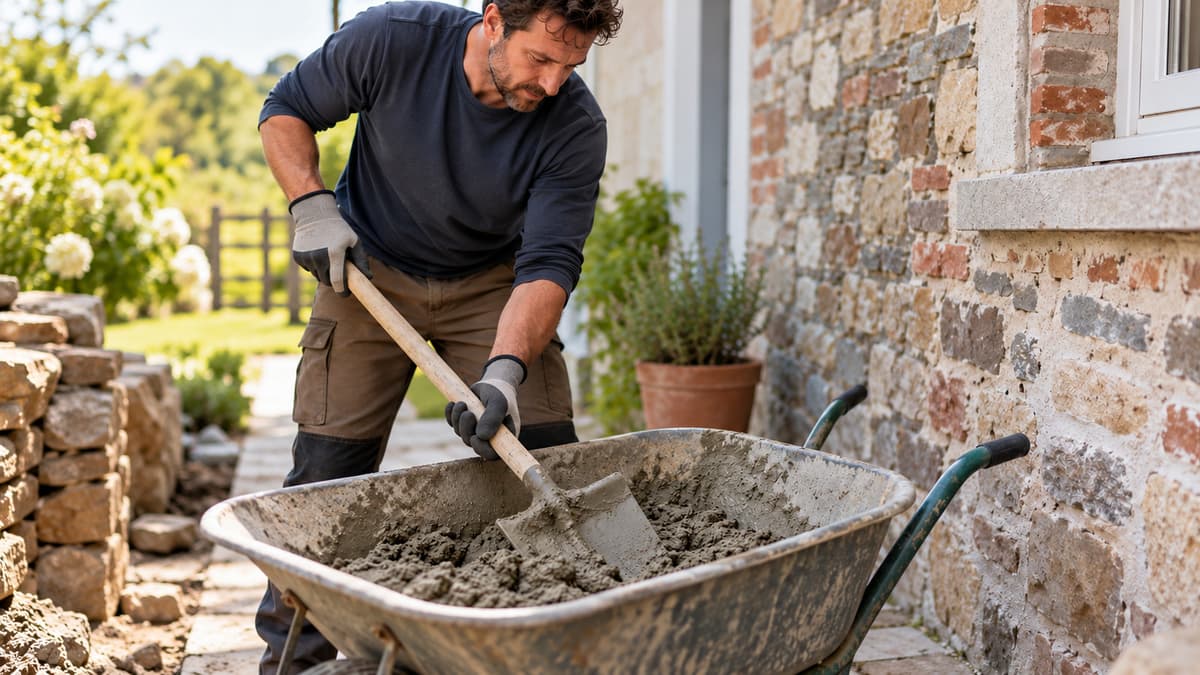
Mix a small batch of mortar in a barrow with a square shovel, while taking the ratio from the bag and choosing a full-size or short tool sensibly.
On this page
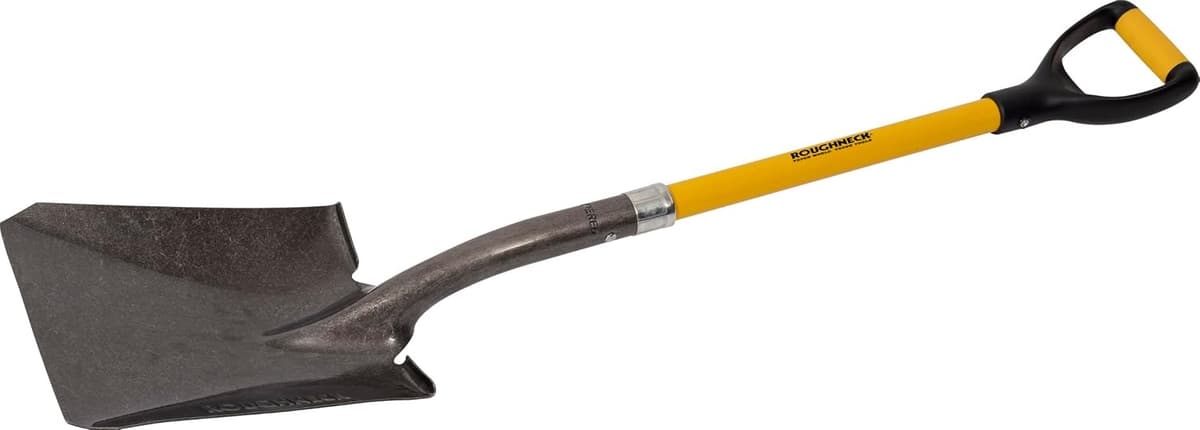
You have enough mortar to point a small repair, not enough to justify a mixer, and the wheelbarrow is already beside the job. Mixing mortar with a shovel can make sense at that scale, provided you keep two decisions separate. A square mouth shovel lifts and folds the material; it does not tell you how much cement, sand, or water to use. That recipe must come from the bag or the material manufacturer's instructions.
The next choice is reach. A full-size builders' shovel works from beside the barrow and moves more per lift. A short shovel turns more easily in the tray, with less leverage and less capacity. The right one depends on the barrow, the batch, and what you can repeatedly lift.
The Products Compared editorial team used public tool guidance, HSE manual-handling guidance, amazon.co.uk listing details, and captured reviews. We did not run a lab test or set a mortar recipe. A purchase through a comparison link may earn a commission at no extra cost to you.
In short
A square mouth shovel can lift and fold a small batch of mortar in a barrow, but the bag supplies the ratio and the water. Choose a full-size tool for reach beside the barrow, or a genuine mini or micro shovel for turning inside it, after you check the stated length and empty weight.
What the square shovel does
A square mouth is a handling shape. Wonkee Donkee Tools describes it for scooping materials such as sand and gravel and also names concrete mixing among its uses. Pavingexpert treats a square mouth as a tool for shifting and levelling material above ground. The straight front edge can scrape across the barrow tray, while the raised sides retain more loose material than a pointed mouth.
For mortar, that means three actions: lift dry material, turn it into the centre, and fold the mix over itself. The blade can also scrape a corner so fewer dry pockets stay hidden. None of that makes the shovel a measuring device, and a large heaped blade is a poor repeatable measure.
The limit appears as the batch grows. Mortar on the blade adds to the empty weight, and a wide square mouth invites a bigger lift than you can control. The HSE does not offer one universal safe kilogram; the task, the load, the place, and the person all count. If the barrow shifts, the lifts turn awkward, or the mix is too stiff to fold without forcing the shaft, reduce the batch or change the method. The square mouth shovel comparison compares shapes and stated sizes. It helps you choose the handling tool. It cannot choose the mortar formulation.
Take the ratio from the bag
The bag holds the recipe because mortar is not one product for one job. The opened sources do not state a cement-to-sand ratio, so this page will not invent a 4:1 or any other number. Use the proportions, water guidance, method, and safety information for the exact material you bought. If the instructions are missing or illegible, obtain the product documentation rather than guessing.
A review can show that somebody turned cement or concrete in a barrow. It cannot show that the proportions were right, that the mortar suited your repair, or that the method matched your bag. A reported use is evidence about the tool, not about the chemistry.
Measure by the method the bag specifies, then use the shovel only to combine the ingredients. One shovel is not a volume: blade sizes differ, the heap changes with moisture, and a 210 × 160 mm micro blade is not a 240 × 310 mm full-size blade.
Follow the printed water sequence and quantity instead of pouring until the batch looks convenient to shovel. If the instructions set stages, waiting time, or a limit on adjustment, those directions outrank a general article. The shovel turns the batch. It does not rescue proportions that were never measured.
Mix a small batch in a barrow
Start with a stable, clean barrow you can work at without holding it with one leg. Read the bag, including its method and warnings, and decide how you will measure the stated proportions. Keep the batch small enough to turn without levering against the sides or spilling whenever you lift the blade.
- Add and measure the dry materials in the order the product instructions give. Keep each measure consistent rather than guessing with differently heaped shovel loads.
- Turn the dry material from the outer edges towards the middle. Scrape the square edge along the tray, then lift and fold, so the bottom does not stay untouched.
- Add water only as the bag directs. Fold from the outside towards the centre rather than chasing liquid around the tray.
- Check the corners and the bottom for dry material. Bring those pockets into the main batch, and continue only for the method or time the product states.
- Stop when the manufacturer's method says the batch is ready. Do not add extra water because the mortar has become harder to move.
Mixing in a barrow does not remove the transport. Assess the load and the route before you move it. HSE manual-handling guidance asks for that assessment rather than one copied weight limit. If the barrow has become awkward, split the batch. Scooping technique is on how to use a square mouth shovel. The mortar proportions still come from the bag.
Full-size or short shovel
A full-size shovel gives you reach from beside the barrow. The Draper 31391 is stated at 940 mm overall, with a pressed blade of 240 × 310 mm and an empty weight of 2.3 kg. Captured reviews include buyers scooping cement and adding water. At £16.99 it was the best-value full-size model in this comparison. Reviews also mention snapped shafts, loose rivets, and a slack handle.
That 2.3 kg is on the shovel before any wet load. A full blade speeds a turn and raises the load, so take a smaller bite only if you resist filling it. Buyers over 6 ft have wanted more than 940 mm. The full-size format makes most sense beside the barrow, not deep inside it.
A short shovel solves a different problem. The Draper 15073 is listed at 700 g and 70 × 15 × 6 cm. The Spear & Jackson MICROSQUARE states a 210 × 160 mm blade, 710 mm overall in a bullet, and 1.15 kg. Reviews describe both in a barrow. That is reported use, not a controlled durability test.
The short blade turns more easily in the tray and moves less per stroke, and you bend closer to the work. Do not buy a 700 g mini for a large batch because the title sounds robust. The square shovel buying guide separates mini, micro, full-size, and long-handle dimensions.
What the reviews actually show
Reviews show that buyers found particular tools usable for particular tasks. They do not turn those experiences into specifications. Captured notes include cement in a barrow on the MICROSQUARE, barrow use on the Draper 15073, concrete mixing on the Draper 70373, and mortar and topsoil on the Roughneck ROU68146. That supports a modest claim: square shovels are used for mixing. It does not give a mix ratio, a batch capacity, or a service life.
The Draper 70373 is an all-steel forged No. 2 shovel listed at 2.75 kg, and reviewers call it heavy and solid. The Roughneck ROU68146 has an attribute claiming 220 g, while reviews on the same listing say more than 2.2 kg or very heavy. That conflict means its working weight stays unknown here. Copying 220 g into a lifting calculation would be false precision.
For a small domestic batch, use reviews for how a tool behaved in a barrow, listing dimensions for whether it fits, and the mortar bag for the material. If the batch is no longer small and controllable, change the scale or the method.
Common questions
Can I mix mortar with a square shovel?
What mortar mix ratio should I use?
Is a full-size shovel better for a wheelbarrow?
Which short shovels have been used in a barrow?
Does a square blade cut the dry ingredients?
How heavy is a builders' shovel before mortar is added?

Products Compared publishes British-English buying guides based on amazon.co.uk listings and public UK sources. We do not run a lab and we do not invent test scores.
Related articles
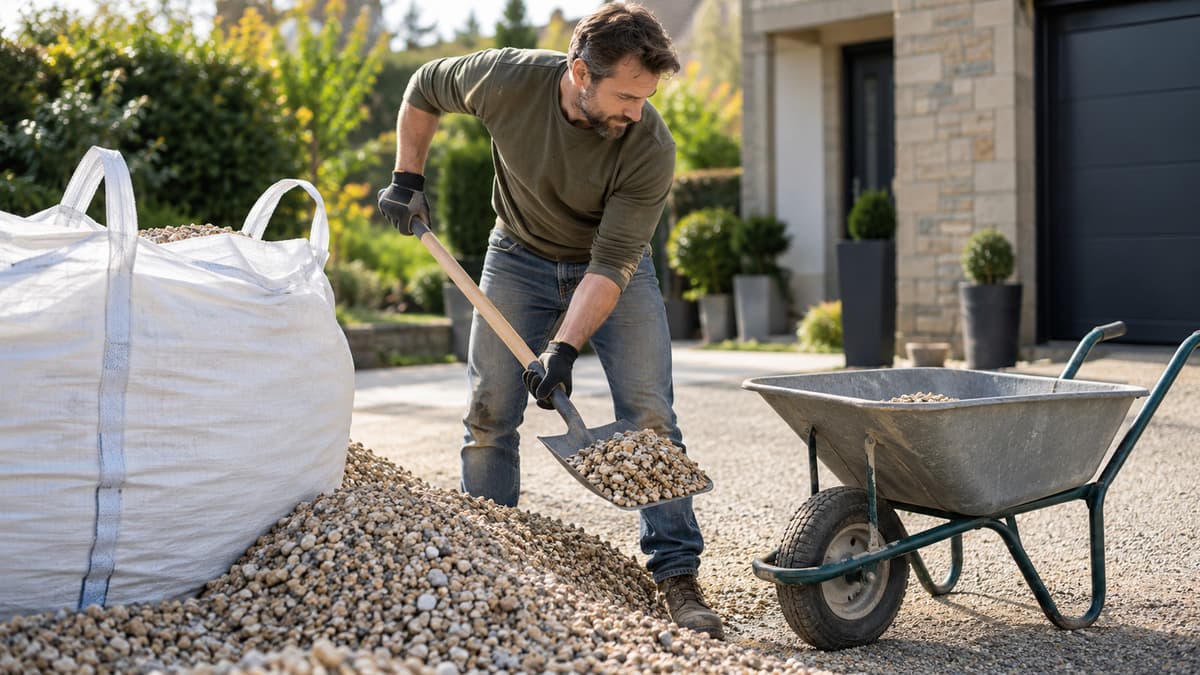
Moving aggregate by hand: scoop, then barrow
Move loose sand, gravel, or hardcore with a square shovel, then let the barrow carry the distance.
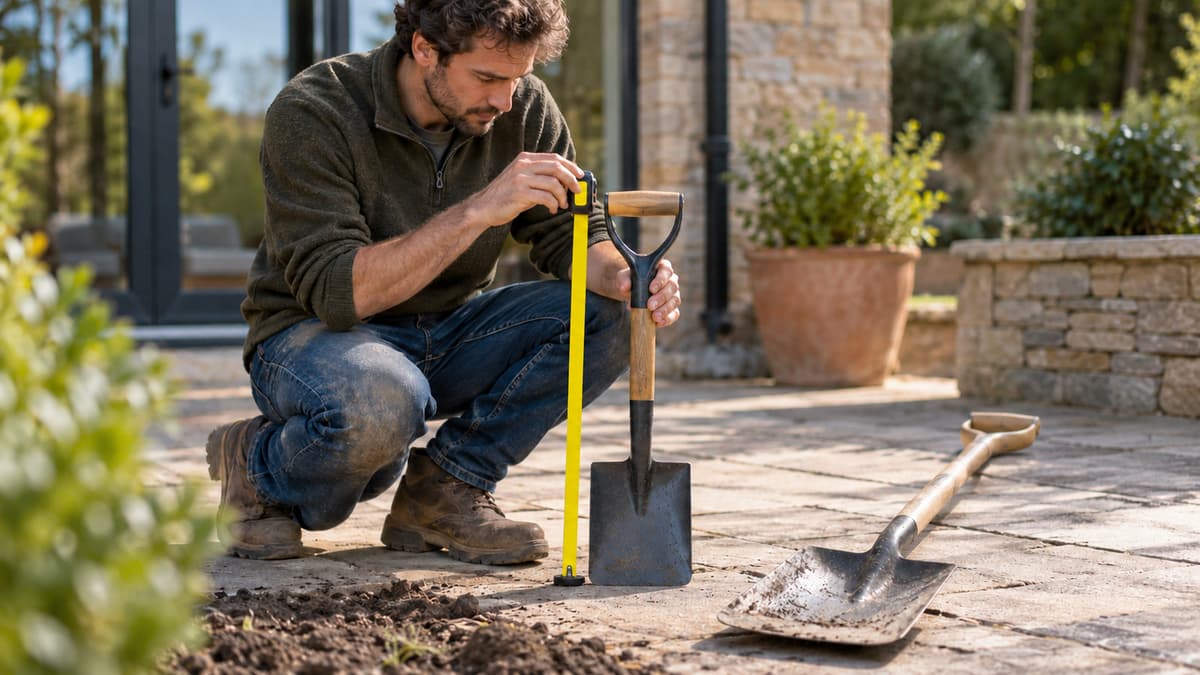
Shovel smaller than expected: read the 70 cm line
Check the stated dimensions before a highly reviewed mini shovel turns out too short for your intended job.

Manual handling when you shovel spoil
A barrow carries material, but you still need to assess each lift rather than rely on one supposedly safe weight.