Manual handling shovelling: how to reduce the risk

UK manual handling rules set no universal safe shovel load. Learn when to reduce each scoop, shorten the carry, use a barrow, or stop the job.
On this page
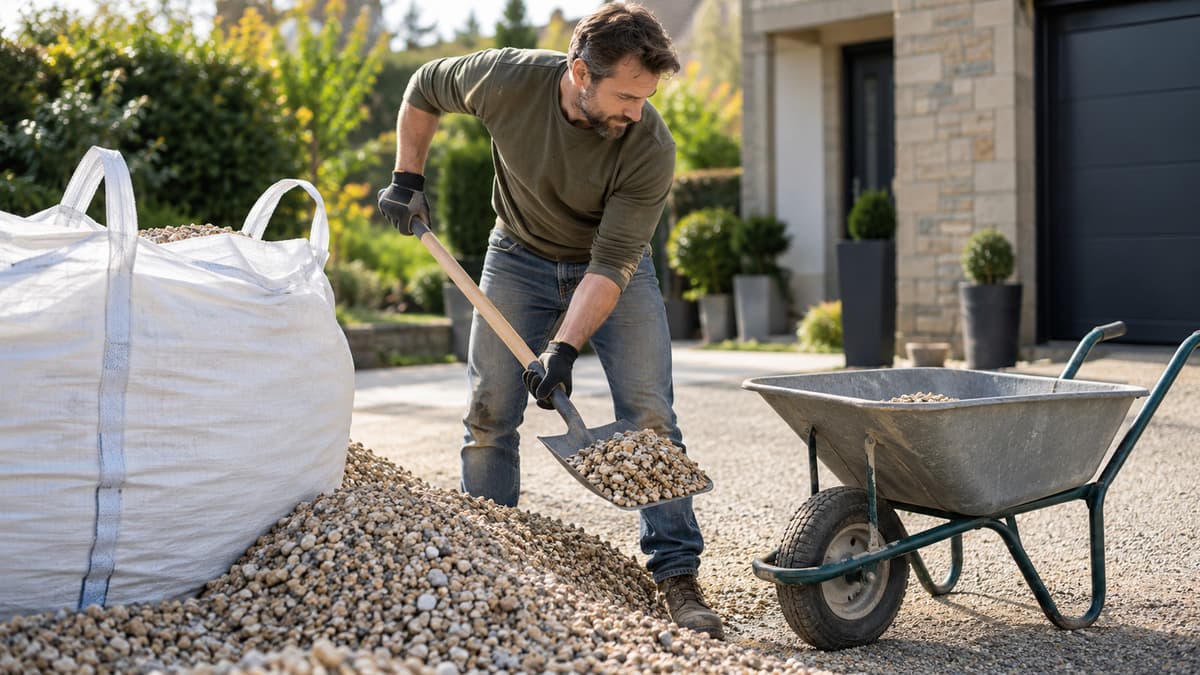
A bulk bag on the drive can make manual handling shovelling look simple: scoop the spoil, turn, and drop it somewhere else. The problem is not one dramatic lift but the tool's own weight, the changing material, the reach, the carry, and the number of repetitions. There is no universal safe kilogram for a shovel load, so the useful decision is how to avoid, assess, and reduce the handling before fatigue starts choosing your technique for you.
In short
The Manual Handling Operations Regulations 1992 do not provide one maximum shovel-load weight that makes repeated lifting safe. For covered work, avoid hazardous handling where reasonably practicable, assess what remains, and reduce the risk. At home, the same order is a sensible planning method, even though HSE construction guidance is written for employers.
What the regulations actually say
The Manual Handling Operations Regulations 1992 manage risk from handling at work. They do not approve a particular shovel or set a mass for every user. HSE construction guidance puts the control order plainly: avoid hazardous manual handling where reasonably practicable, assess what cannot be avoided, and reduce the risk. An employer should first ask whether the spoil needs repeated hand loading at all.
The assessment looks beyond lifting. Lowering into a barrow, pushing or pulling it, carrying the tool, and twisting to tip each scoop are all part of the task. Reach, capability, fatigue, and any relevant limitation can change the risk even when the shovel and material stay the same. The HSE page is aimed at employers, and it is not a householder fine schedule. At home the same order is still practical. If you employ someone or direct site work, use the HSE guidance and assess that work. This buying guide is not compliance paperwork.
Why there is no single safe kilogram
A fixed kilogram would hide why two similar scoops differ. Dry loose material may sit predictably on the blade. Wet spoil can be denser, sticky, and slow to release. A load from near your feet is not the same as one reached across a bulk bag, and a turn to a nearby barrow is not a carry over rubble.
Frequency matters too. A scoop that feels easy once can become poor practice after dozens of repetitions, especially as the pile drops and your reach lengthens. Take a smaller amount you can control without snatching or changing posture as you tire, and arrange the job so fewer lifts are needed.
Do not treat a number from an unrelated lifting chart as permission to continue. These sources give no universal maximum for one shovel load. Watch where the blade enters, how far the load rises, whether you twist, where it lands, how often you repeat it, and what changes when the surface is uneven or wet. A square mouth shifts loose material efficiently, which is why repetition can build unnoticed. Efficiency is not proof of low risk. Our square mouth shovel comparison separates full-size, mini, steel-shaft, and long-handle options, but the tool follows the handling plan rather than replacing it.
Count the shovel before the spoil
Every lift starts with the shovel. The Draper 31391 is listed at 2.3 kg before soil, gravel, sand, or demolition spoil, with an overall length of 940 mm and a pressed blade of 240 × 310 mm. Those figures describe the tool. They do not say what mass you can lift repeatedly.
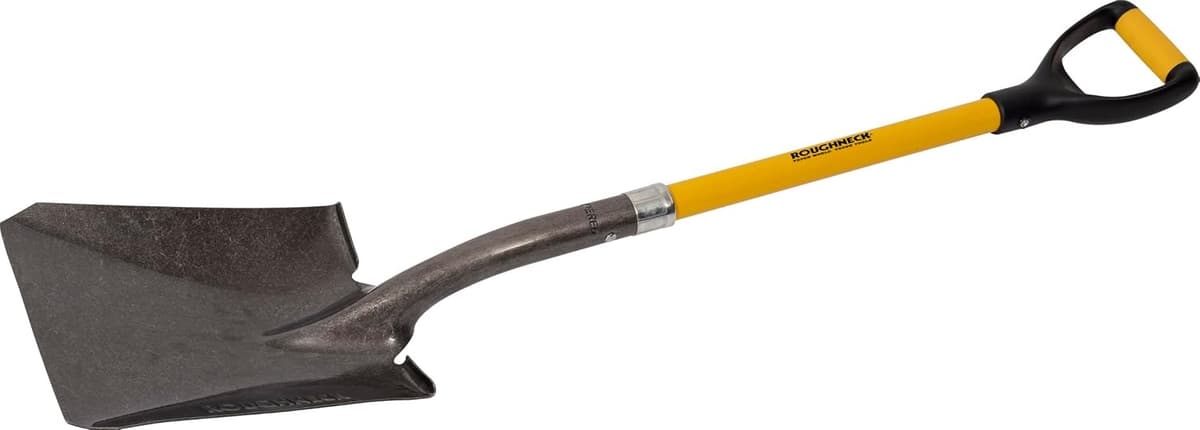
Other listed weights run higher. The long Roughneck ROU68144 is 2.67 kg, and the forged all-steel Draper 70373 is 2.75 kg. Those extra grams move on every empty return and every loaded lift. Steel can be a fair buying trade-off, but it is not weight-free. The Roughneck ROU68146 shows a 220 g attribute, yet reviews on the same page call it over 2.2 kg or very heavy. Do not plan with 220 g. Where a listing conflicts with itself, treat the mass as unknown.
A broad square blade suits loose spoil, but filling it to the edges increases the material held at arm's length. Start below capacity, keep the load stable, and reduce the scoop when the material is wet or awkward.
A longer shaft is not a barrow
A longer shaft can change posture and reach. It cannot make material disappear. The Roughneck ROU68144 is stated at 1,460 mm and 2.67 kg before loading. Taller reviewers say the extra length lets them stand straighter when loading a mixer or skip, and it can reach into a ditch without putting your hands near the water. Reviews also call it tiring after an hour, too much for a disabled buyer, difficult one-handed, or unsuitable for a shorter person. Extra length can move the load farther from your hands and worsen control when the tool does not fit. The long-handle shovel guide sets out that trade-off.
Shaft length does not replace transport. Carrying spoil on the blade across a drive or garden combines lifting with a long, unstable hold. Put a barrow near the pile, use the shovel for the short load, then move several scoops in equipment meant for transport. You still assess pushing, tipping, slopes, thresholds, and soft ground.
Do not overfill the barrow because it cuts the number of trips. If you cannot start, steer, or stop it, the problem has only moved. Smaller loads and a prepared route are the better system where the path narrows or changes level.
Plan the route before the first scoop
Decide where the spoil is going, clear the route, and place the barrow for a small turn rather than a long reach. Leave room for both feet. Set it too close, and the stance gets awkward or the handles become a trip point. If the material is compacted, loosen it with the right tool first. A square mouth shovel is for shifting loose material, not for opening undisturbed clay. Then load with controlled scoops and transport with the barrow. Cutting, levering, lifting, carrying, and throwing in one hurried movement hides which part should change.
After the first few minutes, check whether spoil is sticking, whether you are reaching farther as the near edge disappears, whether the barrow has rolled, and whether you are twisting instead of moving your feet. Reduce the scoop, move the container, change side, or reset the route. Rain changes the spoil and the footing. Mixed rubble can catch or shift. Sharp, unstable, or unidentified waste may need more than a smaller scoop. Stop and reassess. Gloves or a stronger shaft do not answer every hazard.
When the volume is no longer a Saturday job
A bulk bag, a long trench, or a weekend's excavation can mean far more cycles than the first layer suggests. If you must carry every scoop, keep reaching into a deepening hole, or continue after your control slips, manual shovelling is already asking too much. Bring the receiving point closer, add a barrow, arrange help, split the work, or use suitable mechanical equipment before you buy a bigger blade. On employed work, those options belong in the avoid-and-reduce discussion.
No single volume makes a machine mandatory. Access, ground, material, distance, and the people involved all matter. Stop when you cannot keep scoops controlled, the route will not take a barrow safely, the material is not loose, or repetition dominates the task. Hard ground is a separate warning: a square shovel may be the wrong cutting tool before handling begins. When clay needs a machine covers ground that resists the blade. Moving aggregate by hand covers scoop-then-barrow transport.
Products Compared used public HSE and legislation sources plus captured amazon.co.uk listing data. We did not run a lab test. Dimensions and weights are listing claims, and conflicting figures are identified rather than silently resolved. A qualifying Amazon purchase can earn us a commission at no extra cost to you.
Common questions
What do the Manual Handling Operations Regulations 1992 require?
Is there a legal maximum weight for one shovel load?
Does a 1,460 mm handle make shovelling safe?
How heavy is a square shovel before spoil is added?
When should I use a barrow instead of carrying spoil on a shovel?
Do the 1992 regulations apply to householders doing their own garden?
Where can I compare a suitable shovel?

Products Compared publishes British-English buying guides based on amazon.co.uk listings and public UK sources. We do not run a lab and we do not invent test scores.
Related articles
Moving aggregate by hand: scoop, then barrow
Use the shovel to load loose material, then let the barrow carry it rather than walking every scoop.

Digging clay soil UK: when the shovel should stop
A square blade is for loose spoil, while hard clay may need another tool or a machine.

Shovel smaller than expected: read the 70 cm line
Check the stated length and weight before a highly reviewed shovel turns out wrong for you.