Moving aggregate by hand: scoop, then use a barrow
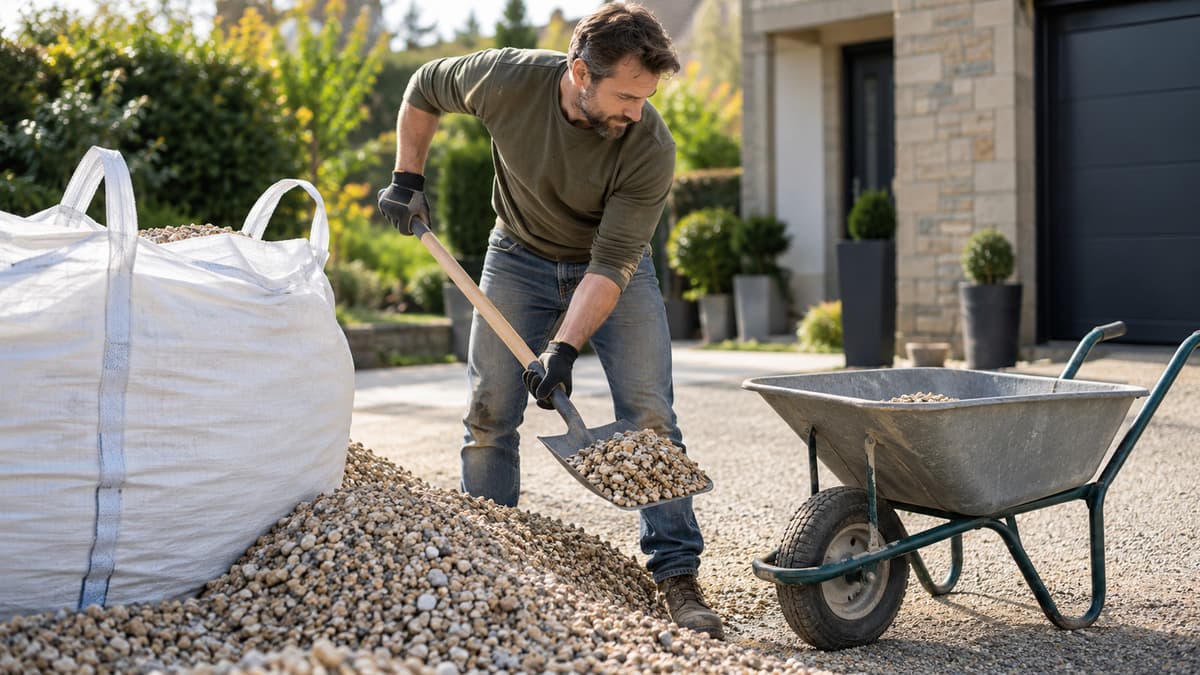
Scoop loose sand, gravel, or hardcore with a square shovel. Count the tool's own weight on every load, and take a barrow before the pile turns into a lift.
On this page
The bulk bag sits on the drive, full of sand, gravel, or hardcore. Moving aggregate by hand starts when you open that bag and take a shovel to the heap. It goes wrong when the shaft becomes a crane and you try to shift the delivery in a few heroic lifts.
You want a square mouth, a blade you can walk, and a wheelbarrow for the distance. A full-size tool in this set already weighs 2.3 kg before a single stone goes on it. The Manual Handling Operations Regulations 1992 set no single safe kilogram for that combined load. Smaller scoops, and a barrow kept close, are how you reduce it.
Products Compared read nine square mouth shovels on amazon.co.uk on 15 October 2026, plus UK blade guides and the Health and Safety Executive page on construction manual handling. Nobody here ran a laboratory test of how much a blade can hold. If you buy through a link on the comparison, we may earn a commission at no extra cost to you.
In short
A square mouth scoops loose sand, gravel, and hardcore, and the lightest stated full-size shovel in this set already weighs 2.3 kg before the load. The Manual Handling Operations Regulations 1992 set no single safe kilogram, so you shrink each blade and let a wheelbarrow move the distance. A bulk bag stays on the ground, and a 70 cm shovel is the wrong length for emptying it.
Loose material is the square shovel's job
The blade for this heap has a straight front edge and sides that rise. British sites call that a square mouth, a wide mouth, or a builders' shovel. Wonkee Donkee Tools lists scooping sand, gravel, and soil, mixing concrete, and refilling trenches. Pavingexpert treats a wide mouth as the shovel for shifting and for levelling. Those are heap jobs. The material is already loose.
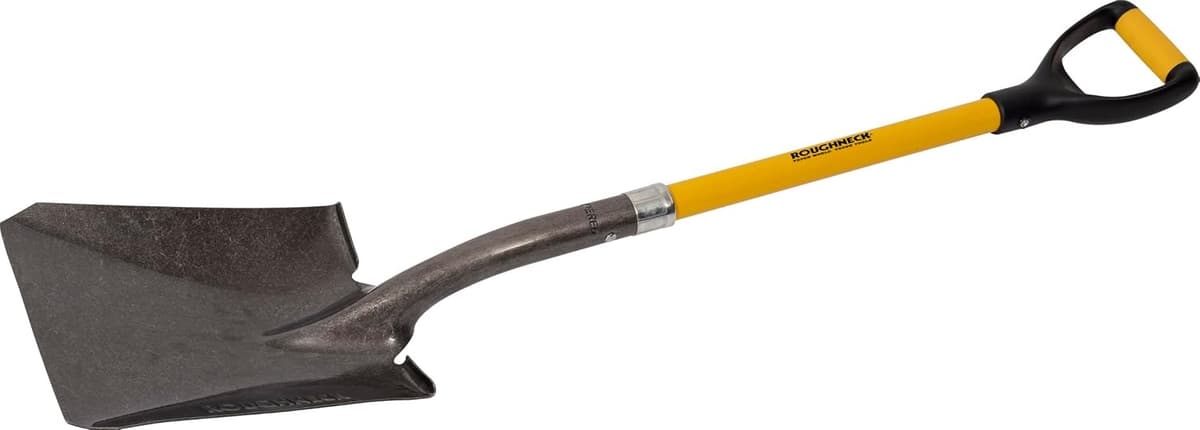
Raised sides are why gravel and sand stay on the blade. The Roughneck ROU68146 bullets name sand, gravel, cement, earth, and trenches. The Draper 31391 is filed under loose building material, with a pressed blade of 240 × 310 mm and a length of 940 mm. The nine tools are on the square mouth shovel comparison.
The limit is ground you have not loosened. A square blade is a poor opener of undisturbed clay and roots. Compacted type 1 is a cutting job. Type 1 from a split bag is a scoop. For hard ground, a taper-mouth shovel or a spade does the cutting, which is the split on the taper-mouth page. A small heap of sand and cement is still a scoop. A full drum belongs with a mixer, and this page will not invent a mix ratio.
The shovel weight you add to every load
Every load includes the shovel. On the listings read on 15 October 2026, the Draper 31391, ASIN B0002BUQFQ, is 2.3 kg, 940 mm, and £16.99. That is the lightest stated full-size weight here. The shaft is hardwood, the head is pressed, and reviews include snapped shafts and loose rivets. A lighter tool that fails in the socket is the heavier problem on the third barrow.
The other stated full-size weights sit just above it. Bulldog 5SM2T, with an FSC ash shaft, is 2.44 kg at £25.36. Bulldog 5SM2AM all-steel is 2.55 kg at £21.00, and the country-of-origin field says India. Faithfull FAIASS2MYD is 2.55 kg at £21.86, blade 300 × 250 mm. A bullet says a 0.7 m shaft, and the item dimensions run to 1,020 mm. Draper 70373 forged all-steel is 2.75 kg at £21.45. Roughneck ROU68144 is 2.67 kg at £19.34 and 1,460 mm. All-steel sits about 2.5–2.8 kg before the load.
The Roughneck ROU68146 attribute says 220 g. Reviews on the same page say over 2.2 kg, or very heavy, so that working weight stays unknown. The shelf price is £22.59, the stated length is 1,070 mm, and the bullets include foot treads and a fibreglass D-grip. Draper 15073 is 700 g, listed at 70 × 15 × 6 cm, £11.61, with 4.2 from 429 reviews. Spear & Jackson MICROSQUARE is 1.15 kg, blade 210 × 160 mm, about 680–710 mm, £12.35, with 4.4 from 413 reviews.
The Health and Safety Executive points you at the 1992 regulations: avoid hazardous handling where you can, assess what remains, and reduce the risk. That page names no cutoff kilogram. Take less on the blade and keep the barrow close. A longer shaft changes your posture, and the kilograms stay in your hands. The long-handle page is only about reach, height, and that extra weight.
What reviewers actually moved
Reviews name jobs, not a safe kilogram, and no text counts the loads in a bulk bag. Draper 31391 texts name sand, aggregate, cement, and type 1, and buyers who moved tonnes, at 4.5 from 627, beside snapped shafts and loose rivets. Roughneck texts name gravel and stone. The ROU68146 is 4.7 from 613, with praise for the sides and the grip and no repeated break, while the 220 g line stays unresolved. The ROU68144, 4.6 from 187, suits some taller users and is too much for some shorter or disabled users. Foot treads are stated on those two only. The mini's 4.2 from 429 covers split wood, rust, and a snap around roots, a weak reason to empty a bulk bag. Length, mouth, and shaft are on the buying guide.
Timber shafts and loose rivets
A riveted timber shaft will scoop. Ask it to break hardcore, lift a slab, or rock a buried stone, and you load the rivets as a pry bar. On the 31391 the shaft is hardwood with a wooden Y-dee, the blade is pressed alloy steel, and the origin field says India. The Bulldog 5SM2T is 4.3 from 34 across eight texts. One says the top of the handle fell off on the second use. The other texts say it did the job. On the all-steel Bulldog 5SM2AM a wooden cross-dowel in the metal grip comes loose, while reviewers call the steel shaft sturdy. If the socket moves or the grain has opened, stop. Bring the head indoors when you finish.
When the bulk bag needs a barrow
Leave the bulk bag on the ground and empty it in blade loads. This page states no bag weight, because that figure is not in the listings or the reviews. Open the sack into a heap you can approach from the side, and keep the barrow within a step or two. The shovel fills the barrow. The barrow takes the path.
A long shaft does not replace the barrow. On the ROU68144, at 1,460 mm and 2.67 kg, taller reviewers praise a straighter back. Shorter reviewers say the length is wrong and the tool is still heavy. Choose that handle when a one-metre shaft makes you stoop and you can accept about 2.7 kg plus the load. Choose the barrow when the drop is more than a pace away. The how to use a square mouth shovel page keeps the scoop, the throw, and the stop together.
A short shovel with a high star line is the other trap. The Draper 15073 title says long handled, and the dimensions say 70 × 15 × 6 cm. The MICROSQUARE blade is 210 × 160 mm. Read those millimetres before you empty a full-size bag.
- Set your feet beside the heap so the next move is a short walk to the barrow.
- Slide the straight edge under loose sand, gravel, or type 1, and lift a blade you can hold for that step.
- Put a boot on the blade only if the shovel states foot treads: the Roughneck ROU68146 or the ROU68144.
- Walk to the barrow and tip, rather than twisting from the waist with a full blade.
- On a timber shaft, scoop. Levering is the rivet failure already in the Draper reviews.
- Stop for an employer's handling assessment, a trench that can collapse, work in the road, or a service you are not trained to expose.
A Saturday heap of loose aggregate can stay a shovel-and-barrow job. Those other conditions need a competent person or a machine. None of these listings states a BS 8020 or BS EN 60900 rating, or a BS 3388 pass. If you are only moving a bag on the drive, stay with the blade, the barrow, and a shaft that is still tight.
Common questions
Is a square mouth the right shape for gravel and sand?
Can I empty a bulk bag with a shovel alone?
How heavy is the shovel before the load?
Do foot treads matter, and which shovels state them?
What broke when people moved spoil with a timber shaft?
When do I stop and use a barrow or a machine?
Where are the nine shovels compared?

Products Compared publishes British-English buying guides based on amazon.co.uk listings and public UK sources. We do not run a lab and we do not invent test scores.
Related articles

Manual handling shovelling: reduce the load
Manual handling rules set no universal safe shovel load. Reduce each scoop, shorten the carry, or stop.
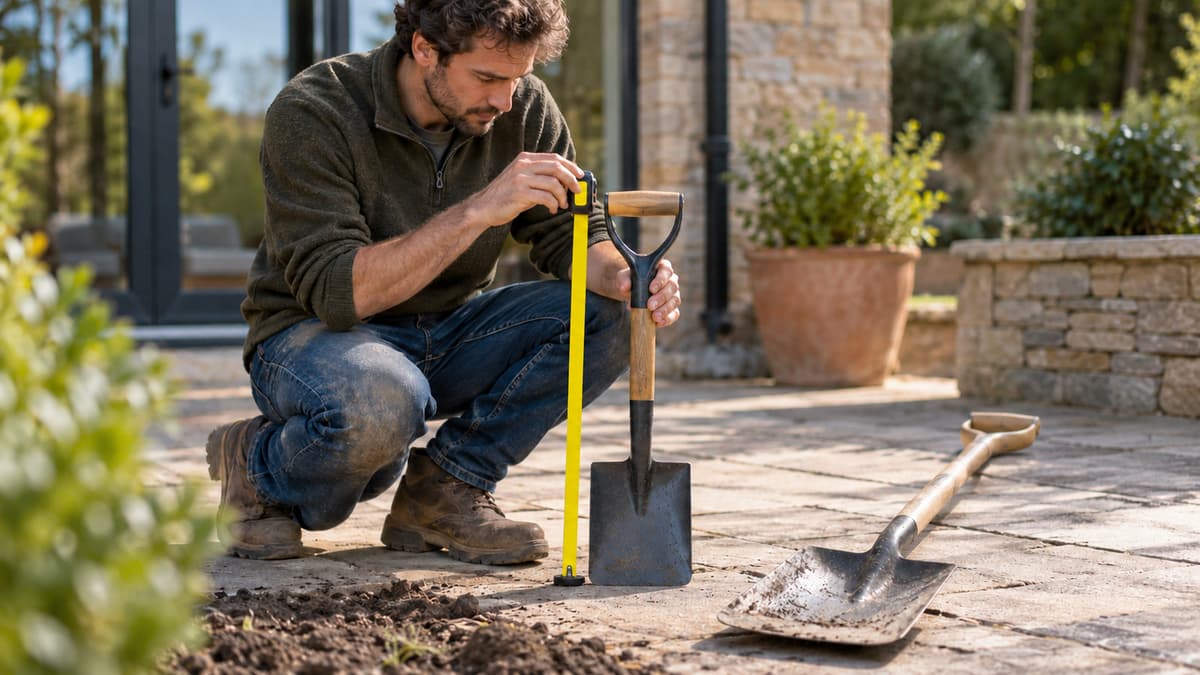
Shovel smaller than expected: read the 70 cm line
A shovel smaller than expected is often a 70 cm listing or a 210 × 160 mm blade. Read those figures first.
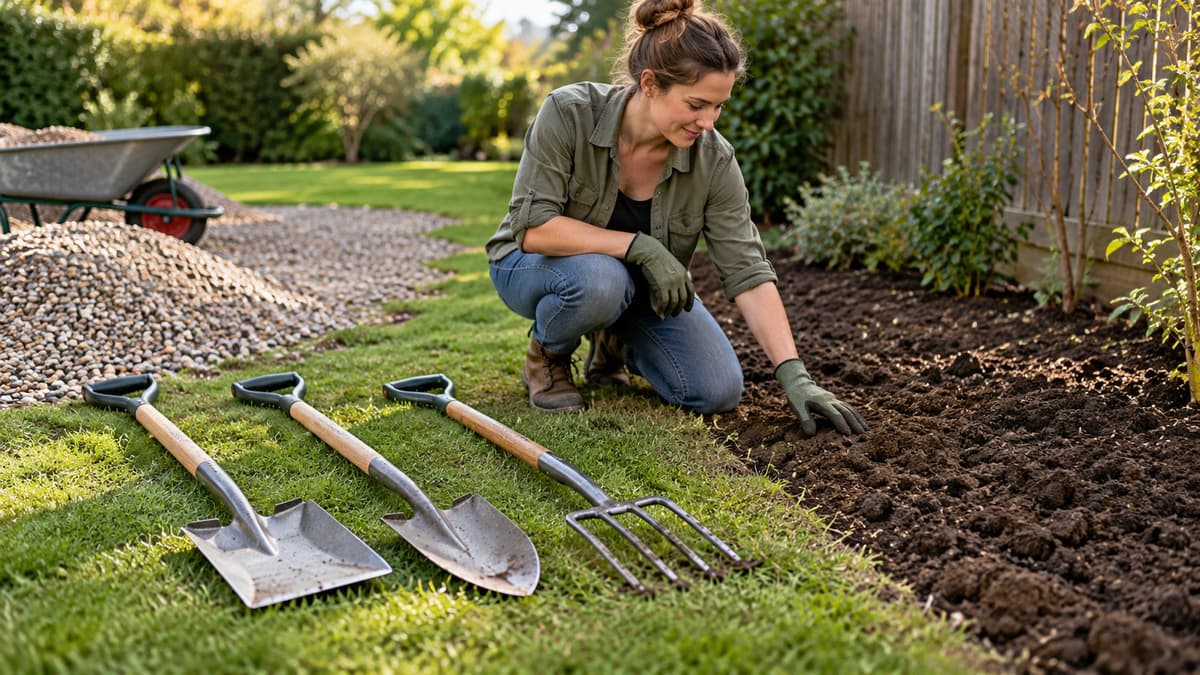
Shovel, spade, or fork: the tool that matches the job
A square shovel lifts loose spoil. A taper or a spade cuts hard ground. A fork is a different tool.