Shovel, spade, or fork: the tool that matches the job
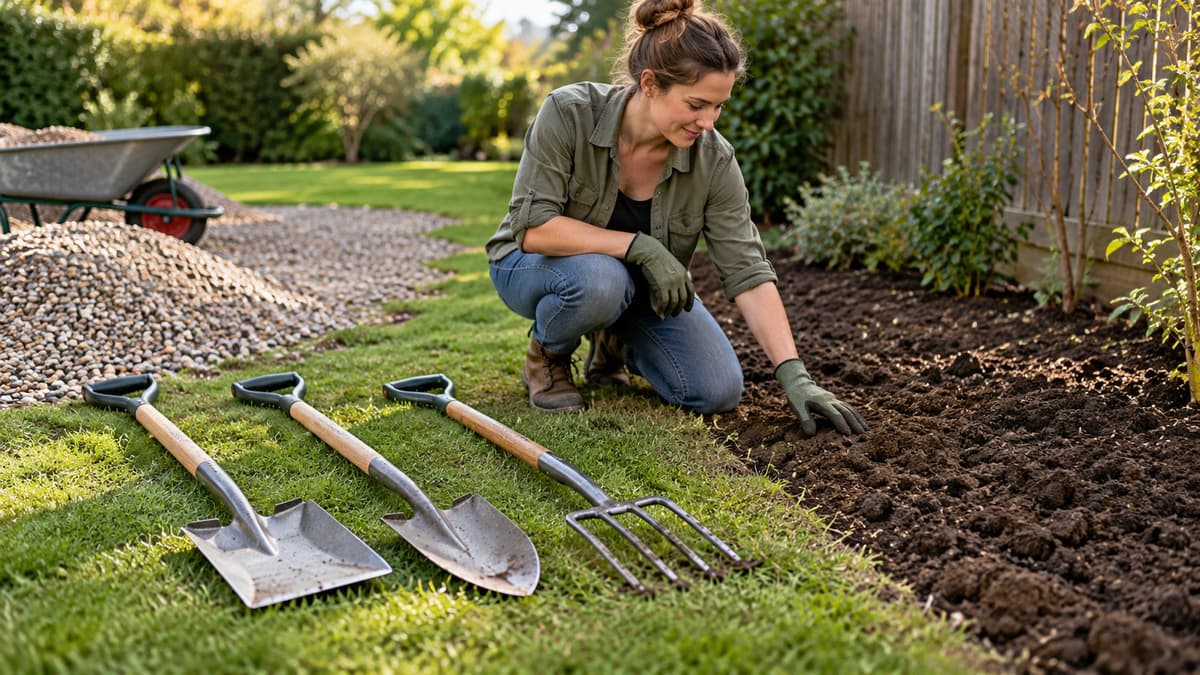
Shovel, spade, or fork is three jobs. A square shovel lifts loose spoil, a taper or a spade cuts hard ground, and this set has no garden fork to sell you.
On this page
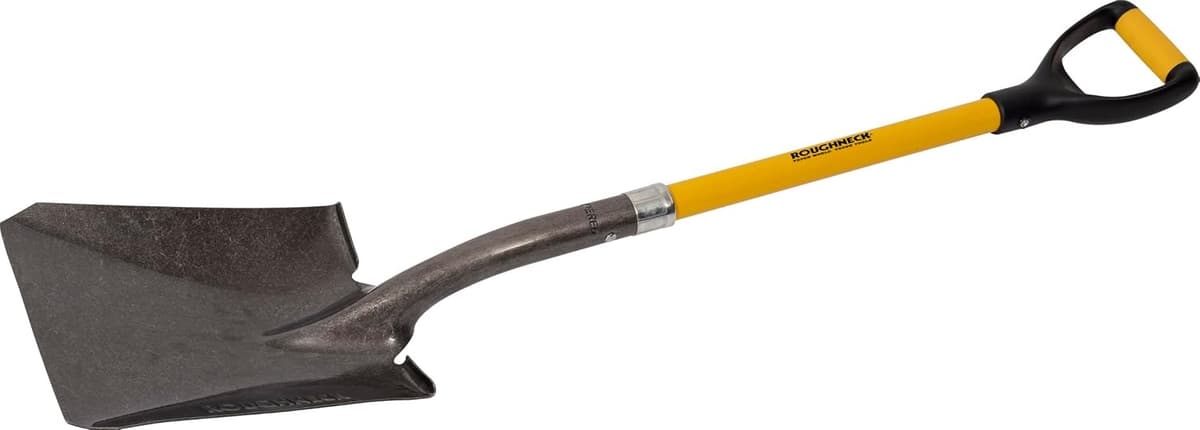
The gravel is already loose on the drive. The bed along the fence has never been turned. You still typed one search for both: shovel, spade, or fork. Those names are three jobs. A square mouth shovel lifts sand, gravel, spoil, and cement, and the straight edge leaves a flatter face than a pointed blade. A taper cuts hard ground. On a British paving page that pointed blade is written as a tapermouth spade, so the cut belongs to a spade and the lift belongs to the square shovel. A garden fork is a third tool, and none of the nine listings here is a fork.
Buy the square mouth when the material will slide onto the blade. Buy a taper or a digging spade when clay or roots are still a solid face. Leave the fork off this shortlist. This comparison has no fork to sell you, and a star rating on a square blade does not change the mouth. The Products Compared editorial team read nine square mouth shovels on amazon.co.uk on 15 October 2026, with public pages from Wonkee Donkee Tools, Pavingexpert, and Spear & Jackson. The capture has no fork ASIN and no taper ASIN. Nobody dug a test pit in a lab. A qualifying purchase can earn a commission at no extra cost to you.
In short
A square mouth shovel lifts loose sand, gravel, and spoil. For hard ground, Wonkee Donkee Tools points to a taper mouth, and Pavingexpert writes tapermouth spade, so the cutting tool is a different shape from the square blade on this comparison. A garden fork is a different tool again, and the nine listings include no fork and no taper.
Three names, three jobs
You can hold three tools that all move soil and still have the wrong one in your hands. Wonkee Donkee Tools gives the square mouth and the taper mouth their own treatment: the square scoops, and the taper cuts hard ground. Pavingexpert sets a widemouth shovel against a tapermouth spade. Digging is the shared errand. The mouths are not interchangeable. The widemouth carries. The tapermouth spade is the name that page uses when the blade has to enter ground that has not been broken.
The fork never joins that pair. The Wonkee blade-shape page has no fork section, and Pavingexpert does not hand you a fork buyer's table, so this article will not invent one. All nine listings are square mouth shovels. There is no fork ASIN and no taper ASIN. A title that says shovel still sits on a straight front edge with raised sides, including when the ground in front of you is a solid face.
The square mouth shovel lifts
The blade that matches a heap has a straight front edge and sides that rise. You slide it under sand, gravel, spoil, or cement that is already loose, and you walk the load to the barrow. The straight edge leaves a flatter face than a pointed blade. If the words you typed were ballast shovel or shovel for gravel, you are in this job. The sides keep stones on the steel. A pointed mouth can cut a slot. It does not hold a heap of gravel the way a dish does.
In this set the full-size square shovel with a stated blade is the Draper 31391, ASIN B0002BUQFQ. On the amazon.co.uk listing read on 15 October 2026 it is 940 mm overall, with a pressed blade of 240 × 310 mm, a hardwood shaft, a wooden Y-dee, and a listed weight of 2.3 kg. The shelf price was £16.99, the lowest full-size price among these nine. The star line is 4.5 from 627 reviews, including snapped shafts, a slack handle, and loose rivets. The top pick on the comparison is a different square mouth, the Roughneck ROU68146, ASIN B00JVOA6PU, about £22.59, stated at 1,070 mm, with 4.7 from 613 ratings. A higher score does not make it a spade or a fork.
Do not let those stars choose a tool for unturned ground. A square blade bought to open clay polishes a straight edge and packs a sticky sheet into the sides. The Draper 15073 mini shows a smaller version of the same miss: the title says long handled, the dimensions say 70 × 15 × 6 cm, the weight is 700 g, and the price was £11.61, with 4.2 from 429 reviews. Buyers report a blade that snapped after two days around roots. Once the heap really is loose, the scoop and the stop sit on the how to use a square mouth shovel page.
A taper or a digging spade cuts
Hard ground asks for a point. Wonkee Donkee Tools puts that job on the taper mouth. Pavingexpert puts the same kind of ground on a tapermouth spade, set against the widemouth shovel that shifts spoil after the ground is open. One trade says taper mouth shovel. The other says tapermouth spade. Mashing them into a single product called shovel is how a square mouth ends up in a bed that has never been turned. The difference between a shovel and a spade, on these UK pages, is that split of lift against cut.
If you can push the straight edge under the material without stamping, you want the square shovel. If the bed, the post hole, or the edge of a path is still one mass of clay or a mat of roots, the digging spade or the taper is the hand tool the guides describe. None of the nine rows is that tool. The taper-mouth page separates the straight edge from the pointed one, and it has no taper-mouth model to add. Boulder clay, a trench that will not stand, and ground you have been told contains a service are reasons to stop even with the right hand tool.
A garden fork is a different tool
A garden fork is the third name in the search, and it is the one this comparison cannot sell. Wonkee's blade shapes stop at square and taper. Pavingexpert's digging notes do not supply a fork table. The nine amazon.co.uk listings are square mouths from Draper, Spear & Jackson, Roughneck, Bulldog, and Faithfull. Sorting them by stars will not produce a tine count or a fork model. A fork you already own may be what you reach for in a bed. A 4.5 from 627 on the Draper 31391 is not evidence that the hardwood shovel can stand in for it.
The substitution is the expensive mistake, even when the shovel itself was cheap. You buy the £16.99 square mouth because the fork was missing from the search, then you lever roots with a riveted timber shaft. Those reviews already include snapped shafts and loose rivets. Levering is a different load from scooping. If the fork is the tool you need, leave this set and buy the fork as a fork.
Which comparison to open
Open the square mouth shovel comparison when the material is already loose and you want a ballast shovel or a shovel for gravel. The table is nine square mouths, with shelf prices from amazon.co.uk on 15 October 2026, from the 700 g Draper mini at £11.61 to the Bulldog ash shovel at £25.36. A lower full-size price is a reason to look at the Draper 31391 for loose spoil. It is not a reason to take it into undisturbed clay. Length, including the 70 cm mini and a 210 × 160 mm micro blade, sits on the buying guide.
The micro shovel shows that the word shovel is not one size. Spear & Jackson's page shows 680 mm. The amazon.co.uk MICROSQUARE listing, ASIN B00AHXYEMK, states a blade of 210 × 160 mm and 1.15 kg at £12.35, with 4.4 from 413 reviews. The bullets say 710 mm overall, and the item dimensions are 68 × 16.5 × 5 cm. Many of those reviews say the buyer expected a full-size shovel. Hold that next to the Draper 31391 at 940 mm. A garden fork is absent. Loose spoil takes the square mouth. Hard ground takes a taper or a spade you will not find in these nine.
Common questions
What does a square shovel do that a spade does?
When do UK guides prefer a taper?
Is a garden fork in this comparison?
Can a square shovel turn clay?
Why does one guide say tapermouth spade and another say taper mouth shovel?
Does a micro shovel count as the same tool?
Which page lists the square shovels you can buy here?
What should I not buy if the ground is still undisturbed?

Products Compared publishes British-English buying guides based on amazon.co.uk listings and public UK sources. We do not run a lab and we do not invent test scores.
Related articles
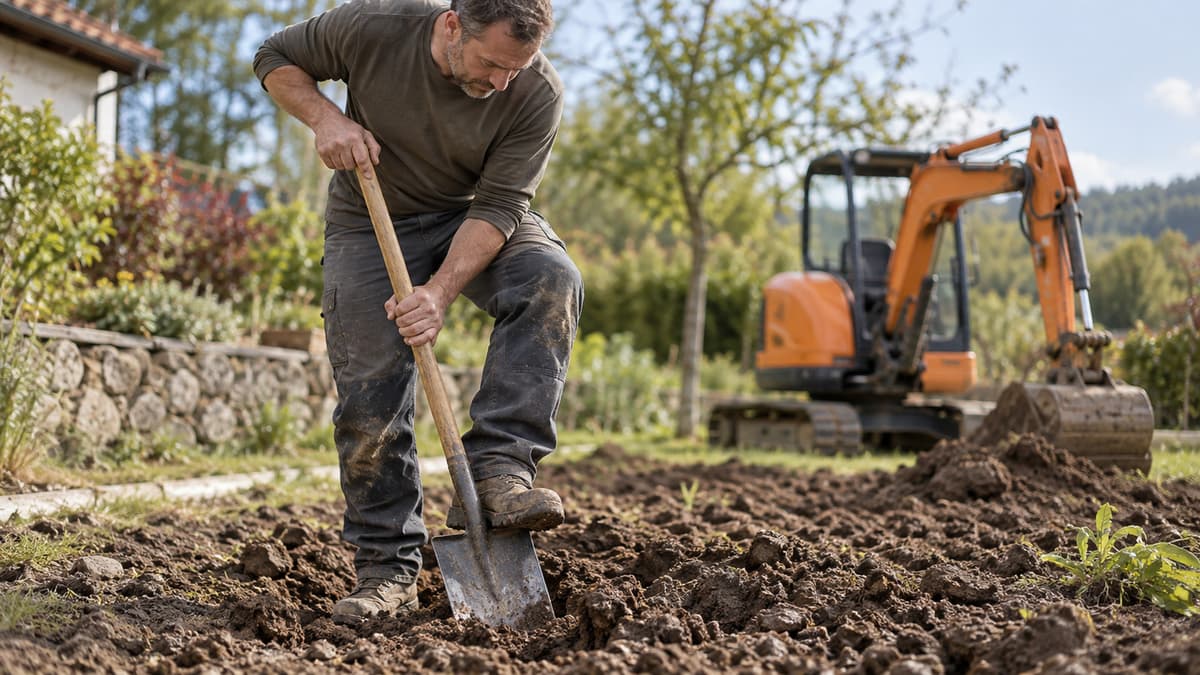
Digging clay soil UK: when the shovel should stop
A square blade skates on undisturbed clay. A taper or a spade is the next hand tool, and some jobs should stop.
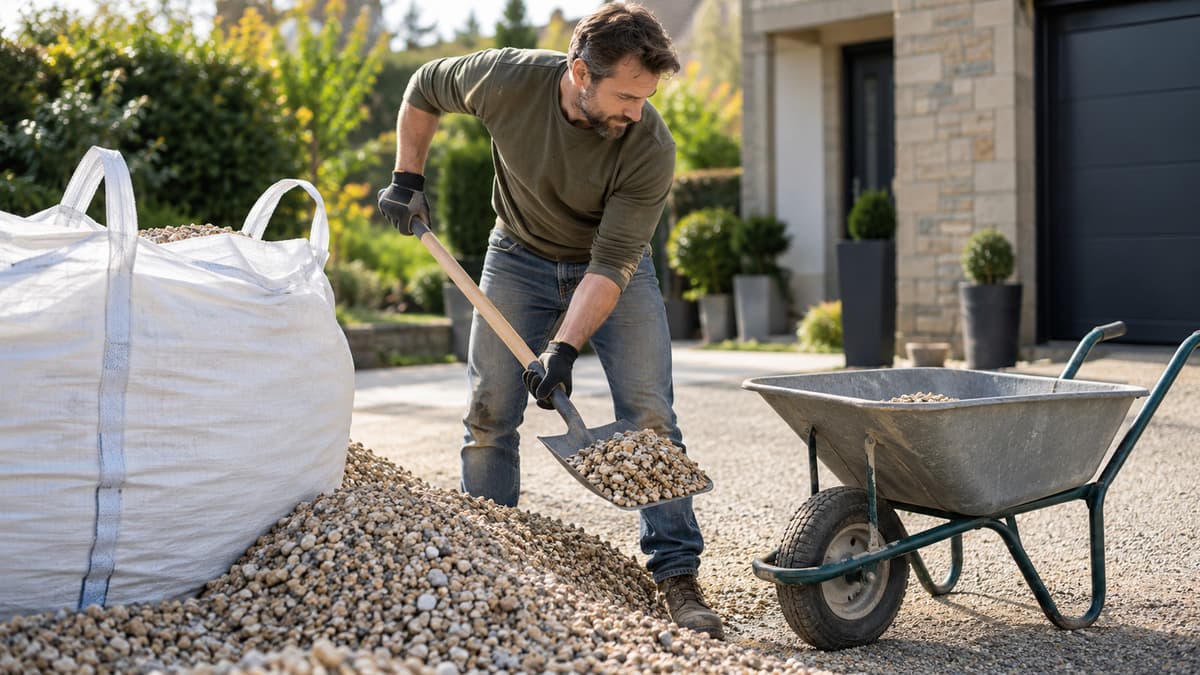
Moving aggregate by hand: scoop, then barrow
Scoop loose sand, gravel, or hardcore with a square shovel, then let a barrow carry the distance.
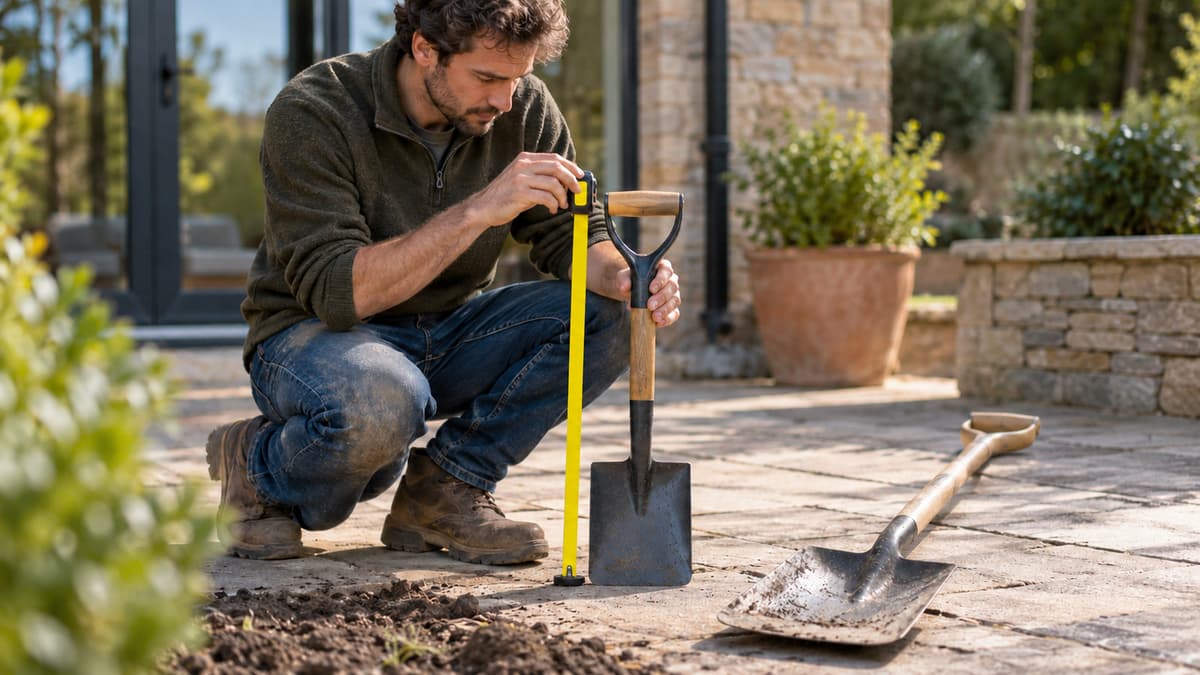
Shovel smaller than expected: read the 70 cm line
Read 70 cm, or a blade of 210 × 160 mm, before a highly reviewed shovel turns out too short to use.