Check before you dig UK: get plans before the blade
Check before you dig UK with plans and a locate first. A steel square shovel is ordinary metal, and HSG47 says to ease the blade in beside a live cable.
On this page
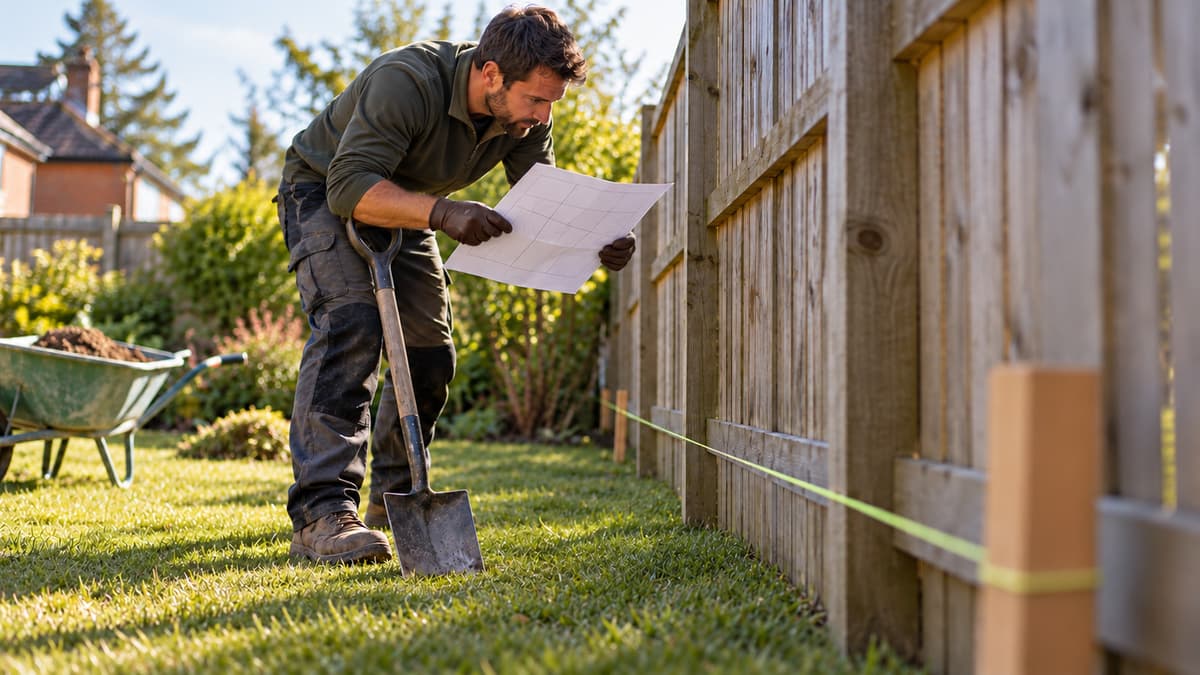
The string is down for a fence or a soakaway, and the square shovel is already against the fence. Undisturbed soil is not a survey. To check before you dig UK, you get plans of what is buried, locate the line where it actually lies, and only then decide whether a steel blade belongs in the hole. A damaged electricity cable can kill you or burn you. These square mouth shovels are builders' scoops for sand, gravel, spoil and cement, and none is sold as an insulated tool.
In short
Get the plans, then locate the services, before you break the surface. LSBUD is a free householder search, and not every asset owner is a member, so a clear result can still leave cables out. HSG47 tells you to dig beside a service and ease the blade in, and beside a cable you need an insulated tool, which these steel shovels are not.
What a damaged cable does
The Health and Safety Executive's page on excavations and underground services states the harm. A damaged cable can kill you, or burn you, from shock, an electric arc, or flame. A short hole for a fence, a water butt or path edging carries the same harm. The cable can sit under a lawn, a drive or a fence line, feeding the house, a garage, a pond pump or path lights. The sheath is not a surface you can trust against a steel edge. If the blade finds a live core, the shaft is a conductor with a grip on the end.
This article gives you no depth at which the garden becomes safe. The HSE pages we used do not hand over a figure, and a made-up depth would be a false permission. A service can sit higher than the old drawing, and a private cable can sit where no network drawing shows it. "Only a shallow cut for the edging" skips the search. Steel conducts whether the mouth is square or tapered. That page does not train you to expose a live cable with a builders' shovel.
Plans before the blade
HSG47, the HSE guidance on avoiding danger from underground services, starts with plans. You find out who has apparatus under the ground, and you read what comes back, before you choose a tool. For a householder the free search is LSBUD, for a garden or a drive as well as for a contractor. A tidy reply is the members who answered, not a complete map. A water company, a telecoms firm or an electricity network outside the membership stays invisible. File the result as "these members responded", then go to anyone the result leaves out.
UK Power Networks points householders towards electricity-cable plans. Use the route your own network publishes. Scotland, Wales and England sit under the Great Britain HSE pages we opened. Garden lighting, a workshop, a hot tub, a pond or an electric gate will not appear on that drawing. Walk the route for lights, a junction box or a lawn scar. A plan plus that walk is still short of a locate. This article does not invent a separate Northern Ireland statute. You still need plans before a steel blade goes in, in Belfast as well as in Bristol.
Locate the line, then dig beside it
A plan is a drawing of a route, not a mark on the soil. HSG47 then moves you on to locating, because the line on the paper and the cable in the ground can disagree. Mark the service where it actually lies so the hole stays off it. A cable avoidance tool is only useful in hands that can read it. If you have never used one, stop and get someone who has. We did not test locators, and none of the nine shovels is a detector. Shelf prices were taken on amazon.co.uk on 15 October 2026.
Dig beside the service, off the marked line, so you see the side of the apparatus rather than driving steel through it. A square mouth is a clumsy probe. Keep it for spoil once the hole is clear. A change in the fill, warning tape, a tile or a plank is a reason to ease off. Fill hides a cable well, and a square blade is a poor opener of undisturbed clay. If the search has not come back, move the hole. Locating does not let you use a steel shovel on the line itself.
Ease the blade in, do not throw it
Beside a service, HSG47 says to ease the blade in and not throw it. Throwing lets the edge leave your control and arrive as an impact. Easing is a short movement you can stop when the soil changes, while you can still see the cut. A square mouth earns the throw only after the ground is clear of services. Scooping onto a board or into a barrow is the job in how to use a square mouth shovel. If you are still asking where the cable runs, put the shovel down.
Foot treads, which both Roughneck listings advertise, are for a controlled push on open spoil. The blade is still steel. Do not stamp the tread on a line you have marked as a possible cable. If a steady lean will not take the edge in, stop. The thing stopping you may be a root, a slate or a sheath. If you cannot see the cut, stop and re-mark, or hand the expose to someone trained.
These shovels are not insulated
Near a cable, HSG47 calls for an insulated tool. The nine square mouth shovels in our square mouth shovel comparison are not sold as insulated. We read the amazon.co.uk listings on 15 October 2026. Shelf prices run from £11.61 to £25.36. Blades are pressed or forged steel, and shafts are wood, fibreglass or all steel. BS 8020:2011 is not marked on these listings, and it is not BS EN 60900. None of the nine states a pass against BS 3388:2004 either. A brand name is not a certificate beside a live cable.
Do not buy any of the nine because the steel will be fine next to a cable. The Draper 15073 at £11.61 is a short pressed shovel, about 70 × 15 × 6 cm and about 700 g, and short steel is still steel. The Bulldog 5SM2T at £25.36 has an ash shaft. Ash does not insulate the head, and an all-steel shaft conducts as well. No row becomes an insulated tool by costing more or carrying more reviews.
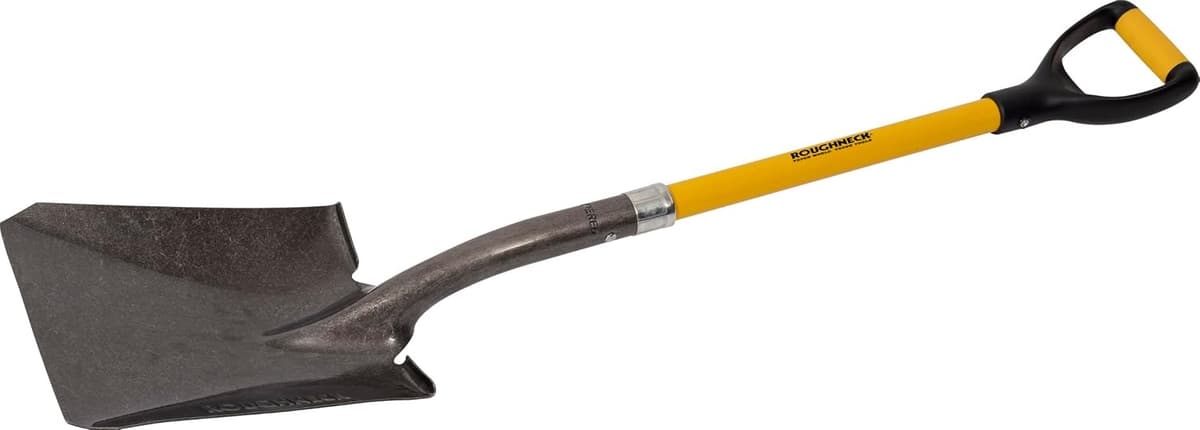
Once the ground is clear, the full-size listing with the most reviews is the Roughneck ROU68146 square shovel, about £22.59, with 4.7 from 613 reviews on amazon.co.uk. It states 1,070 mm, foot treads, a pressed steel blade and a fibreglass shaft. That review count is why it is the top pick for loose material after the search, not a laboratory score, and it says nothing about a cable. Ignore the 220 g line: a review puts the tool over 2.2 kg, so the weight is unknown. A qualifying purchase can earn us a commission at no extra cost to you. Read 70 cm, or a blade of 210 × 160 mm, before you order a short tool.
When you stop
Stop if the hole is in the road or on the pavement, if the trench sides could collapse, or if a locator shows a service you are not trained to expose. A square shovel does not shore an excavation. If the service crosses the fence, move the fence or get someone trained. Stop too when the spoil belongs to an employer under the Manual Handling Operations Regulations 1992. Those rules set no single safe kilogram, and a longer shaft is not a barrow.
If the blade meets a cable, leave the shovel, move yourself away, and contact the network operator or the emergency services. Shock, arc and flame can kill or burn. Do not pull the shaft free or climb back in. This article states no standing distance and no telephone number. When plans, a locate and a careful trial show the work is clear, use the square mouth for spoil. We compared the nine amazon.co.uk listings on 15 October 2026 and read the HSE excavations page, HSG47 and the LSBUD homepage. We ran no laboratory test. If you are unsure, leave the blade in the shed.
Common questions
Do I need plans before I dig a garden hole?
What is LSBUD, and who is missing from it?
What does HSG47 say to do with the blade?
Can I use a normal steel shovel beside a cable?
What is BS 8020, and do these shovels carry it?
What happens if a cable is struck?
When should I stop and get someone trained?
Which page covers the shovel once the ground is clear?

Products Compared publishes British-English buying guides based on amazon.co.uk listings and public UK sources. We do not run a lab and we do not invent test scores.
Related articles

When clay needs a machine
A square blade will not open undisturbed clay. Some trenches should stop before you keep digging.

Manual handling when you shovel spoil
The 1992 rules set no single safe kilogram, and a longer shaft is not a barrow for spoil.

What BS 3388 covers
BS 3388 covers forks, shovels and spades. These amazon.co.uk listings do not state a pass.