Independent comparisons. We may earn from shop links. More info

WHS vs Marshalltown trowel

Updated: October 2026

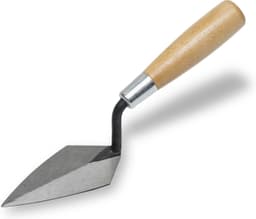
You have been told to bring a WHS or equivalent, and the other tab is a Marshalltown 4 inch that may or may not be the archaeology model. A WHS vs Marshalltown trowel choice here is Spear & Jackson 11104ARCH against Marshalltown 46 114S, with 46 114D kept in view so you do not buy the wrong twin. Choose the 11104ARCH when you want the thicker archaeology blade UK reviewers describe. Choose the 46 114S when you want the London one-piece forge and you have checked the origin lines. Prices are on the [archaeology trowel comparison](/hub/digging-tools/archaeology-trowel). Peter F. set that condition on 19 October 2026. The blades were not measured. A qualifying purchase can earn a commission at no extra cost to you.

You have been told to bring a WHS or equivalent, and the other tab is a Marshalltown 4 inch that may or may not be the archaeology model.

Our top picks

On this page

Two 4 inch tools, three part numbers

11104ARCH is the wooden Spear & Jackson archaeology trowel on amazon.co.uk, at £18.35 with 4.7 from 662 ratings. The maker’s Tyzack page describes a 4 inch (102 mm) hardened and tempered blade and a high tang, and that page is part 11104SFARCH, the soft-feel handle. Use the maker page for the shape. Use 11104ARCH for the wooden listing in this basket. They are not the same part number. 46 114S is the Marshalltown London archaeology model: 4 × 2 inch on the maker’s range, 102 × 51 mm on the UK listing, wood handle, £20.03, 4.7 from 255 ratings. 46 114D is the masonry London 4 inch with a DuraSoft grip, at £21.98 and 4.6 from 142. The archaeology DuraSoft part, 46 114SD, is a third number and it is not the 46 114D listing. A review of 46 114D is not a review of 46 114S. The snap-after-a-week comment in the UK text belongs to the masonry ASIN. Humber and Vale names a WHS Tyzack 4 inch for regular digging and does not name Marshalltown. That is kit advice, not a lab ranking.

What each listing claims

11104ARCH’s bullets say solid forged, hardened and tempered, and a blade that is thicker for archaeology, with a high tang. The listed weight is 160 g. The handle is wood. One materials field says the blade is wood. Treat that as a listing error, not as a wooden blade. There is no thickness in millimetres, so “thicker” stays a claim and a review theme. 46 114S claims one-piece high-carbon steel, a London pattern at 102 × 51 mm, and a hardwood handle. The listed weight is 109 g, so on the page it is the lighter of the two. The maker’s line is “Made in the USA with Global Materials”. The amazon.co.uk details say China. Do not call this listing definitely American, and do not call it definitely Chinese. Buy it only if an unresolved origin is acceptable. 46 114D claims a DuraSoft handle and a masonry blade of the same stated size, not the archaeology wood model. The high tang is the knuckle clearance diggers mention when they compare the WHS shape with a lower pointing trowel. Neither claim includes a British Standard, and the Chartered Institute for Archaeologists does not pick a side.

What UK reviewers report

On 11104ARCH, reviewers describe a thick blade for British clay and for cutting a section. Leave it wet and the carbon steel rusts, and at least one reviewer bent the blade. It held, which is a reason not to say the WHS never bends. People also sharpen it before a dig. The file method is on the how to use an archaeology trowel page. On Marshalltown 4 inch tools the language splits by part number. Reviewers of 46 114D call the blade light or springy, and one reports a snap. That caution belongs to that ASIN. It is an unfair transfer onto 46 114S, whose UK reviews are fewer and more positive. The caution that does sit near the archaeology model is gravel: a thin tip used as a lever is how these blades distort. Weight is the comparison you can check without a micrometer. 160 g against 109 g matches the way reviewers talk: a planted WHS-style blade versus a lighter London forge. It does not prove a millimetre of thickness.

When to pick which

Pick 11104ARCH if you are going on a British dig, especially in clay, and you want the blade reviewers call thick, with a high tang and a wood handle you can mark. Accept carbon steel that must be dried, a details line that wrongly says wood, and the fact that the soft-feel part is a different SKU. At £18.35 it is the slightly cheaper archaeology listing of the two. “Or equivalent” can include 46 114S if the supervisor cares about a forged 4 inch pointing trowel rather than the WHS name. Ask before you assume. Pick 46 114S if you want the London 102 × 51 mm one-piece forge, you prefer the lighter listed blade, and you have read both origin lines. Skip it if a clean “made in” answer is the point of the purchase. Skip 46 114D unless you are buying a DuraSoft masonry pointer on purpose. The Philadelphia 4.5 inch file is not in this comparison. Its ASIN block disagrees with itself, and the pattern is not London 4 inch. Other jobs sit on the best 4 inch archaeology trowel page.

Common questions

Which is stiffer on a British dig?
Reviewers of 11104ARCH describe a thick blade for clay and for sections, and the listing weight is 160 g. Reviewers who call a Marshalltown 4 inch thin or springy are often on 46 114D, not on 46 114S. 46 114S is listed at 109 g. No listing gives a thickness in millimetres, so stiffness here is that review theme plus the weight claim, not a lab figure. If clay and a high tang are the job, start with 11104ARCH.
Is the Marshalltown one-piece forged?
The maker’s archaeology page says 46 114S is one-piece high-carbon steel. 11104ARCH’s bullets say solid forged, hardened and tempered, so both listings in this pair make a forge claim. Forged still does not tell you the country of origin, and it does not make 46 114D into 46 114S. Hilka and Faithfull, outside this page, do not make that claim at all.
Is 46 114D the same as 46 114S?
No. 46 114S is the wood-handle London archaeology trowel at £20.03. 46 114D is the DuraSoft masonry trowel at £21.98. A review that reports a snap after a week belongs to the masonry ASIN. 46 114SD would be the DuraSoft archaeology part, and it is not the listing under 46 114D. Match the part number before you transfer a complaint or a compliment.
Why do some UK reviewers say Marshalltown blades snap?
Because some of them are writing about 46 114D, including a snap after a short period of use. That is a reason to be careful with that ASIN. 46 114S has fewer UK reviews, and they are more positive, plus a warning about the tip in gravel. A thin blade used as a lever is the shared failure. Do not fold every Marshalltown review into one blade.
Does “Made in the USA” settle the origin?
No. The archaeology bullet says “Made in the USA with Global Materials”. The amazon.co.uk details for this 46 114S listing say China. It is reasonable to prefer a tool whose origin line is clean, and this one is not. 11104ARCH does not have that clash. It has a different one: a materials field that calls a steel blade wood.
Which do you buy if the field school says WHS or equivalent?
Buy 11104ARCH if they mean the British archaeology pattern, the thicker blade and the high tang, and you will dry it. Buy 46 114S if they have confirmed that a London one-piece 4 × 2 inch counts as the equivalent, and you accept the origin clash. Do not arrive with 46 114D or a 6 inch Faithfull and call it equivalent. If the note only says “4 inch pointing trowel”, either archaeology listing can fit.

Related pages

Sources

Public UK sources from the research digest; retrieved 20 October 2026.

  1. Humber and Vale, what you need for digging (retrieved 20 October 2026)
  2. Leicestershire Fieldworkers, a quick guide to archaeological excavation (retrieved 20 October 2026)
  3. Spear & Jackson, Tyzack 4 inch (102 mm) archaeology trowel (retrieved 20 October 2026)
  4. Marshalltown archaeology pointing trowels (retrieved 20 October 2026)
  5. GOV.UK, scheduled monument consent (retrieved 20 October 2026)
  6. GOV.UK, report treasure (retrieved 20 October 2026)
  7. Northern Ireland, metal detecting, archaeology and the law (retrieved 20 October 2026)
  8. Port of London Authority, Thames foreshore permits (retrieved 20 October 2026)