Independent comparisons. We may earn from shop links. More info

How to use an archaeology trowel

Updated: October 2026

You have a new pointing trowel, a patch of soil that already looks scraped, and someone about to step onto the bit you just cleaned. How to use an archaeology trowel, on a UK dig, is mostly how not to do those two things. You shave in a straight line with the long edge, you move the spoil off the surface, and you do not turn the tip into a crowbar. This page does not rank the six listings on the [archaeology trowel comparison](/hub/digging-tools/archaeology-trowel). Peter F. set out that habit on 19 October 2026. It is not a lab test. A qualifying purchase can earn a commission at no extra cost to you.

You have a new pointing trowel, a patch of soil that already looks scraped, and someone about to step onto the bit you just cleaned.

Our top picks

On this page

Clean in a line

Leicestershire Fieldworkers tell diggers to trowel in a straight line, not in circles, and to keep the spoil moving. A circle polishes a patch and leaves a ridge the next person has to interpret. A line, in the same direction as the rest of the trench, takes off a thin coat and leaves a surface you can read. Work towards the bucket, and put the loose soil somewhere that is not the area you have just finished. If the spoil stays on the cleaned ground, you will trowel it twice. Do not walk on a surface you have just cleaned. Boots wipe out the colour change you spent twenty minutes finding. Kneel beside the area, or use a board if the site has one. If the blade needs your whole weight, you are in the wrong layer or you are using the wrong tool. Keep the bucket on the uncleaned side, so you are not stepping back onto the clay you have just finished.

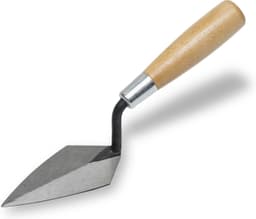
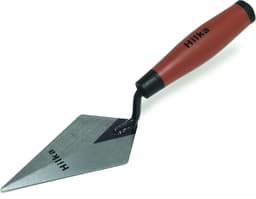
The edge you use

The long edges do the cleaning. You present one long side at a shallow angle and take off a thin coat, then the next, in that same direction. The tip is for a small cut at the edge of a feature, not for a stab. The short edges beside the handle stay blunt on purpose. They sit next to your fingers when you change grip. A sharp short edge is how a new digger opens a knuckle, and it does not clean the ground any faster. File the long edges, leave the short edges near the grip blunt, and remember that a very sharp edge can damage soft finds. You do not need a razor to see a change in soil. You need an edge that cuts a shaving instead of burnishing. If the blade is skating, it is too blunt or you are pressing flat. If it slices bone or pot as soon as you touch it, slow down. Thin blades used as levers bend or snap. One gravel warning on a Marshalltown is about prying, not about a blunt long edge.

Sharpen and dry

A new archaeology trowel often wants a first sharpen before a dig. Reviewers of the Spear & Jackson 11104ARCH say as much. You are giving the long sides a working edge so the first hour is not spent skating. No listing here states a bevel in millimetres, so do not invent one. A few strokes with a file, tried on a thumbnail of soil, is the beginner’s version. The file cuts on the forward stroke. Lift it on the return. Beginners file away from the edge and away from the body. Wear a glove on the hand that holds the blade, and eye protection, and do not use a file with a bare tang. A bench grinder is not required for that first edge. Carbon steel on these archaeology listings rusts if you leave it wet. Wipe the blade, including under the tang, before it goes into a damp bag. A night in a wet bucket means the next morning is rust, not the surface.

When the trowel is the wrong tool

Bulk soil is a mattock, a shovel or a spade, then the trowel again once you need to see a surface. Leicestershire’s guide treats the pointing trowel as the tool for cleaning and for small features. If you are removing a bucket of topsoil, the 4 inch blade is the slow choice. Switch when the work is volume. Switch back when the work is definition. Do not lever a stone out with the tip. Reviews describe thin Marshalltown blades bending or snapping when they are used as a bar in gravel. One reviewer bent a WHS-style blade and it held, which is not a promise that 11104ARCH is a pry bar. Clean around the stone, or fetch a heavier tool. Stop when the find is fragile. Bone, soft pot and corroded metal want a slower edge, a brush, or a supervisor. Stop and get the right person when you may have human remains, when an object might be treasure, or when the place might be scheduled. Deadlines, Scottish treasure trove and a Thames permit are on the archaeology trowel for metal detecting page. On a dig, the context goes in the site record before the object goes in a bag.

Common questions

Do you trowel in circles or in a line?
Trowel in a straight line, in the same direction as the rest of the trench. Leicestershire Fieldworkers contrast that with circles, which polish a patch and leave a rim. Keep each stroke light and overlap the last one. Cast the spoil off the cleaned area as you go. A circle looks tidy from above and reads as a mess to the next person who has to record the surface.
Which edge should be sharp?
Sharpen the long edges, the ones that take the shaving. Leave the short edges near the handle blunt so they are not a blade beside your fingers. A very sharp edge can cut soft finds as well as soil, so the aim is a working edge, not a knife. If you are learning, a glove on the blade hand is the sensible extra while you file. The tip is for small cuts at a feature edge, not for levering.
Should a new trowel be sharpened before a dig?
Often yes. Reviewers of the Spear & Jackson 11104ARCH say they sharpen before a dig, because a new edge can skate instead of cut. Use a file on the long edges, one direction, and stop once the blade takes a thin shaving of soil. You do not need a measured bevel, and you do not need a bench grinder for that first afternoon. Dry the blade afterwards so the new steel does not rust overnight.
Can you lever out a stone with the tip?
No. The tip is a cutting point, and a thin blade used as a crowbar bends or snaps. Marshalltown reviews here include a gravel warning and, on the masonry 4 inch rather than on every archaeology model, a snap. Even a thicker WHS-style blade that bent and held is still the wrong bar. Clean around the stone, or fetch a heavier tool. A curled tip will not go back to a straight shaving on its own.
How do you stop the blade rusting?
Dry carbon steel before you pack it. Wipe both faces and the junction with the tang, and do not leave the trowel in a wet bucket or a damp bag overnight. These archaeology listings are not stainless. Rust is what follows a wet afternoon and a closed finds tray. A wipe is enough. A wet edge is still a sharp edge next to your hand, so dry it before you close the bag.
When do you put the trowel down and use a mattock?
Put it down when the task is bulk soil rather than a surface. A mattock, shovel or spade moves volume. The pointing trowel cleans what that heavier tool has opened, and it defines small features. If you need your weight on the handle to move topsoil, you are in mattock territory. Go back to the trowel when you need to see a change in colour, not when you need to empty a barrow.

Related pages

Sources

Public UK sources from the research digest; retrieved 20 October 2026.

  1. Humber and Vale, what you need for digging (retrieved 20 October 2026)
  2. Leicestershire Fieldworkers, a quick guide to archaeological excavation (retrieved 20 October 2026)
  3. Spear & Jackson, Tyzack 4 inch (102 mm) archaeology trowel (retrieved 20 October 2026)
  4. Marshalltown archaeology pointing trowels (retrieved 20 October 2026)
  5. GOV.UK, scheduled monument consent (retrieved 20 October 2026)
  6. GOV.UK, report treasure (retrieved 20 October 2026)
  7. Northern Ireland, metal detecting, archaeology and the law (retrieved 20 October 2026)
  8. Port of London Authority, Thames foreshore permits (retrieved 20 October 2026)