Independent comparisons. We may earn from shop links. More info

Archaeology trowel for metal detecting

Updated: October 2026

The detector has beeped on a stubble field, and the pointing trowel is already in your hand. An archaeology trowel for metal detecting does not create a right to dig. You need the landowner’s permission, you need to know which UK country you are in, and on the Thames foreshore you need your own Port of London Authority permit. Prices are on the [archaeology trowel comparison](/hub/digging-tools/archaeology-trowel). Peter F. put those gates first on 19 October 2026, using GOV.UK, legislation and the PLA conditions, not a lab. A qualifying purchase can earn a commission at no extra cost to you.

The detector has beeped on a stubble field, and the pointing trowel is already in your hand. An archaeology trowel for metal detecting does not create a right to dig.

Our top picks

On this page

Permission before the hole

On private land in England and Wales, the soil is still someone else’s. Ask the landowner, and if a tenant farms the field, ask the tenant too. Agree in writing who keeps which finds. A nod at the gate is a weak record when a coin later matters. Permission to use a footpath is not permission to cut a hole. Digging because a machine beeped is the mistake this page is for. Scheduled monuments are a separate gate. Consent from Historic England, Historic Environment Scotland or Cadw is required before works that would damage a scheduled monument. Metal detecting on a scheduled monument is restricted under the Ancient Monuments and Archaeological Areas Act 1979. A hole the width of a 4 inch blade is still works. If you do not know whether the pasture is scheduled, check before you cut. An ordinary field that is not scheduled still has a landowner. The monument rule does not replace permission, and permission does not replace the monument rule.

Treasure, and the Scottish difference

In England, Wales and Northern Ireland the Treasure Act 1996 is the statutory scheme. GOV.UK tells you to report treasure within 14 days, through a Finds Liaison Officer. The penalty stated there is an unlimited fine or up to three months. What counts is section 1 of the Act, including the significance class in the Code of Practice. This page will not compress that section into a slogan. If you are unsure, ask the Finds Liaison Officer. Archaeologists on a formal dig are not rewarded under that reporting note. A hobby find is a different situation, and the clock still runs. The Portable Antiquities Scheme records finds in England and Wales that are not treasure. Recording is voluntary. It is not the 14-day treasure duty, and it does not authorise the hole. Scotland uses treasure trove, which is not limited to gold and silver, and you report to the Treasure Trove Unit, not to an English Finds Liaison Officer. The Unit’s 2024/25 figures include 5,844 chance finds. That is the scale of the system, not a target. If you are unsure which side of the border you are on, do not guess the form.

Northern Ireland and the Thames

In Northern Ireland, searching by excavation for archaeological objects needs a licence under the Historic Monuments and Archaeological Objects (Northern Ireland) Order 1995. Department for Communities guidance is the public note. Landowner permission of the English kind is not a substitute for that licence. Archaeological objects are reported within 14 days. Do not detect and dig there the way you would on a permitted English farm. A trowel in the car is not a licence. On the Thames foreshore, searching, scraping or digging from Teddington to the Thames Barrier needs a Port of London Authority permit. Standard conditions allow hand tools only, a maximum of 7.5 cm (3 inches), and the hole refilled before the tide. The permit is yours. A friend’s permit is not the condition. A 4 inch (102 mm) pointing trowel will go past 7.5 cm if you lean on it. The cap is the permit condition, not the length on the tool. If you need more than a shallow scrape, you are outside the standard permission and you stop.

Which trowel, once you may dig

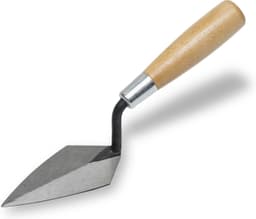
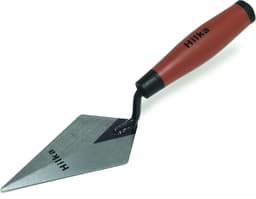
Once the landowner, the monument check, the right UK country and, where it applies, the foreshore permit are in place, use a 4 inch pointing trowel. That is the size UK field groups use for a small feature, and it can cut a neat plug without becoming a 6 inch brick tool. Faithfull’s 150 mm pointer, at £3.90, is the budget masonry listing here and a clumsy plug. A garden scoop bowls the soil. Neither belongs in the hole. Spear & Jackson 11104ARCH and Marshalltown 46 114S are the archaeology-labelled 4 inch listings. Stiffness is on the WHS vs Marshalltown trowel page, and who each suits is on the best 4 inch archaeology trowel page. Dry carbon steel afterwards. Do not pry the tip into gravel or towards a buried service. How you shave a surface in a straight line, once you are on a dig rather than lifting a plug, is the how to use an archaeology trowel page. Finds do not become yours because you bought the tool. If the object might be treasure, or the ground might be scheduled, stop and report. The beep was information. It was not consent.

Common questions

Do you need the landowner’s permission as well as a trowel?
Yes, wherever the land is not yours. In England and Wales, ask the landowner and, where there is one, the tenant, and agree finds in writing. A footpath does not include a right to dig. A scheduled monument still needs consent from the right heritage body even when the landowner agrees. The trowel is the tool you use after those answers are in place. Owning a 4 inch blade changes none of them.
What do you report, and how fast?
Report treasure within 14 days, through a Finds Liaison Officer, under the scheme GOV.UK describes for England, Wales and Northern Ireland. The penalty stated there is an unlimited fine or up to three months. Section 1 of the Treasure Act 1996 and the Code of Practice say what is covered. If you are unsure, ask the Finds Liaison Officer. Other finds in England and Wales can be recorded with the Portable Antiquities Scheme. That recording is not the 14-day duty.
Is Scottish treasure the same as the Treasure Act?
No. Scotland uses treasure trove, which is not limited to gold and silver, and you deal with the Treasure Trove Unit rather than an English Finds Liaison Officer. The 2024/25 report includes 5,844 chance finds. Do not file a Scottish find on an English form because the object looks like silver. If you are near the border, check the country before you dig and before you report.
Can you detect and dig in Northern Ireland the way you do in England?
No. The 1995 Order requires a licence to excavate in search of archaeological objects. Landowner permission does not replace that licence. Archaeological objects are reported within 14 days. A pointing trowel that is legal to sell on amazon.co.uk is not a licence. If you do not hold one, leave the soil alone.
How deep can you go on the Thames with a trowel?
On a standard PLA foreshore permit, hand tools only and a maximum of 7.5 cm, which is 3 inches, from Teddington to the Thames Barrier. You refill before the tide, and the permit has to be yours. A 4 inch blade can exceed 7.5 cm if you lean on it, so the number to obey is the condition, not the tool length. Deeper than the cap means stop, not a longer trowel.
What does a scheduled monument have to do with a small hole?
Consent is required before works that would damage a scheduled monument, through Historic England, Historic Environment Scotland or Cadw. Detecting on a scheduled monument is restricted by the 1979 Act. A plug cut with a pointing trowel is still an excavation. If you cannot tell whether the field is scheduled, find out first. The landowner’s yes does not remove that check.

Related pages

Sources

Public UK sources from the research digest; retrieved 20 October 2026.

  1. Humber and Vale, what you need for digging (retrieved 20 October 2026)
  2. Leicestershire Fieldworkers, a quick guide to archaeological excavation (retrieved 20 October 2026)
  3. Spear & Jackson, Tyzack 4 inch (102 mm) archaeology trowel (retrieved 20 October 2026)
  4. Marshalltown archaeology pointing trowels (retrieved 20 October 2026)
  5. GOV.UK, scheduled monument consent (retrieved 20 October 2026)
  6. GOV.UK, report treasure (retrieved 20 October 2026)
  7. Northern Ireland, metal detecting, archaeology and the law (retrieved 20 October 2026)
  8. Port of London Authority, Thames foreshore permits (retrieved 20 October 2026)