Independent comparisons. We may earn from shop links. More info

Best archaeology trowel UK

Updated: October 2026

You have a field-school kit list in one tab and an amazon.co.uk search in the other, and the search has mixed a garden scoop, a plastering trowel and a brick pointer into the same row. A best archaeology trowel UK decision starts with the job, not the star rating. If you will shave soil on a dig, UK field groups describe a pointing trowel of about 4 inches (102 mm). If you will fill mortar joints, a cheaper masonry pointer is the honest buy. The six shelf prices sit on the [archaeology trowel comparison](/hub/digging-tools/archaeology-trowel). Peter F. set that order of checks on 19 October 2026 from amazon.co.uk listings and public UK sources. It is not a lab test. A qualifying purchase can earn a commission at no extra cost to you.

You have a field-school kit list in one tab and an amazon.co.uk search in the other, and the search has mixed a garden scoop, a plastering trowel and a brick pointer into the same row.

Our top picks

On this page

What you are actually buying

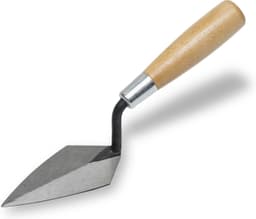
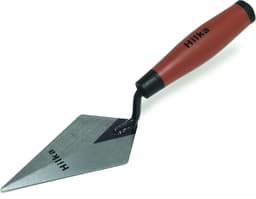
A pointing trowel is a small tapered blade for scraping a thin layer or pressing mortar into a joint. An archaeology trowel, as Humber and Vale and the Leicestershire Fieldworkers describe it, is that shape used to clean a surface and to define a small feature. It is not a scooped garden trowel, and it is not a rectangular plasterer’s trowel. A high star rating on either of those does not turn it into dig kit. The listings here split into two jobs even when the titles look alike. Spear & Jackson 11104ARCH and Marshalltown 46 114S are the two labelled for archaeology. Hilka 66306004 and Faithfull FAISGTPT6 are budget pointers whose reviews are mostly mortar and gardening. Marshalltown 46 114D is a London masonry pointer with a soft grip. The 4.5 inch Philadelphia file is a different pattern, and its own page disagrees with itself, so pause rather than treat it as the 4 inch rule. If you only need to point a garden wall this weekend, stop at a masonry pointer and ignore the archaeology label.

Four inches, then forge and pattern

Humber and Vale tells regular diggers to buy a WHS Tyzack 4 inch, which is 102 mm. Leicestershire Fieldworkers put a 4 inch pointing trowel in the kit and heavier tools in the line for bulk soil. On these amazon.co.uk listings, 11104ARCH and 46 114S sit on that size. The Marshalltown archaeology model is stated as 102 × 51 mm, the London 4 × 2 inch pattern. The Faithfull at 150 mm is a longer pointer. It can still be a useful brick tool. It is not the same kit line. Forge is a claim on the listing, not a measurement we made. The 11104ARCH bullets say solid forged, hardened and tempered, and thicker for archaeology. Marshalltown states one-piece high-carbon steel on the archaeology model. Hilka and Faithfull do not claim a one-piece forging. No UK listing here gives a thickness in millimetres, so you cannot rank them by a number that is not there. London pattern, or the British WHS shape with a high tang, is what the UK archaeology listings describe. Philadelphia is the other Marshalltown pointing shape. The Chartered Institute for Archaeologists does not name a brand, so a logo is not a professional requirement.

Wood, soft grip, and the two price bands

Wood on 11104ARCH and on 46 114S can be marked so the trowel is not swapped on site. A soft grip is what the masonry listings emphasise: DuraSoft on 46 114D, and soft handles on the Hilka and the Faithfull. Neither handle turns a 6 inch blade into a 4 inch dig tool. If the kit list says wood or soft-feel, read the part number before you assume the photo matches. On these pages the entry band is Faithfull at £3.90 (4.6 from 1,714 ratings) and Hilka at £5.39 (4.5 from 371). The named forged pointers sit higher: 11104ARCH at £18.35 (4.7 from 662), the disputed 4.5 inch Marshalltown at £19.52 (4.5 from 423), 46 114S at £20.03 (4.7 from 255), and 46 114D at £21.98 (4.6 from 142). Those are shelf prices on the kept listings, not a survey of every UK shop. If the dig expects about 4 inches and a forged blade, open the two archaeology-labelled listings. The WHS vs Marshalltown trowel page compares that pair.

What to check before you pay

Spear & Jackson’s Tyzack page describes a 102 mm hardened and tempered blade and a high tang, and that page is part 11104SFARCH, the soft-feel model. The wooden amazon.co.uk listing here is 11104ARCH. They are not the same part. The 11104ARCH details also include a materials line that calls the blade wood, which contradicts the forged-steel bullets. Flag it. Do not correct it into a fact the page did not state cleanly. Marshalltown’s range uses part numbers, not the brand alone. 46 114S is the London 4 × 2 inch wood model. 46 114SD is the DuraSoft archaeology part, and it is not 46 114D, the masonry DuraSoft at £21.98. On 46 114S the bullet says made in the USA with global materials and the details line says China. Neither line settles the origin. The 4.5 inch file is the other clash. The URL ASIN is B00AAFDID6 and the details block prints B003A83DJO. Do not treat those as one confirmed product. How you then use a sound 4 inch blade is on the how to use an archaeology trowel page, and it still does not give you permission to dig.

Common questions

What size pointing trowel do UK digs expect?
Community kit lists in this set point at about 4 inches, or 102 mm. Humber and Vale names a WHS Tyzack 4 inch for people who dig regularly. Leicestershire Fieldworkers list a 4 inch pointing trowel for cleaning, and heavier tools when a lot of soil has to move. A site can still ask for its own brand. The 4 inch figure is the usual starting size, not a rule that every trench in Britain is identical.
Does the blade have to be forged in one piece?
No source here says a dig will refuse you without a forged blade. What you can check is the claim on the listing. 11104ARCH says solid forged, hardened and tempered. Marshalltown states one-piece high-carbon steel on 46 114S. Hilka and Faithfull do not make that claim. If the bullet never says forged, do not invent the word from a star rating.
Should you choose a wood handle or a soft grip?
Wood on the two archaeology-labelled listings can be marked so it is not picked up by the next person. A soft grip, as on 46 114D, the Hilka and the Faithfull, is the masonry comfort story. Choose wood when loss on site matters more. Choose soft grip when you are pointing mortar and the archaeology forge is beside the point. The grip does not change a 150 mm blade into a 102 mm one.
Is a 6 inch pointing trowel the same tool?
The Faithfull here is a 150 mm pointer at £3.90, with 4.6 from 1,714 ratings, and those reviews are mostly mortar and gardening. It can be a sensible cheap brick tool. It is not the 4 inch archaeology kit line. Compared with 11104ARCH or 46 114S, you are buying more blade and a different job. Take it for joints. Leave it off a dig list that asked for 4 inches.
Which Marshalltown part number is the archaeology model?
On the maker’s archaeology range, 46 114S is the London 4 × 2 inch wood trowel, listed here at £20.03. 46 114SD would be the DuraSoft archaeology variant, and it is not the masonry listing 46 114D at £21.98. A page that only says Marshalltown is too coarse. Match the part number, the 102 × 51 mm size and the handle before you treat a review of the soft-grip masonry tool as a review of 46 114S.

Related pages

Sources

Public UK sources from the research digest; retrieved 20 October 2026.

  1. Humber and Vale, what you need for digging (retrieved 20 October 2026)
  2. Leicestershire Fieldworkers, a quick guide to archaeological excavation (retrieved 20 October 2026)
  3. Spear & Jackson, Tyzack 4 inch (102 mm) archaeology trowel (retrieved 20 October 2026)
  4. Marshalltown archaeology pointing trowels (retrieved 20 October 2026)
  5. GOV.UK, scheduled monument consent (retrieved 20 October 2026)
  6. GOV.UK, report treasure (retrieved 20 October 2026)
  7. Northern Ireland, metal detecting, archaeology and the law (retrieved 20 October 2026)
  8. Port of London Authority, Thames foreshore permits (retrieved 20 October 2026)