Independent comparisons. We may earn from shop links. More info

Best 4 inch archaeology trowel

Updated: October 2026

You want one trowel for a UK dig, and the amazon.co.uk sort has handed you a 6 inch brick pointer with 1,714 ratings. That volume is real, and it is mostly the wrong job. The best 4 inch archaeology trowel here is a conditional pick, not a test winner. Spear & Jackson 11104ARCH is the top pick when you want the stiffer archaeology blade UK reviewers describe and you will dry carbon steel. Marshalltown 46 114S is the alternative when you want the London one-piece forge and you have read the origin clash. Prices are on the [archaeology trowel comparison](/hub/digging-tools/archaeology-trowel). Peter F. matched each kept listing to a person on 19 October 2026. There was no lab test. A qualifying purchase can earn a commission at no extra cost to you.

You want one trowel for a UK dig, and the amazon.co.uk sort has handed you a 6 inch brick pointer with 1,714 ratings. That volume is real, and it is mostly the wrong job.

Our top picks

On this page

Two jobs, two shortlists

Excavation and pointing are neighbours in the search box and strangers in the hand. A dig that is cleaning a surface wants a pointing trowel around 4 inches, which is what Humber and Vale and the Leicestershire Fieldworkers describe. Pointing a joint wants a blade you can live with in mortar, and the cheapest high-rated tools here are that second job. Faithfull leads the pointing-trowel ratings in this set because 1,714 people scored a 150 mm masonry and garden tool. Rank and archaeology fit are not the same sentence. Start a UK excavation shortlist with the two archaeology-labelled 4 inch listings: 11104ARCH at £18.35 (4.7 from 662) and 46 114S at £20.03 (4.7 from 255, 102 × 51 mm). Start a mortar shortlist with Faithfull at £3.90 and Hilka at £5.39. The Chartered Institute for Archaeologists does not crown a brand. The display scores are a disclosed sum of stars, review volume and listing fit, not an award. If a field school said “4 inch, WHS or equivalent”, stay with the pair and use the WHS vs Marshalltown trowel page for the stiffness argument. This page only assigns a fit.

The 4 inch archaeology listings

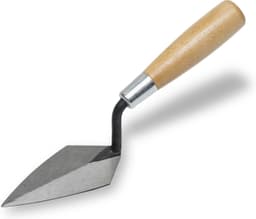
11104ARCH is the conditional top pick for a UK dig that wants the thicker archaeology blade reviewers describe. The bullets say solid forged, hardened and tempered, and a high tang. The listing weight is 160 g. Humber and Vale’s kit note names a WHS Tyzack 4 inch, which is this family, though the maker’s soft-feel part 11104SFARCH is a different number. Skip it if the blade must sit wet in a bucket. Carbon steel rusts if you leave it damp, and one details line wrongly calls the blade wood. Do not buy it because 4.7 from 662 beats 4.6 from 1,714. Those are different tools. 46 114S is the conditional alternative. The maker lists it as the London archaeology model: 4 × 2 inch, wood, one-piece high-carbon steel. On amazon.co.uk it is 102 × 51 mm, hardwood, 109 g, at £20.03. Choose it if you want that forge and a lighter blade than the WHS reviewers describe. Skip it if you need a settled country of origin. The bullet says made in the USA with global materials and the details say China. Skip it too if your only Marshalltown evidence is a review of 46 114D. A snap on that listing is not a snap of 46 114S.

When the cheaper pointers are the better buy

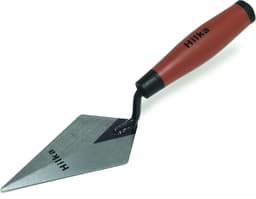
Faithfull FAISGTPT6 at £3.90 is the best value when the job is mortar or a small garden repair, not when the job is a 4 inch dig kit. You get a 150 mm pointer, a soft grip, and 4.6 from 1,714 ratings. That volume is masonry volume. Take it if you are pointing brick and you want to spend under £5. Leave it if a supervisor asked for 4 inches. Compared with 11104ARCH, you save about £14 and you change the tool. Hilka 66306004 at £5.39 is the cheap 4 inch, with 4.5 from 371 ratings. It can stand in for a trial of the length, or for light pointing, if you do not need a forge claim. It is a weak stand-in for a field school that said WHS or equivalent. You are buying shape and price. The 4.5 inch Philadelphia listing is the one to skip or verify before you call it an archaeology trowel. The URL is ASIN B00AAFDID6 and the details block prints B003A83DJO. Philadelphia is also a different pattern from the London 4 × 2 inch. How a detectorist should think about a small blade, after the law, is on the archaeology trowel for metal detecting page.

How to read the scores

The numbers 84 and 82 are not a lab and not a prize. They add amazon.co.uk stars, the number of ratings, and whether the listing claims an archaeology pointing trowel of about 4 inches. 11104ARCH scores 84 because the rating, the review count and the archaeology label line up. 46 114S scores 82 because fewer people have rated it. Faithfull scores 54 because masonry volume cannot outweigh a 6 inch job. Nobody here measured thickness in millimetres. A score does not repair a materials line that says the blade is wood, or an ASIN block that disagrees with itself. Dig, and you can live with rust and that bad materials field: open 11104ARCH. Dig, and you want the London one-piece listing and you will check China against USA: open 46 114S. Mortar only: open the Faithfull, and treat the Hilka as the 4 inch budget neighbour.

Common questions

Which listing is the top pick for a UK dig, and on what condition?
The conditional top pick is Spear & Jackson 11104ARCH at £18.35. Take it if you want the stiffer archaeology blade UK reviewers describe, you will dry carbon steel, and you can see that a details line wrongly calls the blade wood. It is not the pick if you wanted a soft-feel handle, because that maker part is 11104SFARCH. It is also not the pick for a mortar-only afternoon, where the Faithfull costs £3.90.
When is the Marshalltown 46 114S the better fit?
Choose 46 114S at £20.03 when you want the London 102 × 51 mm one-piece forge, a wood handle, and a lighter listed weight (109 g against 160 g on the 11104ARCH). It fits if that shape matters more than the thicker blade WHS reviewers talk about. It fits less well if you need the country of origin to be one clean fact. The USA-with-global-materials bullet and the China details line both sit on the page.
Is the best value the Faithfull because it has the most reviews?
It is the best value for mortar and small jobs, at £3.90, because the price is low and 1,714 ratings support a 6 inch pointer for that work. It is not the best value for a 4 inch dig kit. The review count is masonry and garden volume. Compared with 11104ARCH you are not buying a cheaper version of the same blade. You are buying a different length and a different claim.
Can the Hilka stand in for a field school?
Only as a cheap 4 inch shape, at £5.39, and only if the school did not ask for a forged WHS-style blade or an equivalent. The Hilka listing does not claim a one-piece forging. For a weekend of pointing it is a fair spend. For a week on clay it is the trowel you replace once you know you will keep digging. If the kit list says WHS or equivalent, go back to 11104ARCH or a checked 46 114S.
Should anyone buy the 4.5 inch Philadelphia listing?
Not as an archaeology trowel, until you have checked which product the page is. B00AAFDID6 in the URL and B003A83DJO in the details are both printed, and these listings are not treated as one confirmed item. The pattern is Philadelphia 4.5 inch, not the London 4 inch. At £19.52 you are near the price of 46 114S without the clean part number. Skip it, or verify the page, before you pack it.

Related pages

Sources

Public UK sources from the research digest; retrieved 20 October 2026.

  1. Humber and Vale, what you need for digging (retrieved 20 October 2026)
  2. Leicestershire Fieldworkers, a quick guide to archaeological excavation (retrieved 20 October 2026)
  3. Spear & Jackson, Tyzack 4 inch (102 mm) archaeology trowel (retrieved 20 October 2026)
  4. Marshalltown archaeology pointing trowels (retrieved 20 October 2026)
  5. GOV.UK, scheduled monument consent (retrieved 20 October 2026)
  6. GOV.UK, report treasure (retrieved 20 October 2026)
  7. Northern Ireland, metal detecting, archaeology and the law (retrieved 20 October 2026)
  8. Port of London Authority, Thames foreshore permits (retrieved 20 October 2026)