Independent comparisons. We may earn from shop links. More info

Pedestal fan vs tower fan

Updated: 21 October 2026

You are choosing between a head on a pole and a slim column. Pedestal fan vs tower fan is that shape decision. A remote does not settle it, because both shapes are sold with handsets. This page says when to stay with a pedestal and when a tower is the better tool. If you already want the pole and the guard, the models are on the [pedestal fan with remote control comparison](/hub/cooling/pedestal-fan-with-remote-control). If you buy through our links, we may earn a commission at no extra cost to you. Peter F. compared these amazon.co.uk pedestal listings. A tower from the same batch is not priced here.

You are choosing between a head on a pole and a slim column. Pedestal fan vs tower fan is that shape decision. A remote does not settle it, because both shapes are sold with handsets.

Our top picks

On this page

The two shapes

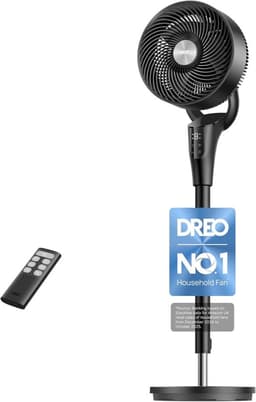
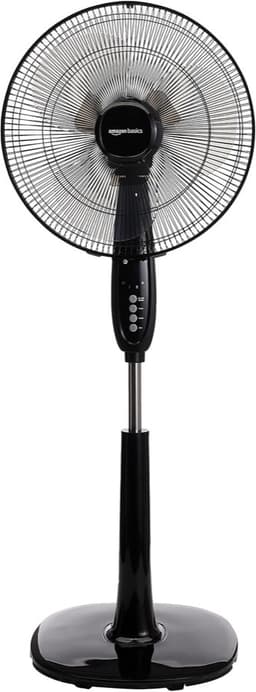
A pedestal fan is a bladed head inside a guard, on a height-adjustable pole and a floor base you can tilt. The fans in our table include a remote that, on the better pages, sets speed, oscillation, and a timer. Footprints vary. The Amazon Basics FS40-10BR is listed around 40 × 45 cm in plan and up to 135 cm tall, at about 5.4–5.6 kg. The Shark FlexBreeze on its pedestal is listed at 35 × 35 cm in plan and 94 cm high, at 5.5 kg. A generic convertible in the same comparison weighs 1.73 kg and is only 100 cm tall, which is a light stand rather than a heavy base. You are buying a round guard that sticks out into the room and a head you can point. A tower fan is a vertical column. The airflow usually leaves a long slot rather than a round guard, the base is smaller in the stories UK guides tell, and tilt is often weaker or absent. Toolstation’s buyer guide puts towers with smaller rooms and a lower noise expectation, and pedestals with medium rooms. Ideal Home makes the same split: a tower when the floor is tight, a pedestal when you want more airflow. TechRadar’s comparison says a pedestal is usually the stronger, more aimable breeze, and a tower the slimmer, often gentler one. None of those articles is a measurement of the eight pedestals we kept. They are the shape rule. A remote on the pedestal does not turn it into a tower, and a remote on a tower does not turn it into a pedestal. Both shapes fail in the same way if you wanted cold air. A fan cools people by moving air. It does not refrigerate the room. Below 35°C a fan can help. Pointed straight at the body, GOV.UK says not to. The shape does not change that sentence.

Air and noise

Choose a pedestal when you want a guarded head you can aim at a sofa, a desk, or the length of a bed, and when you want oscillation you can see. In this set the Shark claims 180°, the ROVSUN prints 60–120°, and the Amazon Basics fan oscillates without stating the angle. Height is part of the aim. The 16 inch pedestals here adjust through roughly 115–135 cm, so the breeze can clear a chair back. A tower’s slot tends to spread a gentler column of air through a lower band of the room. That is the better behaviour in a small bedroom where a 40 cm guard would dominate, and the worse behaviour when you need to lift the airflow over a high bed. Ideal Home’s practical line matches that: more airflow is the pedestal’s case, a tight room is the tower’s. Noise does not split neatly by shape. There is no decibel gap that says every tower is quieter than every pedestal. Inside the pedestal table, a 20 dB bullet on a DREO page sits next to 28.2 dB in the table, and reviewers say the low speed is quiet while the high speed sounds like a fan. The ROVSUN states 40 dB. The Shark table says 45 dB and some owners still use a low speed overnight. A tower can be quieter in a given room because the airflow is softer, or noisier because you run it harder to feel anything. Judge the lowest speed you will actually use. That night-time reading, including beeps, is on the quiet pedestal fan for the bedroom page. Good Housekeeping’s tip of a low reading ideally below 35 dB is their rule of thumb for pedestals, not a law, and not a tower-versus-pedestal result. Running cost will not choose the shape either. At Ofgem’s average Direct Debit rate of 26.32 pence per kWh for 1 October to 31 December 2026 in England, Scotland and Wales, a 36 W fan for eight hours is about 7.6 pence. That average is not a Northern Ireland rate and not a fixed tariff. A tower with a similar wattage costs a similar sum. The plug still matters more than the silhouette: a pedestal page that prints 120 V is a supply problem, whether or not a tower beside it looks tidier.

Space and people in the room

The pedestal’s cost in a small room is the base and the guard. A head 40 cm across, on a base about 40 × 45 cm, needs a clear circle so the oscillation does not hit a curtain, a cot, or a bookshelf. The Shark’s listed 35 × 35 cm footprint is a bit tighter, and that fan can also come off the pole and sit on a table, which is a way to free the floor if the listing you buy includes the pedestal in the box. A tower stands in a smaller patch of floor and is easier to slide beside a wardrobe. It is also, in Ideal Home’s account, easier to knock because the column is tall relative to a compact base. TechRadar notes the same stability habit: a wide pedestal base tends to stay put, and a slim tower needs a base that is actually heavy. With children, the guard and the base matter more than a scare story. A pedestal keeps the blades behind a grille. The grille is only useful when it is clipped shut, which is an assembly step, not a slogan. A light 1.73 kg convertible is easier to pull over than a base around 5–6 kg. A tower removes the open guard, and a bladeless tower goes further by hiding the impeller. Ideal Home mentions bladeless columns as a safety option in homes with children. That is a different category from this pedestal table, and it is often a different price. This page is not ranking Dyson or any other bladeless brand. If small children share the room and you want no guard at head height, look at a tower or a bladeless column on purpose, and still secure the base. If the children are older and you want aimable air, a shut guard on a heavy pedestal is the ordinary answer. Oscillation that sweeps 180° will find a trailing lead and a low curtain. Fix the lead to the skirting side of the base before you judge the noise.

Which to buy

Stay with a pedestal fan with a remote when you have floor space for a base around 35–45 cm across, you want to aim and tilt a guarded head, and you want oscillation you can point at people rather than a gentler slot of air. In this comparison the top pick for a stated UK plug is the Amazon Basics 40 cm fan at about £47.45. The limits on its remote are on the best pedestal fan with a remote page. A pedestal page can still print 120 V. Buy a tower instead when the floor is the constraint, you want a slimmer column in a small bedroom, and a softer spread matters more than a head you can tilt over a sofa. A tower with a remote is a fair buy for that room. It is not a buy you should make from this pedestal table, and a remote is not the feature that forces the switch. Do not expect either shape to air-condition the flat. If the only worry is beeps and a low speed, you can stay with a pedestal and choose on the quiet-bedroom page. If the only worry is a missing square of floor, leave this category and shop for a tower.

Common questions

Which is quieter?
Neither shape is quiet by definition. A pedestal on a low speed can be fine for sleep, and the same pedestal on a high speed sounds like a fan, which is what DREO and ROVSUN reviews describe. A tower is often sold as the gentler, smaller-room fan, and it can still be loud if you run it flat out. Compare the low speed you will use, including button beeps. Do not treat a 20 dB pedestal headline, or a tower advert, as a measured gap between the two shapes.
Which moves more air?
A pedestal is the usual choice when you want a stronger, aimable breeze. That is TechRadar’s split and Ideal Home’s: the guarded head moves air you can point, and a tower spreads a gentler flow in less floor space. Inside our pedestal table the printed airflow units do not even match each other, so a cubic-feet figure on one DREO page is not a contest with a tower’s cubic-metres claim. A bigger number in the wrong unit is not more cooling, and neither fan refrigerates the air.
Which is safer with children?
A pedestal is safer when the guard is on properly and the base is heavy enough not to tip, which in this set means the fans around 5–6 kg rather than the 1.73 kg convertible. A tower, and especially a bladeless tower, removes the open grille at head height, which Ideal Home flags for homes with children. Bladeless fans are outside this comparison. Whichever you buy, keep leads out of reach and do not leave a mains fan running while you are out, which is Electrical Safety First’s line for fans in general.
Which fits a small bedroom?
A tower usually fits the floor better, because the column replaces a 40 cm guard and a base that needs room to oscillate. A pedestal fits the same bedroom when you can spare that circle and you want the head above the mattress, which the 115–135 cm Amazon Basics range is built to do. If the room is small and noise is the only issue, a quiet low speed on a pedestal can still be right. If you cannot spare the floor, choose the tower and stop comparing 16 inch guards.
Can a pedestal have a remote too?
Yes. Every fan kept in this comparison is a pedestal sold with a remote. The handset should change speed and, on these listings, a timer and often oscillation. Batteries are a separate pack on several of them. A tower can have a remote as well. The handset is not a reason to prefer one shape. What the remote cannot do is make a 120 V table into a UK plug, or make a high speed quiet.
Do both fail as air conditioning?
Yes. A pedestal and a tower both move air. They do not remove heat from the room the way an air conditioner does, and this page does not claim a temperature drop for either. NHS advice allows a fan to help when it is below 35°C. GOV.UK says not to aim it straight at the body. If you need the air itself colder, you are shopping for cooling equipment in another category, not for a slimmer fan.
Is a bladeless tower worth it?
It can be, when you want no guard at child height and you accept a different price band from a £47.45 pedestal. That is a safety and space choice Ideal Home describes, not a result from our table. This comparison is not scoring Dyson or any bladeless model. If you want aimable air from a guarded head and a stated UK plug, stay with the pedestal comparison. If you want the column with no visible blades, leave this page and judge those listings on their own plug, noise, and base weight.

Related pages

Sources

Public UK sources below. Prices, stars and review notes are from the amazon.co.uk listings in this set. Page updated 20 October 2026. This is not a laboratory test.

  1. Electrical Equipment (Safety) Regulations 2016, regulation 35 (retrieved 20 October 2026)
  2. Plugs and Sockets etc. (Safety) Regulations 1994, Part II (retrieved 20 October 2026)
  3. Electrical Safety First: electric fans (retrieved 20 October 2026)
  4. NHS: heatwave, how to cope in hot weather (retrieved 20 October 2026)
  5. GOV.UK: beat the heat, keep cool at home (retrieved 20 October 2026)
  6. Ofgem: energy price cap unit rates and standing charges (retrieved 20 October 2026)
  7. Good Housekeeping UK: pedestal fans (retrieved 20 October 2026)
  8. TechRadar: pedestal fan vs tower fan (retrieved 20 October 2026)