Independent comparisons. We may earn from shop links. More info

Dyson fan vs air conditioning

Updated: 21 October 2026

You bought a Dyson, or you are about to, because the room felt hot and the title said cool. In this Dyson fan vs air conditioning comparison, the room stayed hot because these machines move air or, on two of them, add heat. They do not remove heat. The five listings are in the [Dyson fan comparison](/hub/cooling/dyson-fan). Peter F. read them on amazon.co.uk on 19 October 2026. There was no measured temperature drop. A qualifying purchase can earn a commission at no extra cost to you. Cool on the box is a product name, not a refrigerant circuit.

You bought a Dyson, or you are about to, because the room felt hot and the title said cool.

Our top picks

Dyson Dyson HP1 Hot+Cool

Best overall

Dyson Dyson HP1 Hot+Cool
5.6/10about £449
Dyson Dyson AM09 Hot+Cool

Rank 2

Dyson Dyson AM09 Hot+Cool
6.4/10about £399.99
On this page

Why the room stayed hot

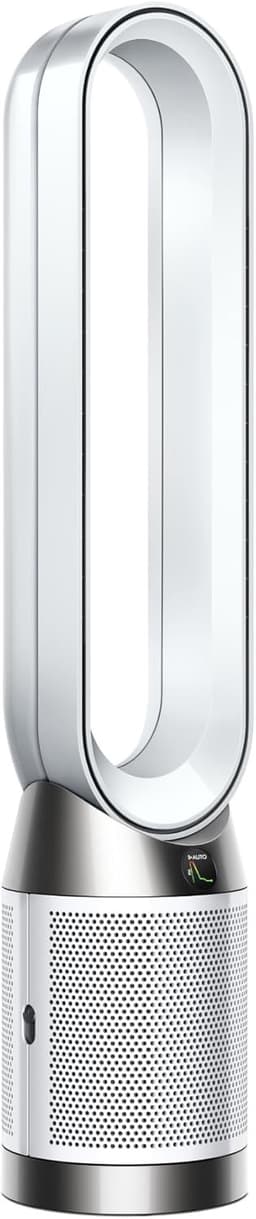
The clearest UK example is the PC1, about £449 with 3.6 from 86 reviews. The file is dominated by people who wanted the room colder and sent it back. The title says Powerful Cooling Purifier. The bullets describe a sealed HEPA system and airflow, not a compressor, a hose, or a heater. It blows the air already in the room. That is usually the category, not a faulty motor. AM09 reviews say the same about fan mode, while liking the heater. One buyer checked and the temperature rose. Dyson’s HP1 page says that machine is a fan, not an air-conditioning unit. None of the five listings shows a compressor. The HushJet’s evaporative line does not include a water tank.

Fan, purifier, heater

A fan moves air across your skin. If that air is cooler than your skin, you feel cooler, and sweat evaporates faster. The room’s stored heat is still there. The PC1 or the HP1 adds a HEPA claim. About £449 can be worth it for pollen. It does not buy a colder room. A heater is the opposite of an air conditioner. The AM09 prints 2,000 W, 230 V and 12.5 A. The HP1’s 40 W cell is not the element. Its thermostat, on the AM09, only decides whether that heater starts. The PC1 has no heater claim. The HushJet has neither a thermostat nor a hose.
Dyson Dyson HP1 Hot+Cool

Testsieger

Dyson Dyson HP1 Hot+Cool
5.6/10about £449

What you buy if the room must be colder

An air conditioner removes heat and has to send it somewhere else, usually through a hose out of a window. A Dyson tower has nowhere to send the heat. If you need the room colder, shop for that exhaust path and a listing that states cooling capacity, not a 40 W fan cell. This page will not invent a BTU figure for these five ASINs. With no way to vent heat outside, a portable unit fails too, and a fan is still only a fan. GOV.UK says use a fan below 35°C and do not aim it at your body. At or above 35°C indoors, aiming it at yourself can make you hotter. That is not a degree-drop claim for a Dyson.

When a Dyson is still the right buy

A breeze, a HEPA claim, or occasional heat from the AM09’s 2,000 W are real jobs. The best Dyson fan page splits them by person. A PC1 that fails as an air conditioner can still be the right purifier. Do not buy any of them to hold a bedroom below the weather. Keep the Dyson for air movement, filtration or listed heat. Buy a machine that vents heat outside if the room must be colder.

Common questions

Does a Dyson fan cool the room?
No. These five move air, and the AM09 and the HP1 can add heat. They do not remove heat. Dyson’s HP1 page says the machine is a fan, not an air-conditioning unit. You can feel cooler when air moves over your skin. A thermometer in the room will not show a refrigeration effect, and this page is not claiming a degree drop from any review.
Why do so many PC1 reviews say it was useless?
Because the buyers wanted the room colder and the machine blew warm room air. That cluster sits inside 3.6 from 86 reviews at about £449. The listing has no compressor. If your job was pollen, those reviews are the wrong verdict. If your job was a colder flat, they are the right one, and the return was the honest outcome.
What does an air conditioner do that this fan does not?
It extracts heat and sends it outside, usually through a hose on a portable unit. A fan only circulates the air that is already in the room. A purifier can trap particles while it circulates that air. Neither step is a cooling capacity. Without a path for heat to leave, you still have the same warm room, stirred.
Is the AM09 closer to an air conditioner because it has a thermostat?
No. The thermostat limits a 2,000 W heater. It lets you set a target, and the element stays off when the target is below the room. That is the opposite of a cooling cycle. Fan mode on the same machine is still a fan. Reviewers who liked the heat were reviewing a heater, not a split system.
When is a fan still the right tool?
When you want to feel cooler in air that is already below 35°C, or when you want a breeze while a purifier runs. GOV.UK says not to aim the fan at your body. It is also the right tool when you do not have a way to vent heat outside and you accept that the room temperature will not fall. It is the wrong tool for a set indoor temperature in a heatwave.
If I need the room colder, where do I go next?
Shop for an air conditioner that can send heat outside, and check the window or the wall before you trust a hose kit. Do not spend the difference between these Dysons hoping the HP1’s footnote or the PC1’s title will close that gap. The HushJet’s evaporative line does not include a tank in the box, so it is not a miniature cooler either.

Related pages

Sources

Public UK sources named below. amazon.co.uk prices, stars and review counts on these listings were read on 19 October 2026. Page updated 20 October 2026.

  1. Dyson HP (retrieved 2026-10-20)
  2. Dyson PC (retrieved 2026-10-20)
  3. Dyson AM (retrieved 2026-10-20)
  4. AM09 ecodesign PDF (retrieved 2026-10-20)
  5. Filter (retrieved 2026-10-20)
  6. Regulation 2015/1188 Annex II (retrieved 2026-10-20)
  7. Regulation 206/ (retrieved 2026-10-20)
  8. Beat the heat checklist (retrieved 2026-10-20)