Vertical or portable air compressor: space or carry

Choose a vertical or portable air compressor by whether you carry it. A 50 litre upright stores air and saves floor space; airflow and decibels stay listed.
On this page
In short
You have one clear patch of garage floor, a tool that stalls each time the motor kicks back in, and two listings that both say quiet. A vertical or portable air compressor is a choice between a tank that stays in that bay and a tank you can carry to the car. The upright 50 litre stores air and starts less often. Airflow stays with the pump, and the quiet figure stays the decibel on the listing.
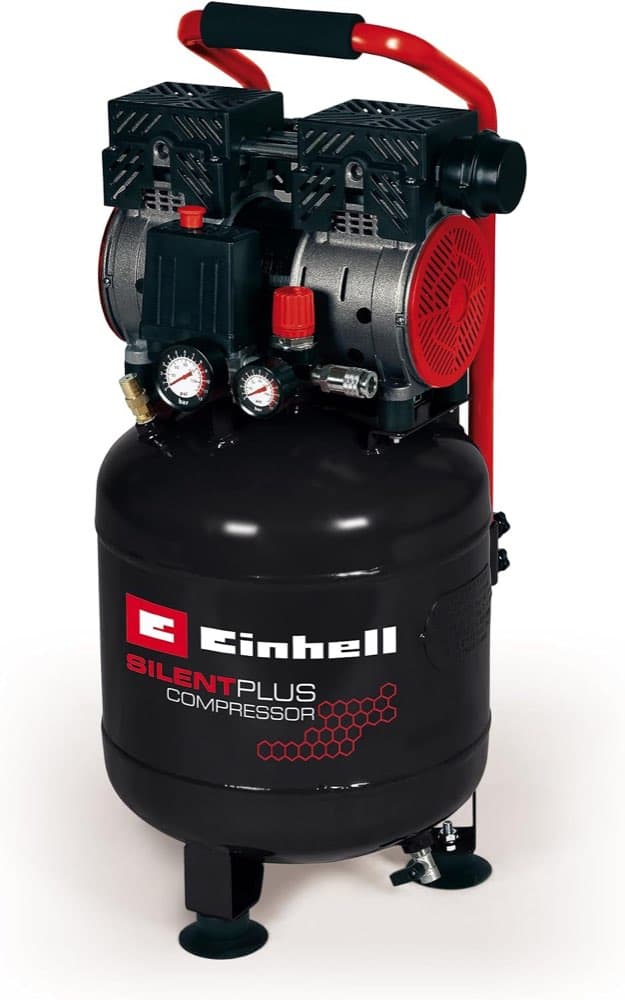
A vertical compressor is a shape
Vertical means the receiver stands on end. The footprint shrinks and the height grows. That is a layout choice for a crowded slab and a clear ceiling, which is why a 50 litre vertical compressor appears when the real question is compressor floor space in a garage. The pump, the motor and the decibel line stay as the maker printed them.
The quiet Stanley pair prints one noise figure in two shapes. The DST 101/8/6 is a 6 litre portable at 59 dB. The DST 150/8/50V is a 50 litre vertical at 59 dB. A calmer photo still sells a shape.
Both figures are listing values. This page has no sound-meter reading from a British garage, so a hard wall or a long duty can make either machine feel louder than the box. The loud machine in that set is portable too. The 5 litre Airboss, DN200/10/5, is listed at 98 dB and about 10 bar.
A third body can look upright and is a different purchase: the oil-lubricated D210 at 33.5 kg and 95 dB, the heavy lubricated receiver. The quiet upright is the DST 150/8/50V. Use 59 dB to separate that pair from 95 dB and 98 dB, then open the vertical air compressor comparison for the shape.
What the extra litres change
A larger tank stores compressed air, so the motor can rest while you work from that store. Those pauses are the vertical receiver restarts a bigger tank is meant to cut. Bostitch’s UK choosing guide states the bargain: tank size leaves delivery unchanged, a larger tank means the motor runs less often, and you give up portability for that rest. Scheppach’s UK range puts small tanks on tyres and inflatables you carry, and larger receivers where the machine stays in the workshop.
Airflow still has to match the tool. SIP’s Airmate 50 litre vertical sheet, a different brand, prints 9.6 CFM displacement and 4.7 CFM free air delivery, plus 230 volts and 13 amps. The tank stores air beside those figures. Stanley’s sheets are a separate measurement, so leave SIP’s CFM on SIP. The wording of that split is in free air delivery explained.
Flowtech puts a 6 litre machine on short bursts and a larger tank on a longer job. Six times the tool’s SCFM is their rule of thumb, and this page has no lab check of it. A tool that outruns the pump will empty 50 litres and then fall back to the pump. Eight bar on 50 litres is 400 bar-litres, the workplace case in when a workshop compressor needs a written scheme. This page stops at that sum.
What you give up for fewer restarts
Fewer starts are paid for in mass. The DST 150/8/50V is listed at 27 kg: a two-person lift, or a wheeled move on a level floor. A loft ladder or a flat-to-flat staircase is a poor plan for one person. Wheels help on the garage slab and stop at the first step. If Saturday is the driveway and then the spare room, the restarts you saved stay indoors.
Set the quiet portable against that 27 kg. Amazon lists the DST 101/8/6 at about 14.4 kg. B&Q’s figure is about 17 kg. Three kilograms changes a stair plan, so read the plate on the unit you will lift.
Either figure is a deliberate carry. Twenty-seven kilograms is a machine you place and leave. The upright tank gives the slab back and asks for headroom. A shelf, stored timber, or a door through the only clear corner can block a receiver a suitcase would slide under. Measure the standing gap, the door arc and the route to a 13 amp socket.
A vertical tank stuck in the middle of the bay has spent the floor it was bought to save. If both extremes feel wrong, the Wickes Siltek 24 litre was £199 on 15 October 2026. That shop price will move, and it marks the gap between a 6 litre carry unit and a 50 litre upright. Check its weight the same way, and still match the pump to the tool.
Trust the kilograms on the listing
Weight tells you whether the tank size is real. A kit at 5.6 kg is too light for 90 litres, and a kit at 9.1 kg is too light for 50 litres. A genuine 50 litre, with motor and frame, sits in the tens of kilograms: 27 kg on the quiet Stanley upright, 33.5 kg on the oil D210. A title that says 50 litres and a weight under 10 kg has borrowed the litres.
Read tank, weight, noise, pressure, plug and voltage in that order. When two lines conflict, that conflict is what you are buying. The DST 150/8/50V lists 50 litres, 59 dB, 27 kg and a UK plug bullet, while the amazon.co.uk voltage field says 50 volts. UK mains are 230 volts, and a domestic plug is BS 1363.
Fifty volts is a different supply, and the tank’s posture changes none of that. SIP’s own 50 litre sheet states 230 volts and 13 amps. Until the plate, the plug and the voltage field describe one supply, so keep that upright on the shortlist.
Match DST 101/8/6 to the quiet 6 litre and DST 150/8/50V to the quiet 50 litre, then check weight and voltage on the live listing. These figures come from amazon.co.uk, Bostitch, Scheppach, SIP, Flowtech, and the Wickes price on 15 October 2026. There is no lab test here. A qualifying amazon.co.uk purchase can earn a commission at no extra cost to you.
Which comparison to open
Choose the 6 litre when you carry the compressor and the jobs come in short bursts. Tyres, inflatables and a brad nailer in bursts sit there, with more motor starts as the cost. The DST 101/8/6 is the quiet version, at 59 dB, near 14.4 kg on Amazon and near 17 kg at B&Q. The Airboss is the portable you pick after accepting 98 dB. Open the suitcase air compressor comparison for that carry.
Choose the 50 litre upright when the machine stays put, you want fewer restarts, the ceiling clears the tank, and two people or wheels can place 27 kg. The DST 150/8/50V is the quiet vertical at the same 59 dB, once the UK plug bullet and the 50 volt field agree on the plate. The D210 is the lubricated receiver at 95 dB, after you have chosen oil and read the weight. Open the 50 litre vertical compressor comparison for that class.
The Stanley compressor comparison holds the model codes together, including kit weights too light for the tanks in their titles. Use it when 50 litres looks oddly cheap. If the tool’s demand sits above the pump, change the pump first. A taller tank will still empty.
Write down whether you will lift it every time, and whether the listed weight agrees with the litres. The first answer picks portable or vertical. The second tells you whether the listing is the machine in the title.
Common questions
Does a vertical compressor mean it is quiet?
Will a 50 litre tank fit a small garage?
Can I carry a 27 kg compressor upstairs?
Will a bigger tank run air tools for longer?
Is a suitcase compressor the portable choice?
What if the 50 litre listing weighs under 10 kg?
Does an upright tank change the plug or the voltage?
When is a 6 litre compressor still the right machine?

Products Compared publishes British-English buying guides based on amazon.co.uk listings and public UK sources. We do not run a lab and we do not invent test scores.
Related articles
Air compressor size for nail gun: tyres or framing
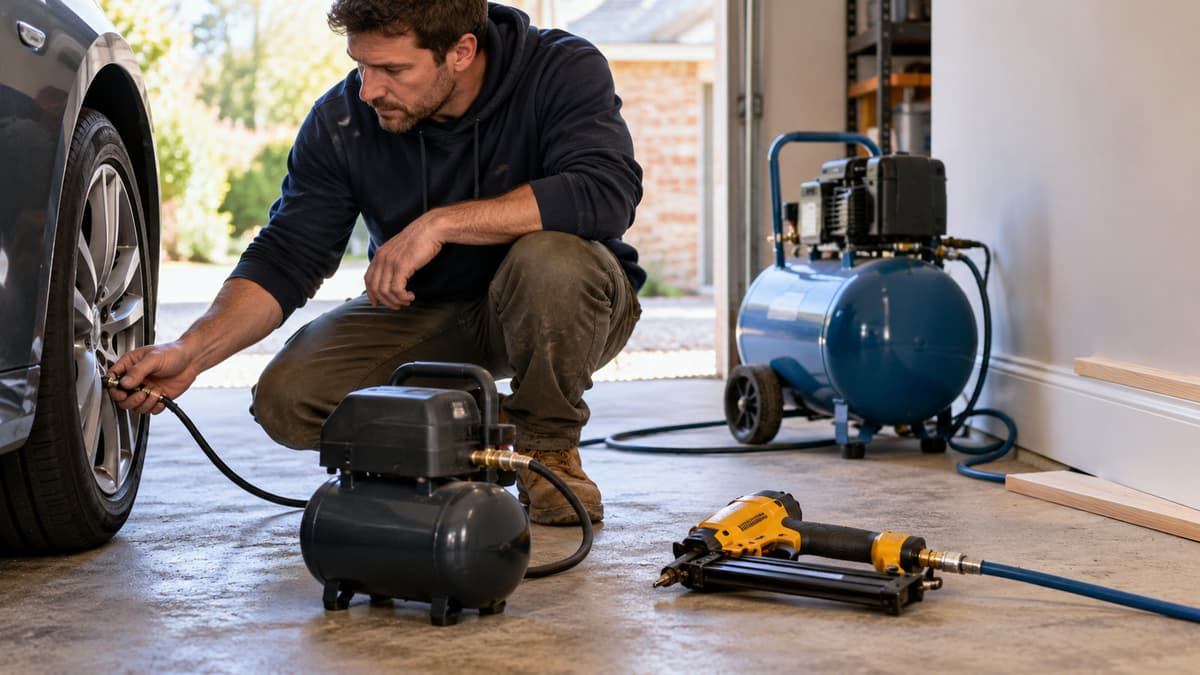
Tyres and a brad nailer are short jobs. Spraying and a framing nailer need the pump, not a bigger tank.
Free air delivery compressor: read the litres first
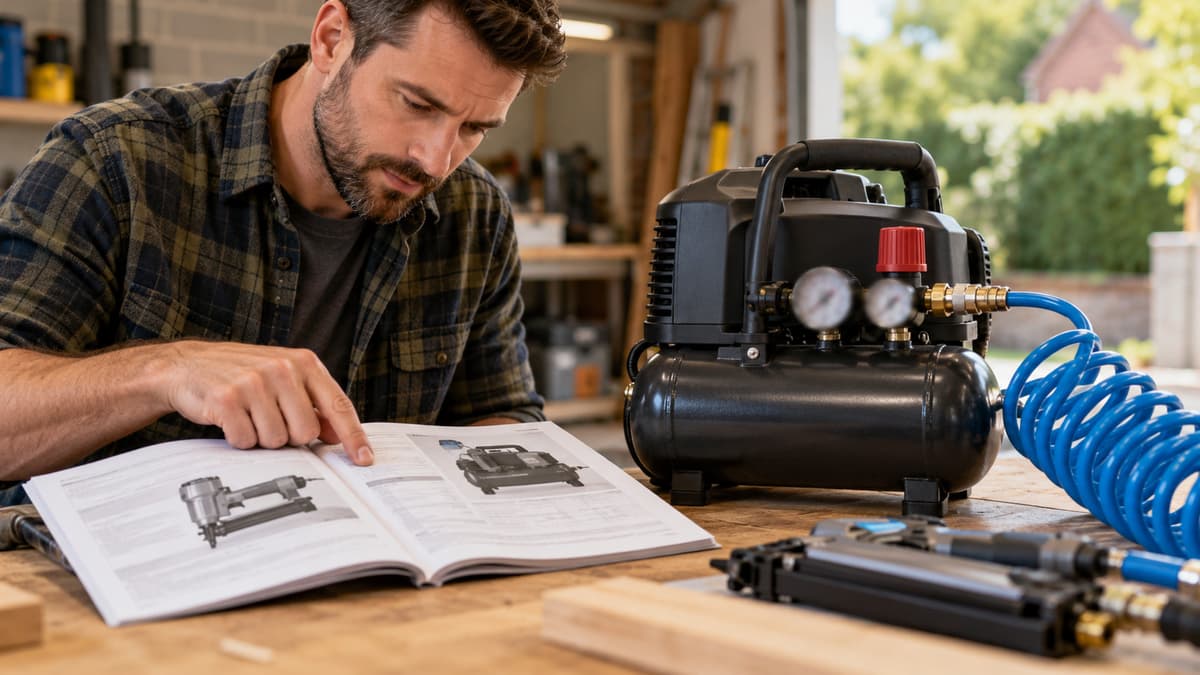
A catalogue airflow figure is not the air you get at the tool. Read displacement and free air delivery apart.
Written scheme of examination air compressor: the 250 line
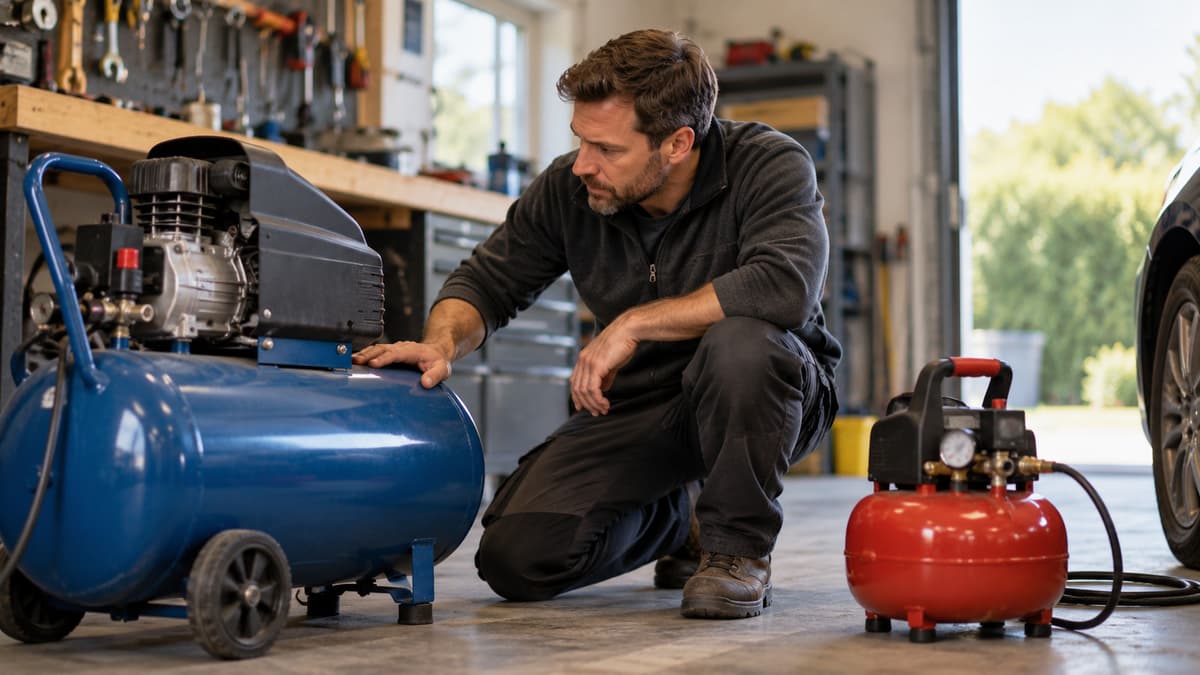
A workplace receiver can cross the bar-litre line. A tyre inflator in a flat usually does not.