Independent comparisons. We may earn from shop links. More info

Where to put a water leak detector

Updated: 20.10.2026

A sensor in the middle of a cupboard can sit dry while water runs to the kickboard and out across the floor. Where to put a water leak detector is mostly that geometry: the probe only sees water that reaches it, and the stopcock is what stops the damage. Peter F. used amazon.co.uk review themes and Thames Water’s stop-valve notes, and did not flood a test house. A qualifying purchase can earn us a commission at no extra cost to you. Cellars, sumps and loft tanks are on the [basement and loft](/hub/burglar-protection/water-leak-alarm/sub/water-leak-alarm-basement) page. Product scores stay on the [water leak alarm comparison](/hub/burglar-protection/water-leak-alarm).

A sensor in the middle of a cupboard can sit dry while water runs to the kickboard and out across the floor.

Our top picks

On this page

Start at the low point, not the middle of the cupboard

Water on a flat floor finds the lowest lip, the tray, or the gap under a plinth. Put the first probe there. If you can only buy one sensor, choose the place that would flood first and that you cannot see. In a typical UK kitchen that is the washing-machine hose or the trap under the sink, not both at once. MoreTips lists washer hoses, under the sink, a plumbed fridge, the boiler, the cylinder and the stopcock. Treat that list as practical guidance, not a standard. A sensor beside the stop valve tells you the area is wet. It does not turn the valve. Which pack to buy is the buying guide.

A thin leak never reaches raised contacts

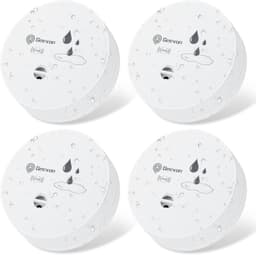
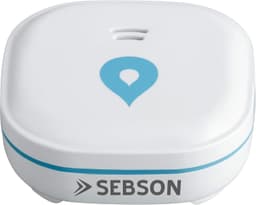
These contact alarms close a circuit when water bridges the probes. SEBSON reviewers say the feet hold the electrodes about 1 mm off the floor, so a damp film can pass underneath. A Geevon return says the prongs miss a thin film under a kickboard. If the machine sits too low for a puck, use a cable. SwitchBot includes about 1 m so the radio can sit outside a tight gap and the sensing end can lie in the tray. The SONOFF cable version is the same idea once a Zigbee hub is already paired. VETOUCH reviewers describe trips with no water they can see, which fits steam in a cupboard. A cable also keeps the probe in the wet when Wi-Fi dies inside a metal sink unit.

Test it, then find the stop valve

Prove the trip before you trust the corner. MoreTips suggests a damp cloth on the contacts. A teaspoon of water does the same job if you can mop it up at once. Dry the probes so the alarm clears. A beep only matters if someone can turn the water off. Thames Water says the inside stop valve is yours, and clockwise closes it. Find it while the floor is dry, turn it a short way and back, then leave it open. The pavement stopcock is the water company’s, not your everyday control. A seized spindle is a plumber’s job. Match the test to a listing on the best water leak alarm page.

When another sensor will not help

A second puck does not find a leak you cannot see. Thames Water’s leaks-at-home guidance says hidden leaks need a detection specialist, not another alarm on the floor. If the meter moves while every tap is shut, or a ceiling stains with no puddle at the machine, stop adding sensors and book someone who traces pipework. The same hand-off applies when the stopcock will not turn, when water is near the consumer unit, or when you would have to wade to reach a socket. A WaterSafe plumber is the call for a visible leak you will not repair yourself. If you were out and nobody heard the beep, the fix is a phone path, not a third puck in the same tray.

Common questions

Where should the first sensor go if I can only buy one?
Put it where water will pool and where you will not see the drip until the floor is wet. In many UK kitchens that is under the washing machine or at the lowest point of the sink cupboard, not in the middle of the shelf. One sensor cannot watch both. Add a second only after the first has passed a damp-cloth test.
Does the middle of the cupboard count?
Only if that is where the water sits. A drip from a trap usually runs to the back edge or out under the door. A puck parked beside the cleaning bottles can stay dry through a real leak. Slide it to the low lip, or lay a cable along the path the water already takes.
How do I test it without flooding the floor?
Touch the probes with a damp cloth, or use a teaspoon of water you can wipe up at once. Confirm the siren or the app, then dry the contacts so the unit resets. Do not run a hose across the kitchen to make sure. If the cloth does not trip it, the probes are too high or the cell is flat, and a bigger puddle will not teach you more.
Where is the stopcock, and which way does it turn?
Thames Water says the inside stop valve is often under the kitchen sink, in an airing cupboard, under the stairs, near the front door, or in a utility, bathroom, garage or cellar. Clockwise closes it. Find it before a leak, and do not treat the pavement stopcock as the one you turn in a hurry.
Why did it beep when I could see no leak?
Bathroom and sink cupboards hold damp air. VETOUCH reviewers report trips with no visible water, which is a placement problem as much as a faulty unit. Shift the sensor out of the steam, dry the probes, and test again with a cloth. If it still alarms on a dry floor, the unit is suspect. If it only alarms in that cupboard, the cupboard is the cause.
Can one sensor watch the washer and the sink?
No. They are two pools unless a single tray actually joins them, which most kickboards do not. A cable can run under one machine. It does not split into two rooms. Use a second puck, or a pack, for the second wet point.
What if the machine is too low for a puck?
Use a sensing cable and keep the radio body where you can reach it and where Wi-Fi, if you need it, still works. SwitchBot includes about 1 m of cable for that gap. A puck forced under a plinth with its contacts in the air will miss the film on the floor. If you cannot lay a cable safely, the placement is wrong for a contact alarm.

Related pages

Sources

Public UK sources used for this comparison, last checked on 19.10.2026.

  1. ABI, Burst pipes and water leaks (retrieved 19.10.2026)
  2. Howden, Escape of water and your home insurance (retrieved 19.10.2026)
  3. Howden, A guide to water leak detection systems (retrieved 19.10.2026)
  4. Aviva, summer escape-of-water release (July 2026) (retrieved 19.10.2026)
  5. Tesco Insurance, Escape of water advice (retrieved 19.10.2026)
  6. Thames Water, how to find and use your inside stop valve (retrieved 19.10.2026)
  7. Thames Water, leaks at home (retrieved 19.10.2026)
  8. RiskSTOP, Water leak detection alarms (retrieved 19.10.2026)