Video doorbell false alarms: cats, cars and the path

Video doorbell false alarms for a cat or a car are often the PIR and a wide lens working as listed. Lower the level, or pick a kit that waits for the button.
On this page
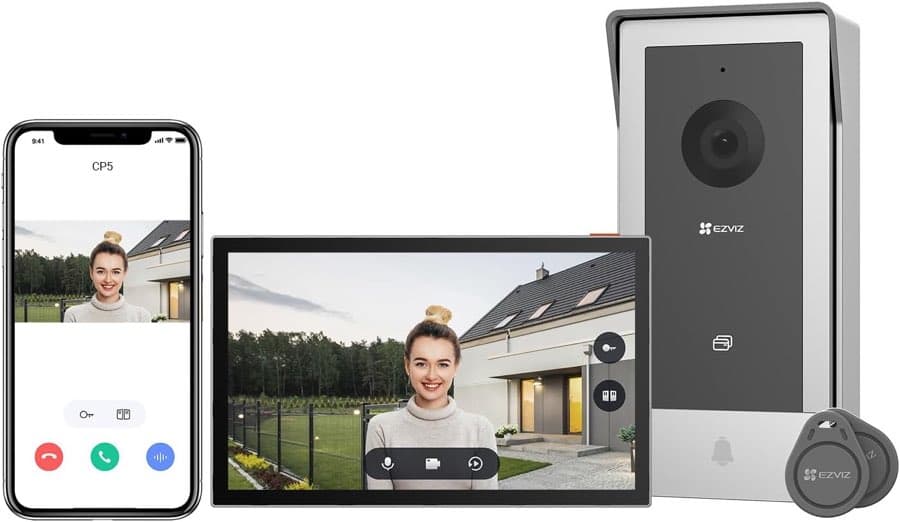
You are in the kitchen when the indoor screen lights and the phone buzzes. The clip is the neighbour's cat on the front path. Ten minutes later the same chime is a car on the road, and nobody has pressed the button. Video doorbell false alarms of that kind are what this page is for. A wide lens and a sensitive PIR are doing the job the listing described. Motion detection on the porch covers whatever crosses the zone, so a video doorbell picks up cats in the front garden as readily as a caller.
A UK review of the ACEBELL says the PIR usually triggers when somebody is outside, and it names that cat. The Products Compared editorial team read the amazon.co.uk listings in our video door intercom comparison, the ICO home CCTV page, and GOV.UK domestic CCTV guidance as checked on 15 October 2026. We did not film your step and we did not run a lab test. A qualifying purchase through an Amazon link can earn us a commission at no extra cost to you.
In short
A sensitive PIR plus a 160° or 170° lens will ping for a cat, a car and the pavement, because that is the frame the listing sold. ACEBELL and XPJ offer high, medium and low, while the TKMARS stays quiet until someone presses and so misses a visitor who never rings. A privacy zone on the EZVIZ CP5 can hide part of the picture. It does not by itself settle the duty if the rest of the clip still shows the street.
Video doorbell false alarms are the sensor doing its job
A PIR on these door stations wakes the camera when something moves in front of the lens. A cat on the path, a person on the pavement, and a vehicle close to a porch that faces the road are all movement. The ping feels like a fault because you wanted callers. On the kits that print a PIR, that wider net is what the listing sold.
The ACEBELL review says the PIR usually triggers when somebody is outside, including a cat in the front garden. That is a working sensor. The same file says the bell has been playing up after nearly two years. A cat clip in the first days is the sensitivity and the aim. A later failure is a separate complaint. Doorbell notification fatigue follows when you swipe the banner and miss the courier. A lower PIR level will not crop a 160° frame, and none of these listings states a false-alarm rate.
Three levels, and a lens that includes the pavement
ACEBELL and XPJ print a PIR with three levels: high, medium and low. ACEBELL is £189.99, 4.4 from 74 amazon.co.uk reviews, a 160° lens, and live monitoring capped at 5 minutes. XPJ is £207.99, 4.4 from 31 reviews, about 160°, with the same three-level PIR. Those prices are from the comparison file checked on 15 October 2026, not a fresh amazon.co.uk scrape. If the screen is already busy, drop one level and walk the path the same afternoon.
High matches a review that says somebody is outside. Medium still catches a person at the mat. Low is the step when the pavement keeps winning. Walk from the gate to the mat, along the pavement, and watch one passing car, because doorbell alerts for cars are that same zone. Leave the level that catches the mat and misses the road.
A 160° view from a front door toward the street takes in the path and a slice of road. The Winnes kits and the TKMARS are listed at 170°. The EZVIZ CP5, the top pick in the video door intercom comparison, is listed at about 134°. It can still include the pavement if you mount it by the gate. The ACEBELL indoor monitor is listed at about 5 to 8 hours and is meant to stay on charge. An owner review describes about two days from the outdoor cell against a 45 to 60 day claim, so that long figure stays a claim. XPJ's monitor is listed at about 6 to 8 hours, and a UK review says the doorbell will not function unless the screen is on.
Kits that stay asleep until the button
The TKMARS 016-1, £58.99 with 3.9 from 748 reviews, starts the camera when someone presses. Waking the screen does not show an empty step. Speech is push-to-talk. About 30 photos sit on the unit without a card. Clips need a microSD of 8–32 GB you buy separately. Someone who drops a box and leaves without pressing is not in the listing. The 170° lens can still put the pavement in frame when they do press. Indoor range is listed at 5 to 10 metres against 50 metres in the open. The bullets say 2.4 GHz and the specification says Bluetooth.
The Winnes kits both mention a PIR, so they are not an escape from cat alerts. The K18S at £62.99, 3.9 from six reviews, has a 4.3 inch screen, a 170° lens, manual live view, and PIR. The 0K18S at £59.99, 3.2 from 15 reviews, also lists PIR, and no review in that file is marked United Kingdom. Those monitors are set out on video door phone no Wi-Fi. A bell that will not ring is a different problem from a camera that filmed the cat.
A privacy zone is not a legal fix by itself
On the EZVIZ CP5 the bullets describe up to four privacy zones over the pavement, a neighbour's window, or the road at the edge of a 134° frame. When the zone is on, that strip drops out of the picture and the notifications. ACEBELL and XPJ do not state that control. On those kits the crop is the bracket: aim at the mat, and accept that 160° keeps a margin you cannot draw out in the app.
The CP5 bullets say the indoor screen lights and rings when a visitor knocks or rings. Reviews mention alerts in the app. That is not the high, medium and low scale on ACEBELL and XPJ. If a CP5 pings for the street, check the EZVIZ alert settings before you assume a PIR is stuck on high. We did not map every firmware screen. This station is the comparison's top pick at £161.49, with 4.4 from 1,330 reviews. The 134° figure has not been certified as your path only.
The ICO home CCTV page treats a lens on the street as a data problem as well as a nuisance. GOV.UK domestic CCTV guidance, checked on 15 October 2026, includes video doorbells. If a passer-by is identifiable, capture less, tell people, secure the footage, delete it, and answer an access request. A zone left off, or a face you can still name, leaves that duty open. The longer account is a doorbell that films the pavement. A shared hall or a shop door sits outside a simple householder fit.
When the behaviour is a reason to choose a different listing
Stay with the ACEBELL or the XPJ if you want a picture of someone who does not press, you can keep the monitor on charge, and you will run the PIR on the lowest level that still catches a walk from the gate. You accept a 160° frame and, on the ACEBELL, a live view capped at 5 minutes. The 32 GB card stated in the ACEBELL monitor will store those animal clips. Clear them.
Move to the TKMARS if you only need the person who rings, you will not create an account, and you can live with no clip of a visitor who walks away. The 748 reviews do not turn a press-to-start camera into a motion sensor. Skip the Winnes kits as an escape from PIR.
Use the CP5 when two intact wires are already in the wall and you will check knock, ring and app alerts rather than a three-level PIR the bullets do not name. Draw the privacy zones over anything past your boundary. The card, up to 512 GB, is not stated as included, and CloudPlay is optional. A phone doorbell from the wireless video door intercom comparison can show the same cat and the same car. This page does not score those ASINs. If people on the street are still identifiable, capture less rather than buying a larger card.
Common questions
Can I turn the PIR down?
Why do I get doorbell alerts for cars and the road?
Will a press-to-talk doorbell record a parcel thief who does not ring?
Does a wider lens mean more false alerts?
The CP5 did not mention a three-level PIR. What triggers it?
Can I mask part of the picture?
Why does my video doorbell alert when a cat walks past?
Should I return a kit that only records when someone rings?

Products Compared publishes British-English buying guides based on amazon.co.uk listings and public UK sources. We do not run a lab and we do not invent test scores.
Related articles
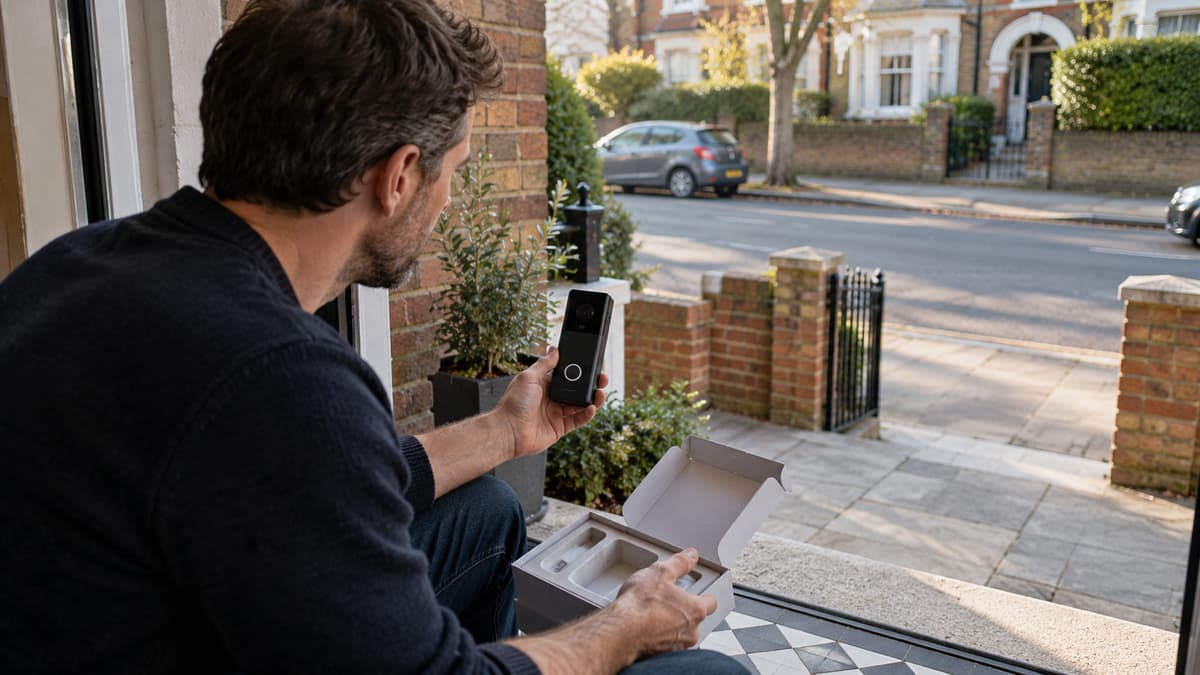
A doorbell that films the pavement
A wide porch camera aimed at the path is a different duty from filming a neighbour or the street. The fee you pay does not decide that.
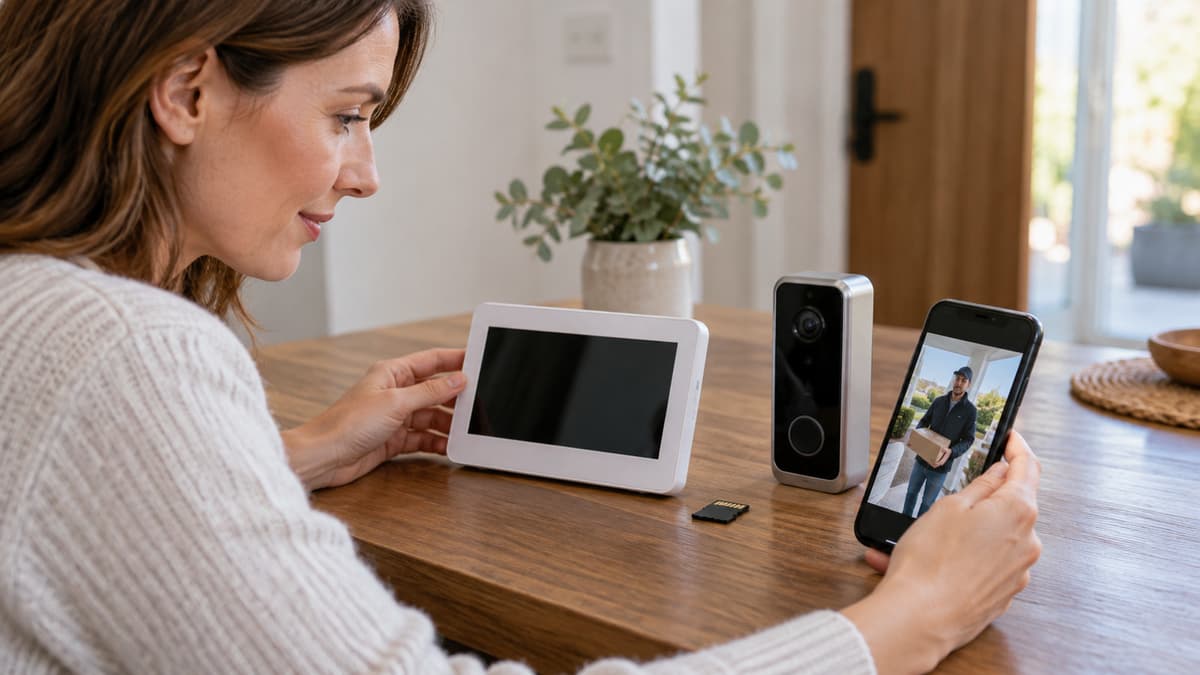
What a doorbell cloud plan costs
The shelf price is not the year's cost. A no-subscription line is a fee claim, not a privacy claim.

No monthly fee is not a privacy promise
Remote view can still need an account, and filming past the boundary still needs a limit and a deletion habit.