Video doorbell filming the street UK: the pavement test
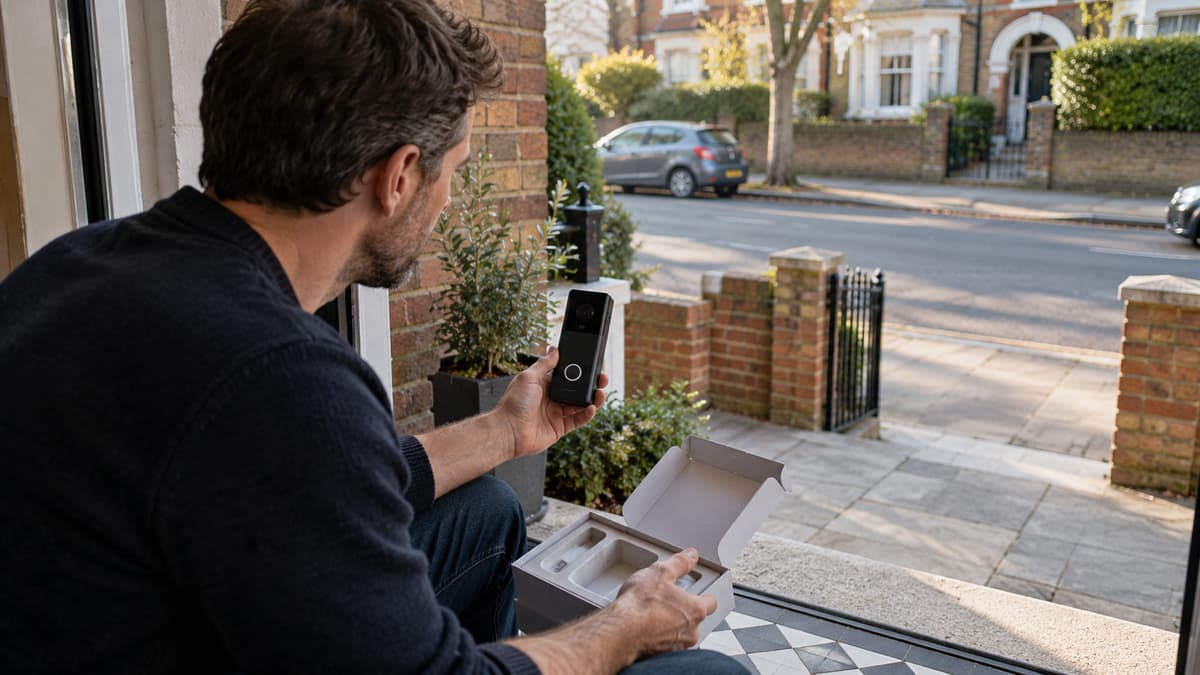
A video doorbell filming the street in the UK can bring UK GDPR in. Capture less, sign it, secure the clips and delete them. A sign is not permission.
On this page
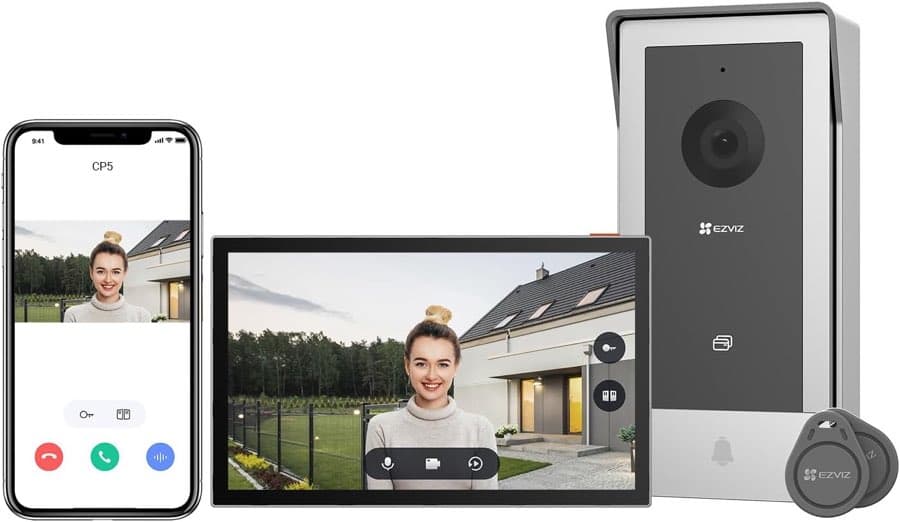
You are on the step with a wide door station still in the box, and the pavement is a few metres from the hinge. Video doorbell filming the street UK householders do by accident starts there: the listing sells 160° or 170° as a clearer view of the caller, and the same frame takes in the road. The ICO's home CCTV guidance treats filming only your own property as a different duty from filming a neighbour, a shared hall or the street. Once the picture goes past the boundary, UK GDPR applies, monthly fee or none. Products Compared did not film your porch and did not run a lab test. A qualifying purchase through an Amazon link can earn us a commission at no extra cost to you.
In short
Past the boundary, UK GDPR applies: capture less, sign it, secure it, delete it, and answer access requests. A sign does not make a street view lawful, and a no-subscription claim does not opt you out. Listed angles in our comparison run from about 134° to 170°, and any of them can include the pavement if you aim them that way.
What the ICO treats as your side of the boundary
The line is the picture, not the brick the camera is screwed to. The ICO's home CCTV page treats filming only your own property as a different duty from filming a neighbour, a hall or the street. GOV.UK's domestic CCTV guidance, checked on 15 October 2026, includes video doorbells. If a person on the pavement is identifiable in the clip, you have left only your property.
Your side of the boundary is the path, the step and the door you control. A caller on your mat is on that side for the seconds they stand there. A person on the public pavement, or a neighbour in their own front garden, is outside it.
Hold the station where you mean to drill, and record while someone walks the pavement and while someone stands at the door. If you can tell who the passer-by is, you are in the beyond-the-boundary case the ICO describes. If the clip shows your step and loses the road, you are in the narrower case. This article is not an ICO decision on your door, and these sources do not state a planning rule for a doorbell. An IP55 or IP65 mark, under BS EN 60529, speaks to rain and dust, not who you may film. Buying advice from Which? is not a data-protection procedure.
Why 134° to 170° often includes the pavement
A degree on a listing is a diagonal view, not a map of your porch. In the video door intercom comparison, ACEBELL and XPJ are listed at about 160°. The Winnes kits and TKMARS are listed at 170°. The EZVIZ CP5 is listed at about 134°. Those figures are listing claims from the comparison checked on 15 October 2026, not a survey of your step. Height and distance from the road change who appears. There is no degree on the ICO page that counts as a safe angle.
ACEBELL at about £189.99 and XPJ at about £207.99 are the about-160° kits, each with a phone app, so a clip can leave the house as well as sit on a card. TKMARS at about £58.99 and the Winnes kits at about £59.99 and about £62.99 are listed at 170°, including the no-app models. A lower price does not tighten the lens. Beside a front door that opens toward the street, 170° is enough to take the pavement on most ordinary British porches.
The EZVIZ CP5 is the top pick in that comparison: a 7 inch wired door phone at about £161.49, with 4.4 from 1,330 amazon.co.uk reviews, listed at 1080p across 134°. Clips go to a microSD card of up to 512 GB or to EZVIZ CloudPlay, and the box does not include a card. The same station can still include the street if you mount it by the gate or tilt it down the path. We did not measure that on a house. A phone doorbell from the wireless video door intercom comparison takes the same clip test. The radio link does not move the pavement.
Capture less, sign it, keep it, delete it
Once the clip leaves your boundary, the ICO's home CCTV guidance asks you to capture less, tell people, keep the footage secure, delete it, and answer access requests. A notice does not make a street view lawful. Aim the station at the step. If the kit offers a privacy zone, use it on the pavement and on the neighbour's window. If it offers neither, the mount is your only control, and a 170° listing will keep seeing the road.
Put a readable sign by the button, stating that recording is in use. A stamp-sized mark facing your own door does not tell someone on the pavement. It does not authorise a view of the street.
Then secure and delete. On the ACEBELL the stated card sits in the monitor. On the EZVIZ CP5, remote viewing uses an account, with CloudPlay optional beside a card you supply. Change a default password. A no-app kit such as the TKMARS still has a screen that needs looking after. Delete a clip when the reason has passed. These sources state no universal number of days. Clear the card and any cloud library, not only the app's recent list. If someone asks for footage of them, answer that request, and do not wipe the clip because the email arrived. Re-aim so the next week is your step.
A shared hall or a shop door is a different case
A flat door onto a communal landing leaves only your property as soon as the lens sees the hall. Other residents, their guests and the couriers who stop at every door are not your household. A 160° or 170° station outside a flat often takes in that landing. Ask someone to walk from the stair to their own door while you watch. If they are identifiable, you are filming beyond your boundary.
A lease, a freeholder or a management company can forbid the camera even when the data-protection steps look workable. This article does not read your lease. A notice on your own door does not override a ban on cameras in the common parts. The EZVIZ CP5's listed 134° can cut how much of the corridor you take. It still needs the clip, and the landlord's permission where the lease requires it.
A shop door sits outside this guide. The ICO and GOV.UK pages used here are household pages. A door station on a shop, a salon or a rental office is a business system, and the householder steps do not finish that duty. If you live above the shop and the camera is for the flat, you are back in the domestic case, including the pavement when the lens sees it. The same applies when the frame shows a neighbour's path, door or visitors. Show them the clip and narrow it. A conversation does not replace the ICO steps if you carry on recording them.
Where to compare a door station, and where to stop
Choose the station for a picture you can keep inside the duty, then run the clip test. The prices and angles above come from the video door intercom comparison, checked on 15 October 2026. Review counts are buying facts, not a privacy ranking. The 134° listing has not been certified as your path only. A phone app instead of one of these monitors does not change the pavement test. Use the Zosi security camera comparison only when the product is a camera system rather than a door station. A bullet camera under the eaves, aimed along the street, is the same problem on a different bracket.
Stop before this becomes a fitting manual. Electric locks, a second indoor monitor and new mains work are outside this article. These sources do not state a planning rule for a doorbell, and household guidance will not carry a shop camera. The decision you can make today is one clip of the pavement. If a passer-by is identifiable, capture less before you rely on a sign or a larger card. If only your step is in frame, you have not triggered the street duties the ICO describes.
Common questions
If I only film my own path, do the extra duties apply?
Does a doorbell count as CCTV?
Do I need a sign if the doorbell films the pavement?
How wide is too wide for a porch camera?
Does local storage mean UK GDPR does not apply?
What if the camera sees a shared hall?
Can a neighbour ask for the doorbell footage?
Is a shop door covered by the same domestic CCTV guide?

Products Compared publishes British-English buying guides based on amazon.co.uk listings and public UK sources. We do not run a lab and we do not invent test scores.
Related articles
Video doorbell subscription cost UK: what a year adds
The shelf price is not the year's cost. Which? puts some app-doorbell cloud plans at about £100 a year.

Video doorbell false alarms: cats, cars and the path
Video doorbell false alarms for a cat or a car are often the PIR and a wide lens working as listed.

Video doorbell no subscription privacy: still an account
No subscription on a video doorbell is only a fee claim. Remote view can still need an account.