Independent comparisons. We may earn from shop links. More info

Solder pot or wax melter

Updated: 2026-10-21

The search box treats a solder pot or wax melter as one product. On amazon.co.uk they are not. One basin in this set is stated to 450 °C and is ladled. The wax pots stop at a claimed 70–120 °C and pour from a spout, or they are not electric at all. If you are holding pewter, leaded casting metal, or a bag of soy, the degree gap is the whole decision. This page is that fork. The price table stays on the [melting pot comparison](/hub/workshop/melting-pot). Products Compared used listing figures from 19 October 2026 and public UK sources, not a melt test of our own.

The search box treats a solder pot or wax melter as one product. On amazon.co.uk they are not. One basin in this set is stated to 450 °C and is ladled.

Our top picks

On this page

The degree gap

A Prince August solder pot in this set is a 250 W mains basin with a thermostat stated from 200 to 450 °C. There are two listings. The pot with a ladle, at about £39.95, states 220 V, includes a ladle and flux, and claims about 1,200 g of pewter. The about £29.95 pot states 250 W and a titanium-plated basin, claims a UK plug in the bullets, and does not print a gram capacity. The maker’s shop lists 230 V for the UK plug option in the same class. Tiranti sells a similar 200–450 °C, 250 W pot at £44.16 ex VAT. That is the hot side. The wax side does not overlap it. JULWHISPER says it holds melted wax at 70–80 °C. Yaskyly states 50–100 °C. ZEROMX states a ceiling of 120 °C. Ksedcon, Bienslys and the 10 litre WUDLEP do not print a full degree span at all. None of them is a 450 °C tool that happens to have a spout. The hob jugs, Marsheepy, Bolosa, KAHOUI and Plumaire, list no element. A reviewer melts wax by standing the jug in a saucepan. You cannot turn that jug up until pewter flows. The listing that asks whether it can melt gold does not answer itself. The Crafts Council lesson puts gold near 1,064 °C, silver near 960 °C and copper near 1,085 °C. Teaching pewter in that same lesson is about 170–230 °C. The gap between a wax hold and a solder dial is already hundreds of degrees. The gap between this solder pot and gold is larger still.

Choose the solder pot when

Choose the solder pot when the metal needs that 200–450 °C band: hobby pewter, tin, a leaded casting alloy the packet actually names, or tinning a cable end. Reviewers of the about £29.95 Prince August pot describe about 1 kg of pewter, small castings, and nipples soldered onto motorbike control cables. You ladle. You keep the metal dry, because the maker warns that wet metal can throw melt. You wash your hands after leaded alloy, and you do not cook in the pot. Skip it for soy, soap, chocolate, balm and beeswax. A basin that can sit at 450 °C is a poor way to hold a pour that may want the low 30s to about 70 °C, and the reviews are about metal, not candles. Also skip it if the plug in the box is not BS 1363. One reviewer of the about £29.95 pot received a US plug. The about £39.95 kit is the one with the ladle, not an automatic upgrade: 3.9 from 30 reviews, and one of three texts says it died after two uses. The about £29.95 pot is the better-evidenced solder pot, with the known complaints of heaters that stop early and a dial that is easy to leave on high. A wax pot at 120 °C will not run a casting range around 300–320 °C. FormX publishes one Prince August casting alloy that melts near 138 °C and is cast nearer 300–320 °C, and that recipe is lead-bearing. Do not read pewter on a craft bag and assume every alloy is the lead-free teaching metal.

Choose the wax pot or the jug when

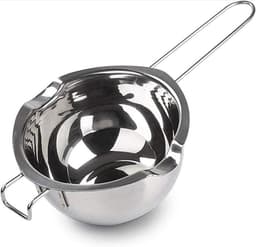
Choose an electric wax pot or a hob jug when the material is candle wax, soap base or a skincare butter. The jug is the unpowered case. The Marsheepy 600 ml bowl at about £9.98, 4.6 from 4,786 reviews, is the one people actually use over a pan for balm and leftover wax. It will not, at any hob setting you should try, become a solder pot. The electric wax pots add a spout and a heater that is supposed to stay in wax range. JULWHISPER’s 70–80 °C hold can melt many waxes and still be wrong for a cooler pour. Yaskyly’s seller line says soy scorches above about 85 °C. That is a claim on their listing, not a universal soy law. A 1.5 litre pot is a home batch. The only 10 litre claim here, the WUDLEP at about £79.99, has four reviews and one fire text, and it still does not state 450 °C. Buying it to also do a bit of metal does not work. Two limits sit outside both baskets. They are gold, and lead hygiene.

Gold and lead

Gold is about 1,064 °C in the Crafts Council lesson. Silver and copper sit in the same high band. None of the pots in this comparison states a temperature, a wattage or a crucible that would reach them. The unanswered gold question on the Prince August listing is not a yes. Do not use this category for gold, silver, copper or aluminium. A longer heat on a 250 W pot does not close a gap of several hundred degrees. Lead is a different limit, and it is not a reason to call the solder pot safe for the kitchen. Lead sits outside COSHH. HSE’s L132 guidance treats industrial lead work above 500 °C as liable to significant fume exposure. These pots’ stated ceiling is 450 °C, under that line, and you still keep leaded casting alloy away from food, wash afterwards, and follow the maker’s warning. Employers who melt lead are in the Control of Lead at Work Regulations, which is not a weekend-hobby checklist. Leaded casting metal and the Crafts Council’s teaching pewter are not the same alloy. If the packet does not say, do not guess.

Common questions

Will a solder pot melt gold?
Not these. The Prince August pots are stated to 450 °C. The Crafts Council puts the melting point of gold near 1,064 °C. The amazon.co.uk bullet asks the gold question and does not claim a gold melt. Silver and copper are in the same out-of-range group. A higher dial setting is not a route to jewellery metals.
Will it melt pewter?
The 200–450 °C Prince August pots are the ones in this set sold for that. Teaching pewter in the Crafts Council lesson is about 170–230 °C, and one commercial Prince August casting alloy is published with a melt near 138 °C and a cast nearer 300–320 °C. A wax melter at 120 °C does not cover that casting range. Check the alloy packet before you assume the ingot matches the lesson.
Can I pour candle wax from the Prince August basin?
You should not. The basin is built for a thermostat up to 450 °C, reviewers use it for metal, and the maker says it is not for cooking. Soy and beeswax want a far cooler pot or a water bath. A solder pot is a bad saving if the real job is candles. Use a wax pot or a jug, and keep wax out of the metal basin.
Will a wax melter melt lead?
A wax pot stated to 120 °C, or a jug with no element, is the wrong tool for a leaded casting range around 300 °C. Even the solder pot, which stops at a stated 450 °C, is under the 500 °C line in HSE lead guidance and still wants dry metal, no food nearby, and clean hands. Do not chase lead in a candle melter by leaving it on longer.
Is pewter always lead-free?
No. The Crafts Council lesson describes a teaching pewter. A separate Prince August casting alloy published by FormX is lead-bearing, with a higher casting temperature than its melt point. Read the ingot, and do not treat every bag marked pewter as the same metal. Wash after leaded alloy, and do not cast it where you prepare food.

Related pages

Sources

Public UK sources and the amazon.co.uk listings compared on this page. Updated October 2026.

  1. SI 2016/1101 regulation 35 (retrieved October 2026)
  2. GOV.UK: Electrical Equipment (Safety) Regulations 2016 (retrieved October 2026)
  3. HSE: COSHH basics (retrieved October 2026)
  4. HSE: L132 Control of lead at work (retrieved October 2026)
  5. HSE: Fire safety (retrieved October 2026)
  6. Prince August solder melting pot (retrieved October 2026)
  7. Crafts Council: Pewter casting lesson (retrieved October 2026)
  8. Candle Shack: Soy wax (retrieved October 2026)