Independent comparisons. We may earn from shop links. More info

Wax melting pot for candle making

Updated: 2026-10-21

A wax melting pot for candle making is not one temperature and not one size. Soy from the same UK shop can pour in the low 30s °C or up around 70 °C, depending on the grade, and a 10 litre headline is not a business machine. You are choosing a hob jug, a 1.5–1.8 litre electric pot, or the single large tap pot in this amazon.co.uk set. If the basin on your bench says 450 °C, leave it for pewter. The price rows are on the [melting pot comparison](/hub/workshop/melting-pot). Figures below are listing claims and shop guides from 19 October 2026, not a Products Compared melt test.

A wax melting pot for candle making is not one temperature and not one size.

Our top picks

On this page

Jug, small electric, or tap

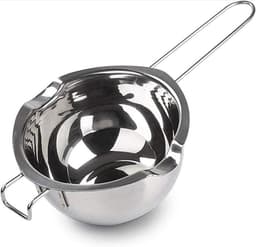
The jug is a stainless bowl in a saucepan of water. In this set that is the Plumaire 400 ml kit at about £7.99, the Marsheepy and Bolosa 600 ml jugs at about £9.98 and about £9.99, and the KAHOUI 900 ml jug at about £8.99. None of them states a mains element. The Marsheepy jug is the one with evidence: 4.6 from 4,786 reviews, used for beeswax balm and leftover tealights. At 600 ml it is a few small candles, not a stall. The Bolosa adds a V spout that one reviewer still found drippy. The KAHOUI jug has only six reviews, and the Plumaire set has four. The small electric is the 1.5 litre group, plus JULWHISPER’s 1.8 litre claim at about £29.99. Ksedcon at about £23.99 states 220 V and 300–600 W and includes a thermometer. Yaskyly at about £27.99 states 50–100 °C and up to 900 g of wax. Bienslys at about £9.99 is the cheap digital, with control failures in the stored texts. ZEROMX at about £19.54 states a 120 °C ceiling, and one review says the plastic rim cracked within two uses. Yaskyly’s own 900 g line shows how fast the useful fill shrinks. The tap pot is the WUDLEP, claimed at 10 litres and about £79.99, with a bottom spigot and four reviews. Two texts use it for wax, soap or butter. The third describes a fire from the inside about two minutes after switch-on. That is the whole large-pot file in this set. Size is useless if the wax sheet wants a cooler pour than the pot will hold.

Temperature follows the wax, not the dial slogan

Candle Shack’s soy pages are the UK reference for how wide the range is. Their European Golden Wax 464 note puts a pour around 60–70 °C. A recipe they publish for the US 464 grade heats to about 70–75 °C, adds fragrance around 60 °C, and pours around 55–60 °C. Their S41 soy melts at about 41–47 °C and pours at about 31–34 °C. Those are different products that a seller may both call soy. A fixed 70–80 °C hold, which is JULWHISPER’s claim, can melt wax and still be wrong for an S41 pour in the low 30s. Yaskyly’s bullet says soy scorches above about 85 °C and tells you to aim at 75–80 °C with the separate thermometer. Use that as their warning, then read your own wax sheet. Ksedcon includes a thermometer and does not print a degree span, so the thermometer is the control. Beeswax is not soy. One JULWHISPER reviewer needed about 30 minutes for a full beeswax fill on high.

What the listings add, and what they do not

Yaskyly and Ksedcon are the electric pots that mention a thermometer in the copy. JULWHISPER’s title mentions a thermometer, and the included-components line does not, so do not assume a meter is in that carton. Kit wicks, 60 on the Plumaire and 100 on several electrics, get you through a first afternoon. They do not set the temperature and they do not prove the element. A UK plug is in the JULWHISPER title and is not stated for Yaskyly, Ksedcon, Bienslys, ZEROMX or WUDLEP. Check the pins. Pour complaints are concrete. JULWHISPER reviewers say there is no useful lip and wax runs down the outside. The Bolosa jug drips, in one of seven texts. ZEROMX was called small and leaky, with cracked plastic around the inner pot within two uses. Those faults matter more than a bundle of stickers.

When the larger pot is the wrong savings

A small business does not start because a title says 10 litres. Candle Creative lists a 16 litre melter at £259.95 including VAT, 30–100 °C, 230 V, 1,800 W, a UK 13 A plug and a timer. That is not a row in our table. It shows what a stated larger melter looks like beside the WUDLEP at about £79.99, which prints neither watts nor a plug, has four reviews, and includes one fire report. Candle Shack’s guide also says flake wax is about 40–50 percent wax by volume and that you should leave 10–15 percent headroom. A 10 litre headline can mean less molten wax than you pictured, and our listing does not print a molten fill. If you pour a few jars a week, the about £9.98 jug or a watched 1.5 litre pot is the honest tool. Do not pour candles from the 450 °C solder pot to save the cost of a jug.

Common questions

Can I melt soy wax in a saucepan jug?
Yes, if the batch fits. The Marsheepy 600 ml jug is the reviewed way to do it, at about £9.98, sitting in a pan of water. You still need a thermometer, because the jug has no dial and soy is not one temperature. It will not melt pewter. Gel wax failed for one Marsheepy buyer, so a fussy wax is a reason to read the sheet before you commit.
What temperature should the pot be?
The temperature on your wax sheet, not a single soy number. Candle Shack’s 464 grades pour somewhere around 55–70 °C depending on the recipe they publish, and their S41 pours at about 31–34 °C. Yaskyly says soy scorches above about 85 °C. A pot stuck at 70–80 °C can be right for one grade and hot for another. Measure it.
Do I need a thermometer if the pot says 70–80 °C?
Yes, if the wax sheet’s pour is not that band. A 70–80 °C hold can melt the wax and still miss a cooler pour, or sit close to an 85 °C scorch warning from a seller. Ksedcon gives you a thermometer and no printed span. JULWHISPER’s title mentions a thermometer that the included-components line does not list. Your own meter settles the argument.
Is the 10 litre pot the one for a small business?
Not this listing, on the evidence we have. The WUDLEP at about £79.99 has four reviews, no stated watts or plug, and one report of an internal fire about two minutes after it was switched on. Specified 9–16 litre shop melters publish a 13 A plug, a wattage and a degree span, at a higher price. A litre claim is not a workshop.
Can I use the solder pot for candles to save money?
No. The Prince August pots are stated to 450 °C for metal, and reviewers use them for pewter and cable tinning. That heat is the wrong class for soy or beeswax, and the maker says the pot is not for cooking. An £8–£10 jug does the candle job the solder pot should not be asked to do. Keep wax out of the metal basin.

Related pages

Sources

Public UK sources and the amazon.co.uk listings compared on this page. Updated October 2026.

  1. SI 2016/1101 regulation 35 (retrieved October 2026)
  2. GOV.UK: Electrical Equipment (Safety) Regulations 2016 (retrieved October 2026)
  3. HSE: COSHH basics (retrieved October 2026)
  4. HSE: L132 Control of lead at work (retrieved October 2026)
  5. HSE: Fire safety (retrieved October 2026)
  6. Prince August solder melting pot (retrieved October 2026)
  7. Crafts Council: Pewter casting lesson (retrieved October 2026)
  8. Candle Shack: Soy wax (retrieved October 2026)