Independent comparisons. We may earn from shop links. More info

Melting pot buying guide

Updated: 2026-10-21

You searched for a melting pot and the results mix three tools that do not do the same job. A solder basin stated to about 450 °C, an electric wax pot that stays nearer 70–120 °C, and a stainless jug you sit in a saucepan are all sold under those words. This melting pot buying guide is the sort you do before the stars: the material, the degree class, the plug, the control, and how much you can lift. Prices for the twelve amazon.co.uk listings we compared on 19 October 2026 sit on the [melting pot comparison](/hub/workshop/melting-pot). Products Compared did not lab-test these pots.

You searched for a melting pot and the results mix three tools that do not do the same job.

Our top picks

On this page

Three melting pots hide in one search

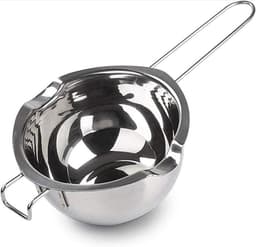
Start with the material, because the brand line will not tell you. White metal and solder in this set belong in a pot whose thermostat is stated from 200 to 450 °C at about 250 W. Those are the two Prince August listings, and you ladle them rather than tip them like a jug. Candle wax, soap base and balm belong in a cooler electric pot, or in a jug over water. The electric wax rows claim a keep-warm around 70–80 °C, a seller span of 50–100 °C, or a ceiling of 120 °C. The hob jugs, from the 400 ml Plumaire set to the 900 ml KAHOUI jug, list no wattage at all. A reviewer puts the small pot in a saucepan. That pan is the whole heat source. Gold is the hard stop. The Crafts Council pewter lesson puts gold near 1,064 °C, and none of these pots states a temperature in that region. If the job is soy, the wax sheet’s pour matters more than the word melting.

Plug, control and thermometer

Domestic mains kit needs a correct connection to a BS 1363 socket. Regulation 35 of the Electrical Equipment (Safety) Regulations 2016 is the rule, and UK mains are 230 V. A CE line in a bullet is not a test certificate we can show you. In this set a UK plug is claimed on the Prince August pots and in the JULWHISPER title. Yaskyly, Ksedcon, Bienslys, ZEROMX and the 10 litre WUDLEP do not state a plug in the raw technical lines. One reviewer of the about £29.95 Prince August pot received a US plug and blew the fuse on first use. Look at the pins on the day the parcel arrives. A holiday adaptor is not the plan. A large imported melter with no printed wattage and no printed plug is unfinished information. Do not paste a recall of some other wax heater onto the WUDLEP pot. Neither of those official alerts is one of these twelve listings. Control is the next cut. A dial from 200 to 450 °C is a metal tool. A fixed hold at 70–80 °C, which is what JULWHISPER states, can melt wax and still be the wrong pour for a cooler soy grade. Candle Shack’s notes put some European 464 soy pours around 60–70 °C and an S41 soy pour down in the low 30s °C. A separate thermometer, listed on the Yaskyly and Ksedcon bullets, is how you check a crude dial. Bienslys and ZEROMX ask about automatic shut-off and do not answer. Assume you stay in the room until the pot is unplugged and cool.

Capacity you can lift

Entry jugs in this snapshot run from about £7.99 to about £9.99, at 400 ml, 600 ml and 900 ml. That is a few small tins, balm pots or leftover tealights, not a market stall. The electric wax pots clustered at 1.5 litres, with JULWHISPER claiming 1.8 litres, sit between about £9.99 and about £29.99. Yaskyly’s bullet says up to 900 g of wax in the 1.5 litre pot, which is already less wax than a litre headline sounds. The only 10 litre claim is the WUDLEP at about £79.99. It weighs 3.6 kg empty and pours from a bottom spigot, and it has four reviews. Candle Shack’s buying guide, written for their own tanks rather than these listings, says flake wax is about 40–50 percent wax by volume and that you should leave 10–15 percent headroom. Use that as their rule of thumb, not as a measurement of the JULWHISPER or the WUDLEP. If you cannot lift a full pot, a tap is the point of a large melter, and this set’s only tap pot does not print watts. Size does not rescue a bad control.

What to ignore on the listing

Kit wicks do not fix a thermostat. Several wax pots include 60 or 100 wicks, stickers and a spoon. That is a starter pack. It does not tell you the element lasts, and it does not make the pot suitable for a child to run. A 5.0 line from two reviews, which is the Yaskyly listing, with no review text in the file, is not the same evidence as 4.3 from 699 on the JULWHISPER or 4.6 from 4,786 on the Marsheepy jug. Read the failure theme beside the average. Prince August reviews include heaters that stop early. Bienslys texts include controls that will not climb, and one account of hot wax spat across a kitchen. Ksedcon and WUDLEP each have a fire described in a single review. Those are not rates, and they still outrank a star average when you are choosing what to plug in.

Common questions

Is a melting pot the same as a wax melter?
No. In this amazon.co.uk set a melting pot is one of three tools. The Prince August pots are stated to 450 °C for solder and pewter. The electric wax pots stay at a claimed 70–120 °C. The Marsheepy, Bolosa, KAHOUI and Plumaire jugs have no element and sit in a pan. One name for all three is how a candle maker ends up with a solder basin.
Do I need a UK three-pin plug?
If the pot is mains-powered, it needs a proper BS 1363 connection, or a correct conversion and a BS 1362 fuse, under the Electrical Equipment (Safety) Regulations 2016. Several wax listings here do not state a plug at all. One Prince August review describes a US plug in the box and a blown fuse. Hob jugs are not electric, so the plug question does not apply to them. Check the pins before the first heat.
What size do I need for a weekend of candles?
A 400–900 ml jug is enough for a few small candles or a balm batch, if you already heat a saucepan. A 1.5 litre electric pot is the hobby step up. Yaskyly’s own bullet puts about 900 g of wax in a 1.5 litre pot, which is less than the litre line sounds. A 10 litre title is a different purchase, and the only one in this set has four reviews.
Can one pot do pewter and soy wax?
Not one of these. A 450 °C basin is the wrong heat for soy, and a wax pot at 120 °C will not run a pewter casting range around 300 °C. Buy the hotter pot only if white metal is the job you actually do, and keep food and candle wax out of that basin. The two materials want two tools.
What should I check on the day the parcel arrives?
Look at the plug pins before you switch on, and match them to a BS 1363 socket if the pot is electric. Confirm the temperature class on the box against the material you bought it for. If the unit smells of burning, trips the supply, or will not hold a setting, stop and return it. Do not open the element to investigate.

Related pages

Sources

Public UK sources and the amazon.co.uk listings compared on this page. Updated October 2026.

  1. SI 2016/1101 regulation 35 (retrieved October 2026)
  2. GOV.UK: Electrical Equipment (Safety) Regulations 2016 (retrieved October 2026)
  3. HSE: COSHH basics (retrieved October 2026)
  4. HSE: L132 Control of lead at work (retrieved October 2026)
  5. HSE: Fire safety (retrieved October 2026)
  6. Prince August solder melting pot (retrieved October 2026)
  7. Crafts Council: Pewter casting lesson (retrieved October 2026)
  8. Candle Shack: Soy wax (retrieved October 2026)